McKenna Ellen, Mhaonaigh Aisling Ui, Wubben Richard, Dwivedi Amrita, Hurley Tim, Kelly Lynne A, Stevenson Nigel J, Little Mark A, Molloy Eleanor J
Discipline of Paediatrics, Trinity College, The University of Dublin, Dublin, Ireland.
Paediatric Research Laboratory, Trinity Translational Medicine Institute (TTMI), St James' Hospital, Dublin, Ireland.
Front Immunol. 2021 Apr 15;12:602963. doi: 10.3389/fimmu.2021.602963. eCollection 2021.
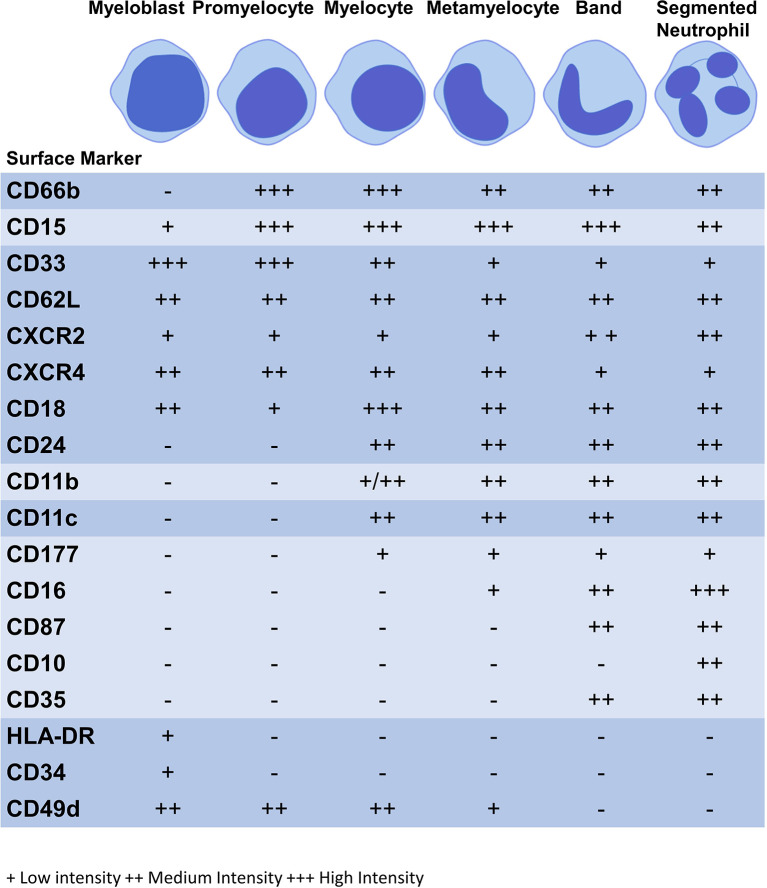
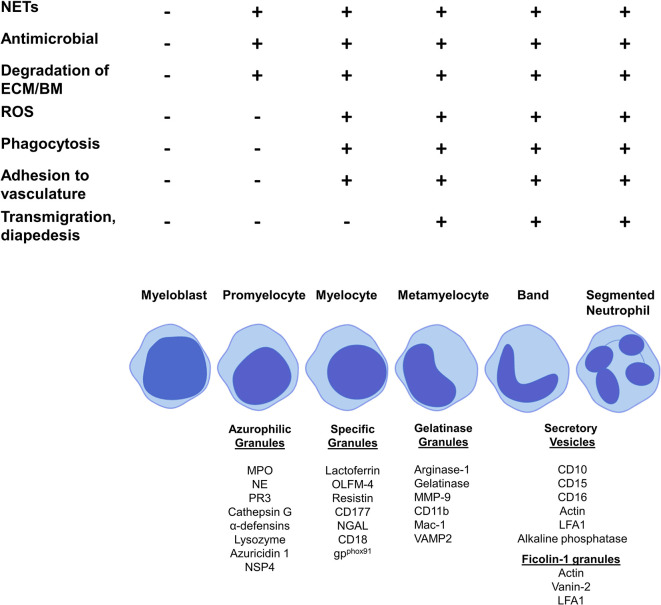
Neutrophils are the most abundant innate immune cell with critical anti-microbial functions. Since the discovery of granulocytes at the end of the nineteenth century, the cells have been given many names including phagocytes, polymorphonuclear neutrophils (PMN), granulocytic myeloid derived suppressor cells (G-MDSC), low density neutrophils (LDN) and tumor associated neutrophils (TANS). This lack of standardized nomenclature for neutrophils suggest that biologically distinct populations of neutrophils exist, particularly in disease, when in fact these may simply be a manifestation of the plasticity of the neutrophil as opposed to unique populations. In this review, we profile the surface markers and granule expression of each stage of granulopoiesis to offer insight into how each stage of maturity may be identified. We also highlight the remarkable surface marker expression profiles between the supposed neutrophil populations.
中性粒细胞是最丰富的具有关键抗菌功能的固有免疫细胞。自19世纪末发现粒细胞以来,这些细胞被赋予了许多名称,包括吞噬细胞、多形核中性粒细胞(PMN)、粒细胞性髓系来源抑制细胞(G-MDSC)、低密度中性粒细胞(LDN)和肿瘤相关中性粒细胞(TANS)。中性粒细胞缺乏标准化的命名法,这表明存在生物学上不同的中性粒细胞群体,特别是在疾病中,而实际上这些可能仅仅是中性粒细胞可塑性的表现,而非独特的群体。在本综述中,我们描述了粒细胞生成各阶段的表面标志物和颗粒表达情况,以深入了解如何识别每个成熟阶段。我们还强调了假定的中性粒细胞群体之间显著的表面标志物表达谱。