
两种鳗鱼中存在的重复瘦素受体为脊椎动物瘦素系统的进化带来了新见解。
Duplicated leptin receptors in two species of eel bring new insights into the evolution of the leptin system in vertebrates.
作者信息
Morini Marina, Pasquier Jérémy, Dirks Ron, van den Thillart Guido, Tomkiewicz Jonna, Rousseau Karine, Dufour Sylvie, Lafont Anne-Gaëlle
机构信息
Muséum National d'Histoire Naturelle, Sorbonne Universités, Research Unit BOREA, Biology of Aquatic Organisms and Ecosystems, CNRS 7208, IRD207, UPMC, UCBN, Paris, France.
ZF-screens B.V., Leiden, The Netherlands.
出版信息
PLoS One. 2015 May 6;10(5):e0126008. doi: 10.1371/journal.pone.0126008. eCollection 2015.
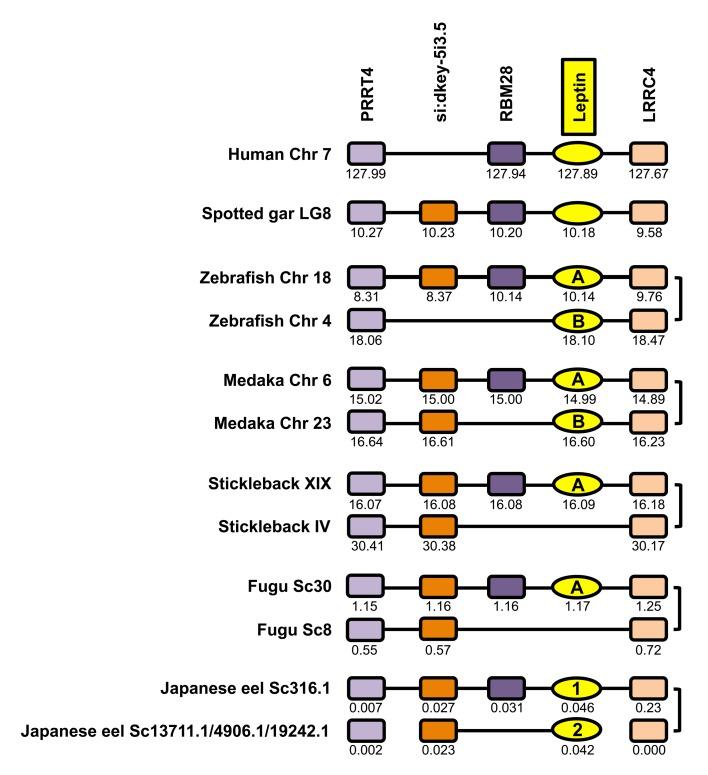
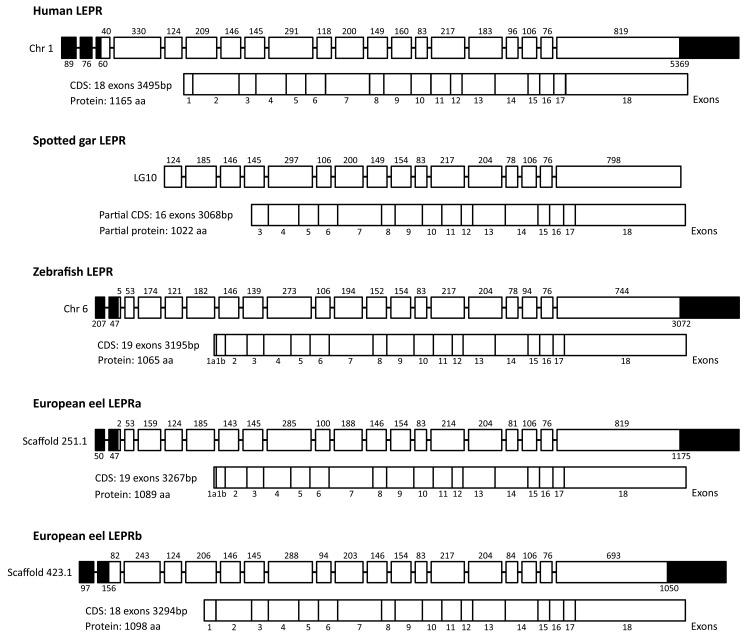
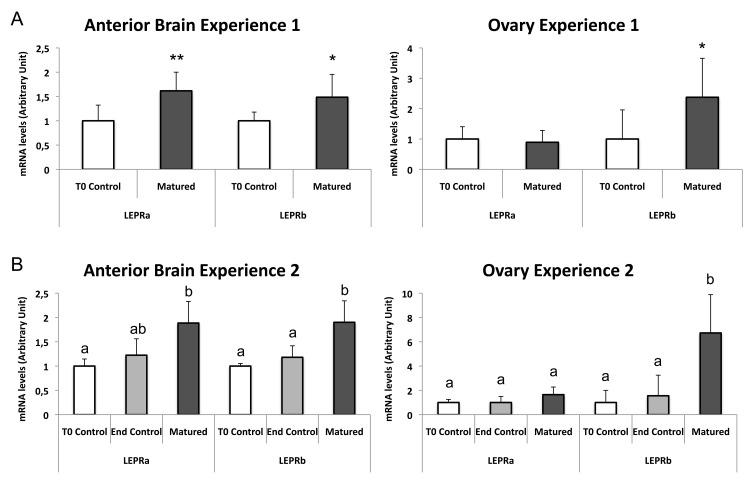
Since its discovery in mammals as a key-hormone in reproduction and metabolism, leptin has been identified in an increasing number of tetrapods and teleosts. Tetrapods possess only one leptin gene, while most teleosts possess two leptin genes, as a result of the teleost third whole genome duplication event (3R). Leptin acts through a specific receptor (LEPR). In the European and Japanese eels, we identified two leptin genes, and for the first time in vertebrates, two LEPR genes. Synteny analyses indicated that eel LEPRa and LEPRb result from teleost 3R. LEPRb seems to have been lost in the teleost lineage shortly after the elopomorph divergence. Quantitative PCRs revealed a wide distribution of leptins and LEPRs in the European eel, including tissues involved in metabolism and reproduction. Noticeably, leptin1 was expressed in fat tissue, while leptin2 in the liver, reflecting subfunctionalization. Four-month fasting had no impact on the expression of leptins and LEPRs in control European eels. This might be related to the remarkable adaptation of silver eel metabolism to long-term fasting throughout the reproductive oceanic migration. In contrast, sexual maturation induced differential increases in the expression of leptins and LEPRs in the BPG-liver axis. Leptin2 was strikingly upregulated in the liver, the central organ of the reproductive metabolic challenge in teleosts. LEPRs were differentially regulated during sexual maturation, which may have contributed to the conservation of the duplicated LEPRs in this species. This suggests an ancient and positive role of the leptin system in the vertebrate reproductive function. This study brings new insights on the evolutionary history of the leptin system in vertebrates. Among extant vertebrates, the eel represents a unique case of duplicated leptins and leptin receptors as a result of 3R.
自瘦素作为生殖和新陈代谢中的关键激素在哺乳动物中被发现以来,越来越多的四足动物和硬骨鱼中也发现了它。由于硬骨鱼的第三次全基因组复制事件(3R),四足动物仅拥有一个瘦素基因,而大多数硬骨鱼拥有两个瘦素基因。瘦素通过特定受体(LEPR)发挥作用。在欧洲鳗鲡和日本鳗鲡中,我们鉴定出了两个瘦素基因,并且在脊椎动物中首次发现了两个LEPR基因。共线性分析表明,鳗鲡的LEPRa和LEPRb源于硬骨鱼的3R。LEPRb似乎在鳗形目分化后不久就在硬骨鱼谱系中丢失了。定量PCR显示,瘦素和LEPRs在欧洲鳗鲡中广泛分布,包括参与新陈代谢和生殖的组织。值得注意的是,瘦素1在脂肪组织中表达,而瘦素2在肝脏中表达,这反映了亚功能化。四个月的禁食对对照欧洲鳗鲡中瘦素和LEPRs的表达没有影响。这可能与银鳗在整个生殖洄游过程中对长期禁食的显著代谢适应性有关。相比之下,性成熟诱导了BPG-肝脏轴中瘦素和LEPRs表达的差异增加。在硬骨鱼中作为生殖代谢挑战的中心器官,肝脏中的瘦素2显著上调。LEPRs在性成熟过程中受到不同的调节,这可能有助于该物种中复制的LEPRs的保留。这表明瘦素系统在脊椎动物生殖功能中具有古老而积极的作用。这项研究为脊椎动物瘦素系统的进化历史带来了新的见解。在现存的脊椎动物中,鳗鲡是由于3R而出现瘦素和瘦素受体复制的独特例子。




 Zotero 插件