Baracchi David, Brown Mark J F, Chittka Lars
Department of Biological and Experimental Psychology, School of Biological and Chemical Sciences, Queen Mary University of London, Mile End Road, London, E1 4NS, UK.
School of Biological Sciences, Royal Holloway University of London, Egham, Surrey, TW20 0EX, UK.
F1000Res. 2015 Mar 19;4:73. doi: 10.12688/f1000research.6262.2. eCollection 2015.
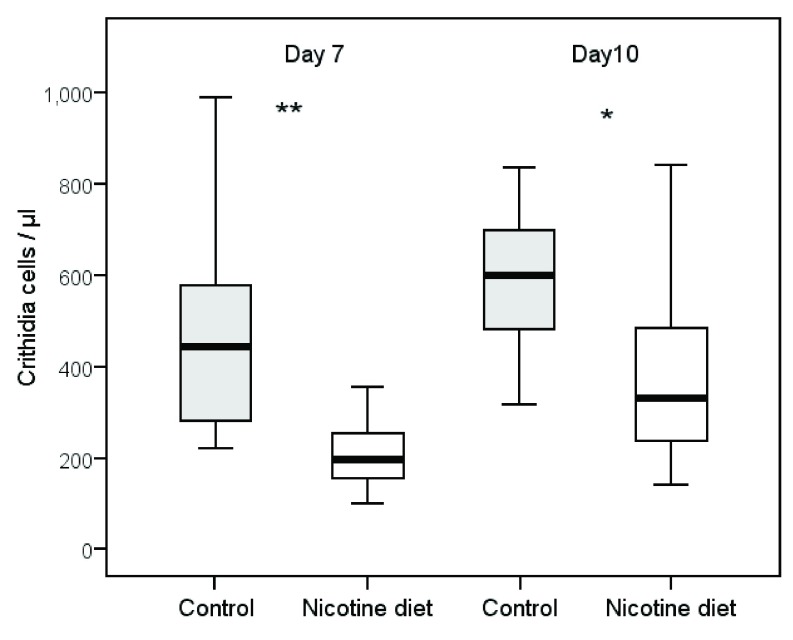
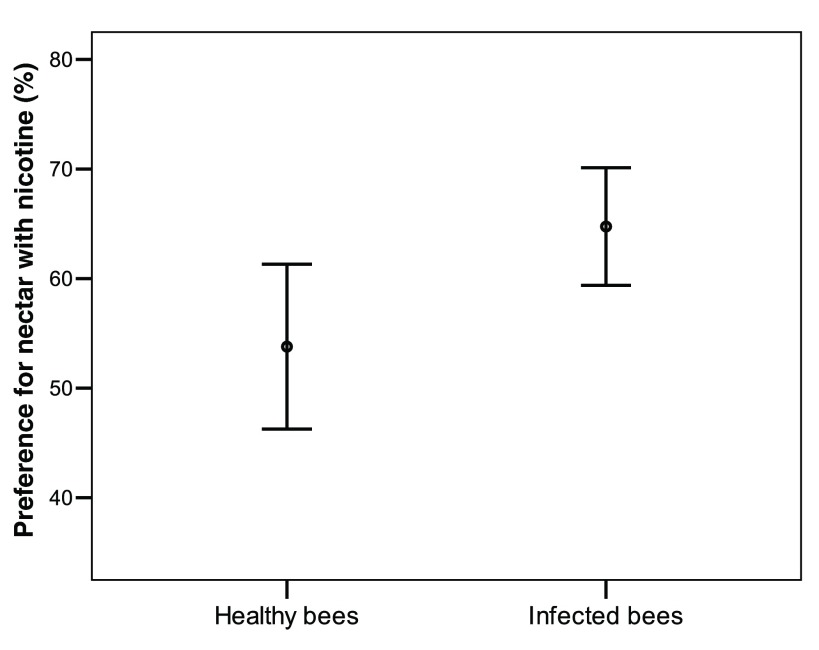
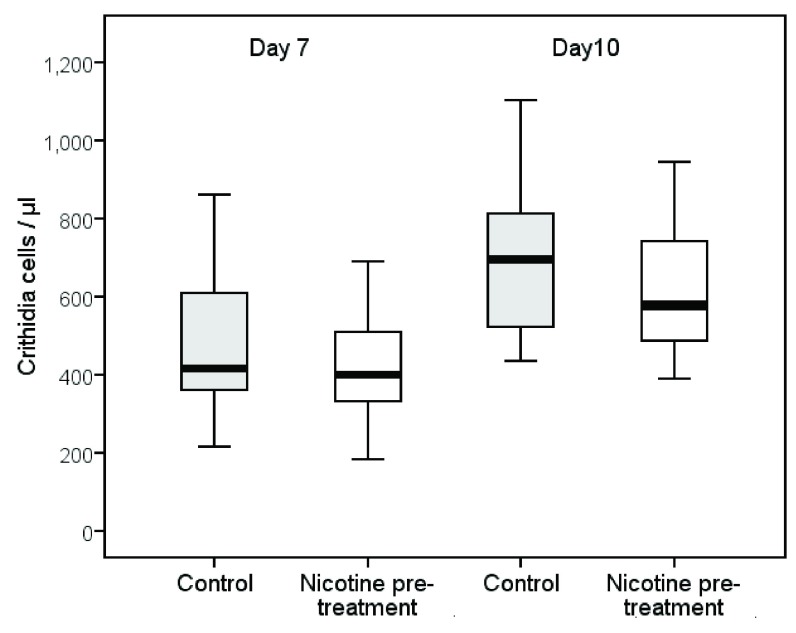
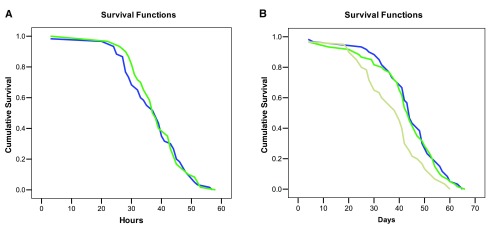
The presence of antimicrobial secondary metabolites in nectar suggests that pollinators, which are threatened globally by emergent disease, may benefit from the consumption of nectars rich in these metabolites. We tested whether nicotine, a nectar secondary metabolite common in Solanaceae and Tilia species, is used by parasitized bumblebees as a source of self-medication , using a series of toxicological, microbiological and behavioural experiments. Caged bees infected with Crithidia bombi had a slight preference for sucrose solution laced with the alkaloid and behavioural tests showed that the parasite infection induced an increased consumption of nicotine during foraging activity, though nicotine had an appetite-reducing effect overall. When ingested, nicotine delayed the progression of a gut infection in bumblebees by a few days, but dietary nicotine did not clear the infection, and after 10 days the parasite load approached that of control bees. Moreover, when pathogens were exposed to the alkaloid prior to host ingestion, the protozoan's viability was not directly affected, suggesting that anti-parasite effects were relatively weak. Nicotine consumption in a single dose did not impose any cost even in starved bees but the alkaloid had detrimental effects on healthy bees if consistently consumed for weeks. These toxic effects disappeared in infected bees, suggesting that detoxification costs might have been counterbalanced by the advantages in slowing the progression of the infection. Nicotine consumption did not affect bee lifespan but the reduction in the parasite load may have other likely unexplored subtle benefits both for individual bees and their colony. Potential evidence for self-medication is discussed. The contention that secondary metabolites in nectar may be under selection from pollinators, or used by plants to enhance their own reproductive success, remains to be confirmed.
花蜜中存在抗菌次生代谢产物,这表明授粉者虽在全球范围内受到新出现疾病的威胁,但食用富含这些代谢产物的花蜜可能会从中受益。我们通过一系列毒理学、微生物学和行为学实验,测试了茄科和椴树属植物花蜜中常见的次生代谢产物尼古丁是否被受寄生虫感染的大黄蜂用作自我治疗的药物来源。感染了熊蜂短膜虫的笼养蜜蜂对添加了这种生物碱的蔗糖溶液略有偏好,行为测试表明,寄生虫感染导致觅食活动期间尼古丁的摄入量增加,不过尼古丁总体上有降低食欲的作用。摄入尼古丁后,大黄蜂肠道感染的进展会延迟几天,但通过饮食摄入尼古丁并不能清除感染,10天后寄生虫载量接近对照蜜蜂。此外,当病原体在宿主摄入之前接触这种生物碱时,原生动物的活力并未受到直接影响,这表明抗寄生虫作用相对较弱。即使是饥饿的蜜蜂,单次摄入尼古丁也不会产生任何代价,但如果持续数周摄入这种生物碱,对健康蜜蜂会有有害影响。这些毒性作用在受感染的蜜蜂中消失了,这表明解毒成本可能被减缓感染进展的优势所抵消。摄入尼古丁并不影响蜜蜂的寿命,但寄生虫载量的减少可能对个体蜜蜂及其蜂群有其他尚未探索的潜在微妙益处。文中讨论了自我治疗的潜在证据。花蜜中的次生代谢产物可能受到授粉者选择,或被植物用来提高自身繁殖成功率这一观点,仍有待证实。