Gebert Daniel, Ketting René F, Zischler Hans, Rosenkranz David
Institute of Anthropology, Johannes Gutenberg-University, Mainz, Germany.
Institute of Molecular Biology IMB, Mainz, Germany.
PLoS One. 2015 May 7;10(5):e0124860. doi: 10.1371/journal.pone.0124860. eCollection 2015.
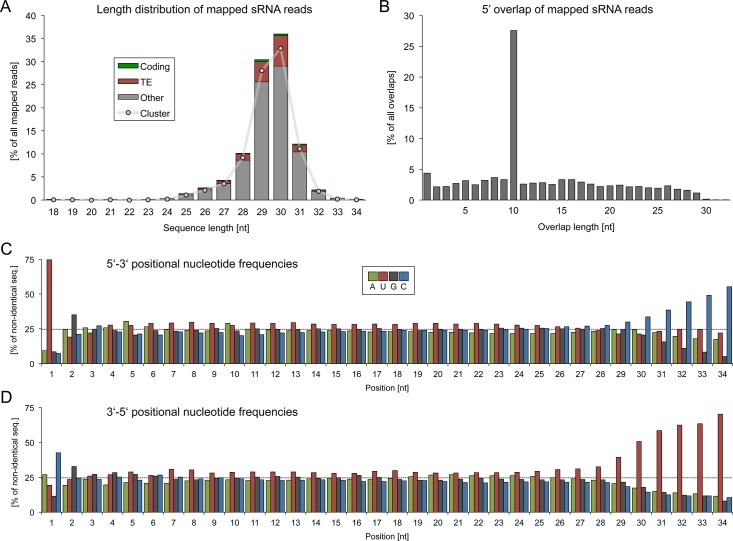
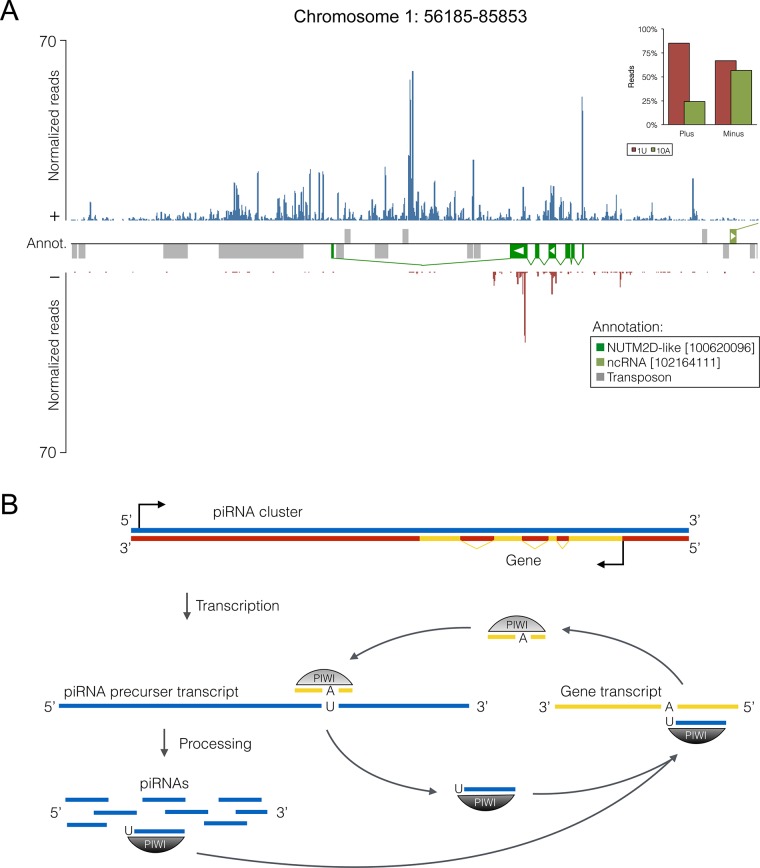
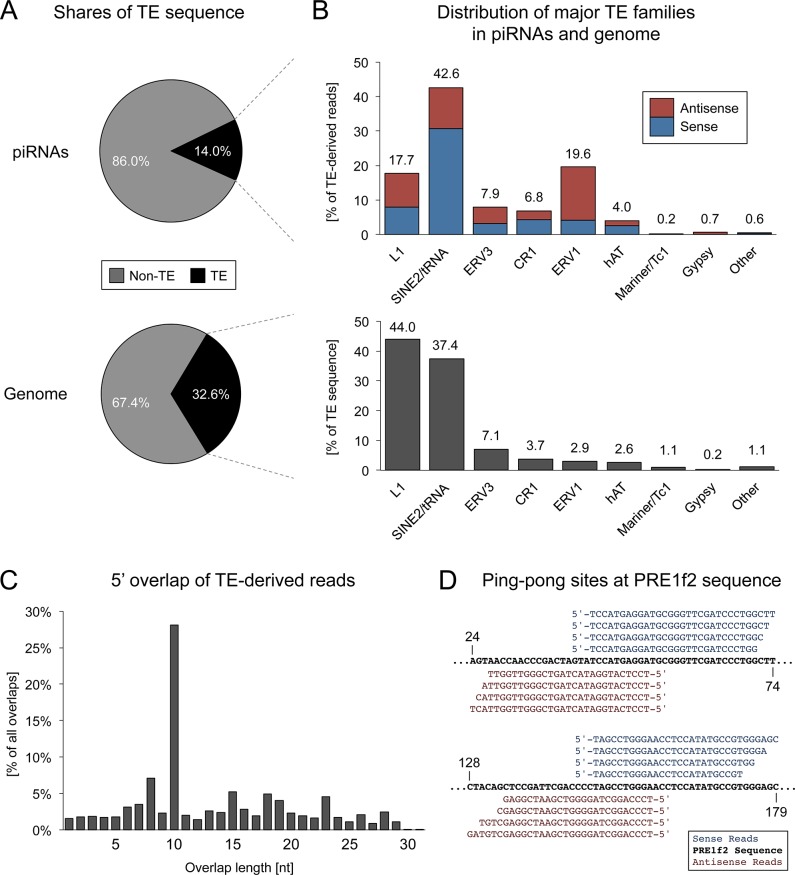
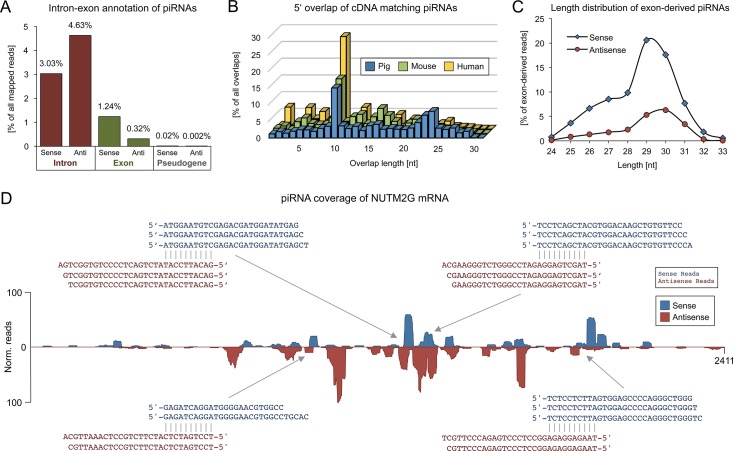
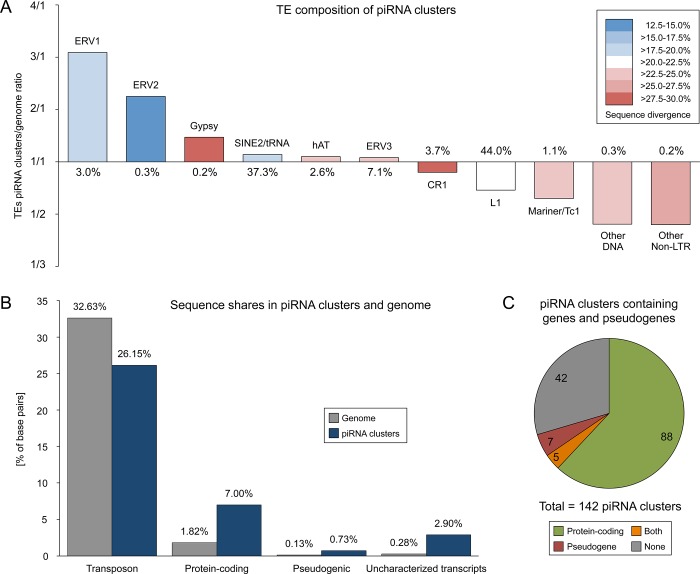
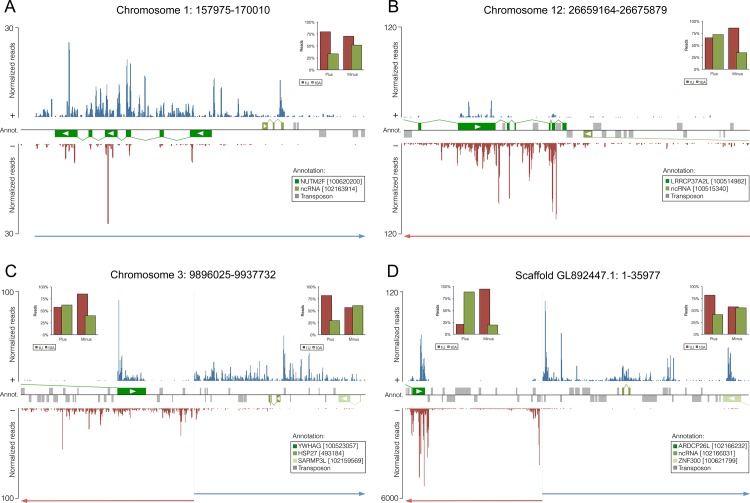
Piwi-interacting (pi-) RNAs guide germline-expressed Piwi proteins in order to suppress the activity of transposable elements (TEs). But notably, the majority of pachytene piRNAs in mammalian testes is not related to TEs. This raises the question of whether the Piwi/piRNA pathway exerts functions beyond TE silencing. Although gene-derived piRNAs were described many times, a possible gene-regulatory function was doubted due to the absence of antisense piRNAs. Here we sequenced and analyzed piRNAs expressed in the adult testis of the pig, as this taxon possesses the full set of mammalian Piwi paralogs while their spermatozoa are marked by an extreme fitness due to selective breeding. We provide an exhaustive characterization of porcine piRNAs and genomic piRNA clusters. Moreover, we reveal that both sense and antisense piRNAs derive from protein-coding genes, while exhibiting features that clearly show that they originate from the Piwi/piRNA-mediated post-transcriptional silencing pathway, commonly referred to as ping-pong cycle. We further show that the majority of identified piRNA clusters in the porcine genome spans exonic sequences of protein-coding genes or pseudogenes, which reveals a mechanism by which primary antisense piRNAs directed against mRNA can be generated. Our data provide evidence that spliced mRNAs, derived from such loci, are not only targeted by piRNAs but are also subject to ping-pong cycle processing. Finally, we demonstrate that homologous genes are targeted and processed by piRNAs in pig, mouse and human. Altogether, this strongly suggests a conserved role for the mammalian Piwi/piRNA pathway in post-transcriptional regulation of protein-coding genes, which did not receive much attention so far.
Piwi相互作用(pi-)RNA引导生殖系表达的Piwi蛋白,以抑制转座元件(TE)的活性。但值得注意的是,哺乳动物睾丸中大多数粗线期piRNA与TE无关。这就提出了一个问题,即Piwi/piRNA途径是否在TE沉默之外还发挥其他功能。尽管基因衍生的piRNA已被多次描述,但由于缺乏反义piRNA,其可能的基因调控功能受到质疑。在这里,我们对猪成年睾丸中表达的piRNA进行了测序和分析,因为该分类群拥有全套哺乳动物Piwi旁系同源物,同时由于选择性育种,其精子具有极高的适应性。我们对猪piRNA和基因组piRNA簇进行了详尽的表征。此外,我们发现有义链和反义链piRNA均来源于蛋白质编码基因,同时表现出的特征清楚地表明它们源自Piwi/piRNA介导的转录后沉默途径,通常称为乒乓循环。我们进一步表明,猪基因组中大多数已鉴定的piRNA簇跨越蛋白质编码基因或假基因的外显子序列,这揭示了一种可以产生针对mRNA的初级反义piRNA的机制。我们的数据提供了证据,表明来源于这些基因座的剪接mRNA不仅是piRNA的靶标,而且还会经历乒乓循环加工。最后,我们证明猪、小鼠和人类中的同源基因是piRNA的靶标并被其加工。总之,这有力地表明哺乳动物Piwi/piRNA途径在蛋白质编码基因的转录后调控中具有保守作用,而这一点迄今尚未得到太多关注。