Meredith David J, Pugh Christopher W, Sutherland Sheera, Tarassenko Lionel, Birks Jacqueline
The Nuffield Department of Clinical Medicine, University of Oxford, Oxford, UK.
Oxford Kidney Unit, Churchill Hospital, Oxford, UK.
Hemodial Int. 2015 Oct;19(4):543-52. doi: 10.1111/hdi.12306. Epub 2015 May 7.
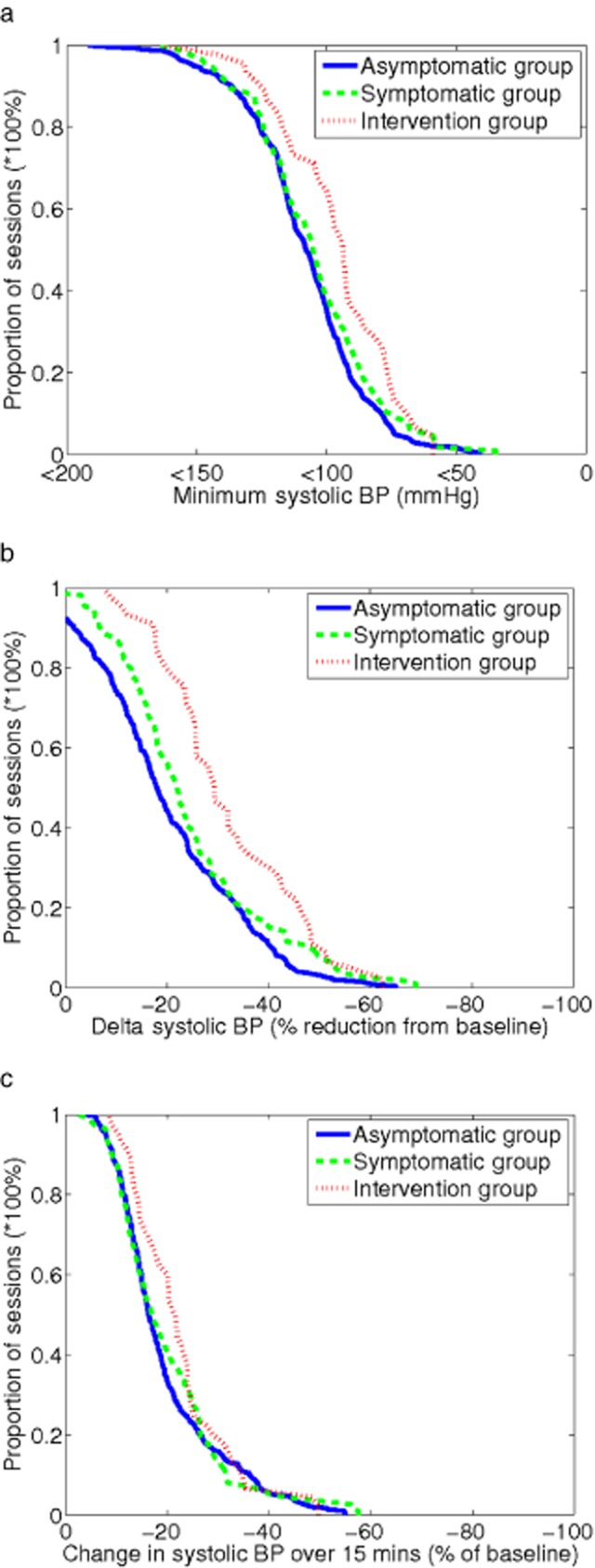
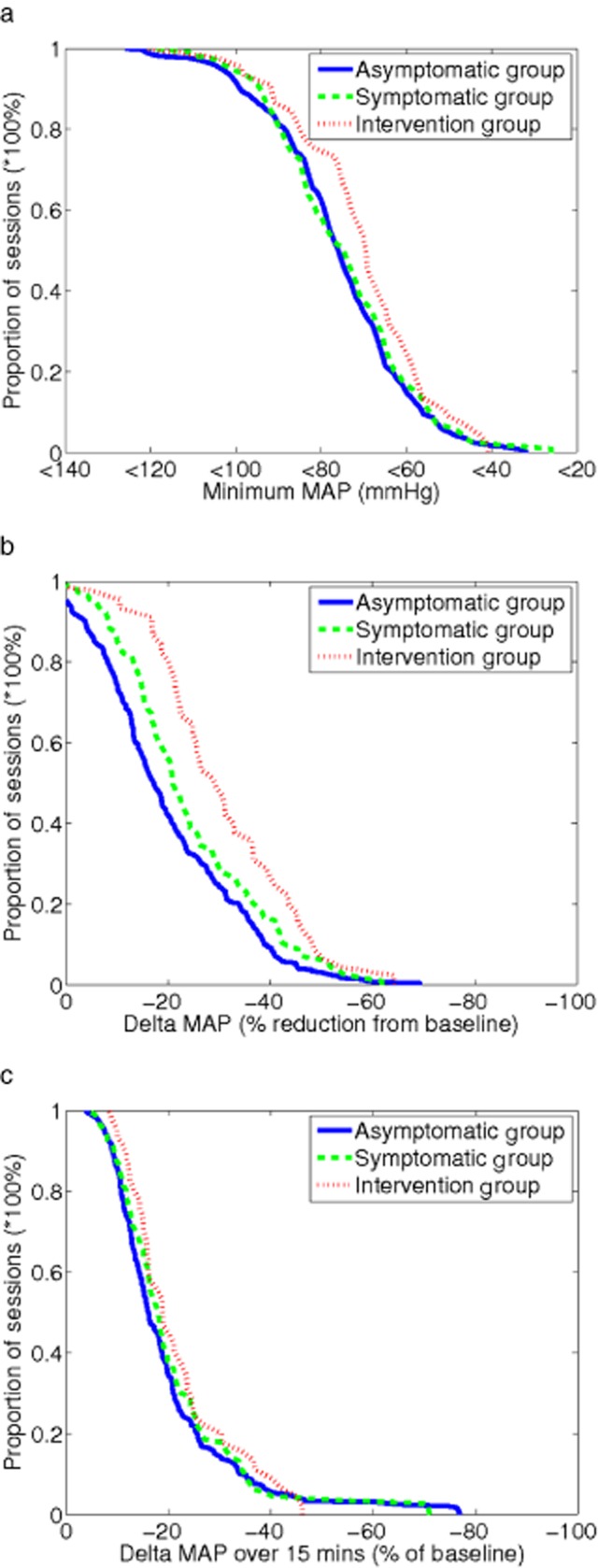
Intradialytic hypotension (IDH) is a detrimental complication of maintenance hemodialysis, but how it is defined and reported varies widely in the literature. European Best Practice Guideline and Kidney Disease Outcomes Quality Initiative guidelines require symptoms and a mitigating intervention to fulfill the diagnosis, but morbidity and mortality outcomes are largely based on blood pressure alone. Furthermore, little is known about the incidence of asymptomatic hypotension, which may be an important cause of hypoperfusion injury and impaired outcome. Seventy-seven patients were studied over 456 dialysis sessions. Blood pressure was measured at 15-minute intervals throughout the session and compared with post-dialysis symptom questionnaire results using mixed modeling to adjust for repeated measures in the same patient. The frequency of asymptomatic hypotension was estimated by logistic regression using a variety of commonly cited blood pressure metrics that describe IDH. In 113 sessions (25%) where symptoms were recorded on the questionnaire, these appear not to have been reported to dialysis staff. When symptoms were reported (293 sessions [64%]), an intervention invariably followed. Dizziness and cramp were strongly associated with changes in systolic blood pressure (SBP), but not diastolic blood pressure. Nausea occurred more frequently in younger patients but was not associated with falls in blood pressure. Thresholds that maximized the probability of an intervention rather than a session remaining asymptomatic were SBP <100 mmHg or a 20% reduction in SBP from baseline. The probability of SBP falling to <100 mmHg in an asymptomatic session was 0.23. Symptoms are frequently not reported by patients who are hypotensive during hemodialysis, which leads to an underestimation of IDH if symptom-based definitions are used. A revised definition of IDH excluding patient-reported symptoms would be in line with literature reporting morbidity and mortality outcomes and include sessions in which potentially detrimental asymptomatic hypotension occurs.
透析中低血压(IDH)是维持性血液透析的一种有害并发症,但在文献中其定义和报告方式差异很大。欧洲最佳实践指南和肾脏病预后质量倡议指南要求出现症状并采取缓解干预措施才能确诊,但发病率和死亡率结果很大程度上仅基于血压。此外,对于无症状性低血压的发生率知之甚少,而无症状性低血压可能是低灌注损伤和预后不良的重要原因。对77例患者进行了456次透析治疗的研究。在整个治疗过程中每隔15分钟测量一次血压,并使用混合模型将其与透析后症状问卷结果进行比较,以调整同一患者的重复测量。使用各种描述IDH的常用血压指标,通过逻辑回归估计无症状性低血压的发生率。在问卷上记录有症状的113次治疗(25%)中,这些症状似乎未报告给透析工作人员。当报告有症状时(293次治疗[64%]),总会采取干预措施。头晕和痉挛与收缩压(SBP)变化密切相关,但与舒张压无关。恶心在年轻患者中更常见,但与血压下降无关。使干预可能性最大化而非治疗过程保持无症状的阈值为SBP<100 mmHg或SBP较基线下降20%。在无症状治疗过程中SBP降至<100 mmHg的概率为0.23。血液透析期间低血压的患者经常不报告症状,如果使用基于症状的定义,这会导致对IDH的低估。修订后的IDH定义排除患者报告的症状,将与报告发病率和死亡率结果的文献一致,并包括发生潜在有害的无症状性低血压的治疗过程。