Department of Medicine, Division of Clinical Pharmacology, Vanderbilt University Medical Center, 2222 Pierce Avenue 561B-PRB, Nashville, TN, 37232-6602, USA.
Veterans Administration Tennessee Valley Healthcare System, Nashville, TN, USA.
BMC Nephrol. 2023 May 11;24(1):134. doi: 10.1186/s12882-023-03192-4.
Intradialytic hypotension (IDH) is a common clinical complication and is associated with increased morbidity and mortality in patients undergoing maintenance hemodialysis (MHD). The pathogenesis of IDH has been attributed to the rapid reduction of plasma volume during hemodialysis and the inadequate compensatory mechanisms in response to hypovolemia, such as the lack of vasoconstriction. This may be due to the increased production of vasodilators, such as bradykinin. In this study we test the hypothesis that bradykinin B receptor blockade prevents intradialytic hypotension.
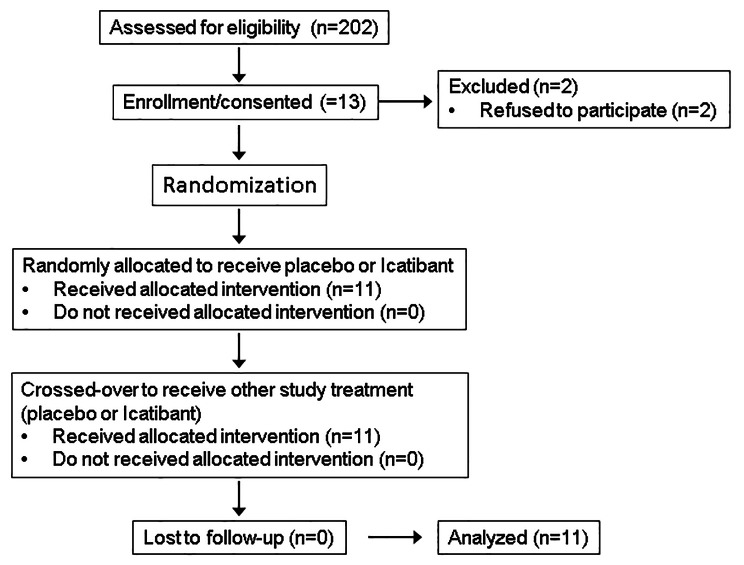
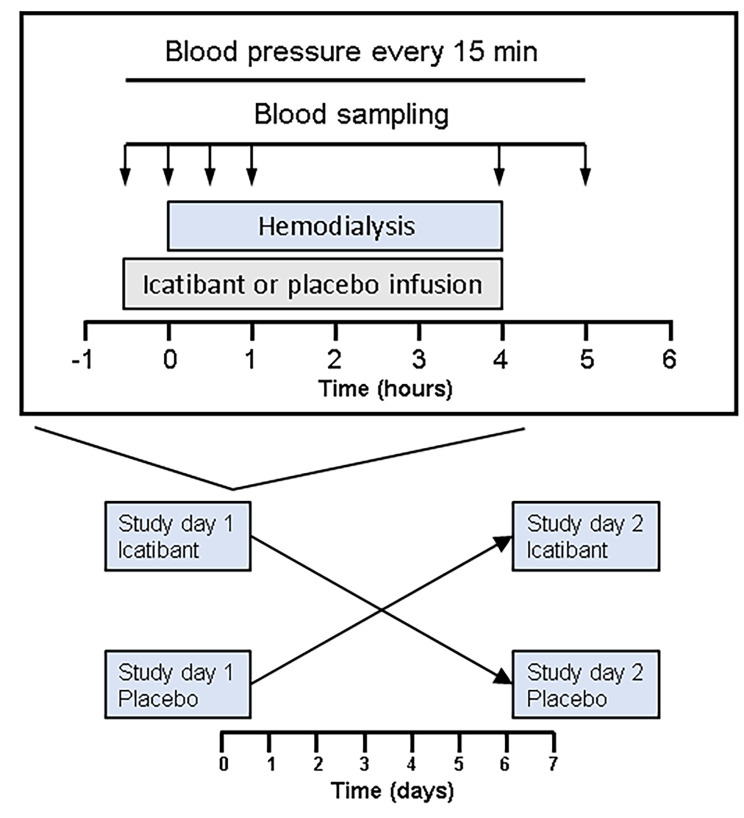
We performed a post-hoc analysis of a double-blind, placebo-controlled, randomized, 2 × 2 crossover clinical trial comparing the continuous infusion of icatibant, a bradykinin B receptor blocker, and placebo during hemodialysis. Icatibant or placebo was infused for 30 min before and during hemodialysis in 11 patients on MHD.
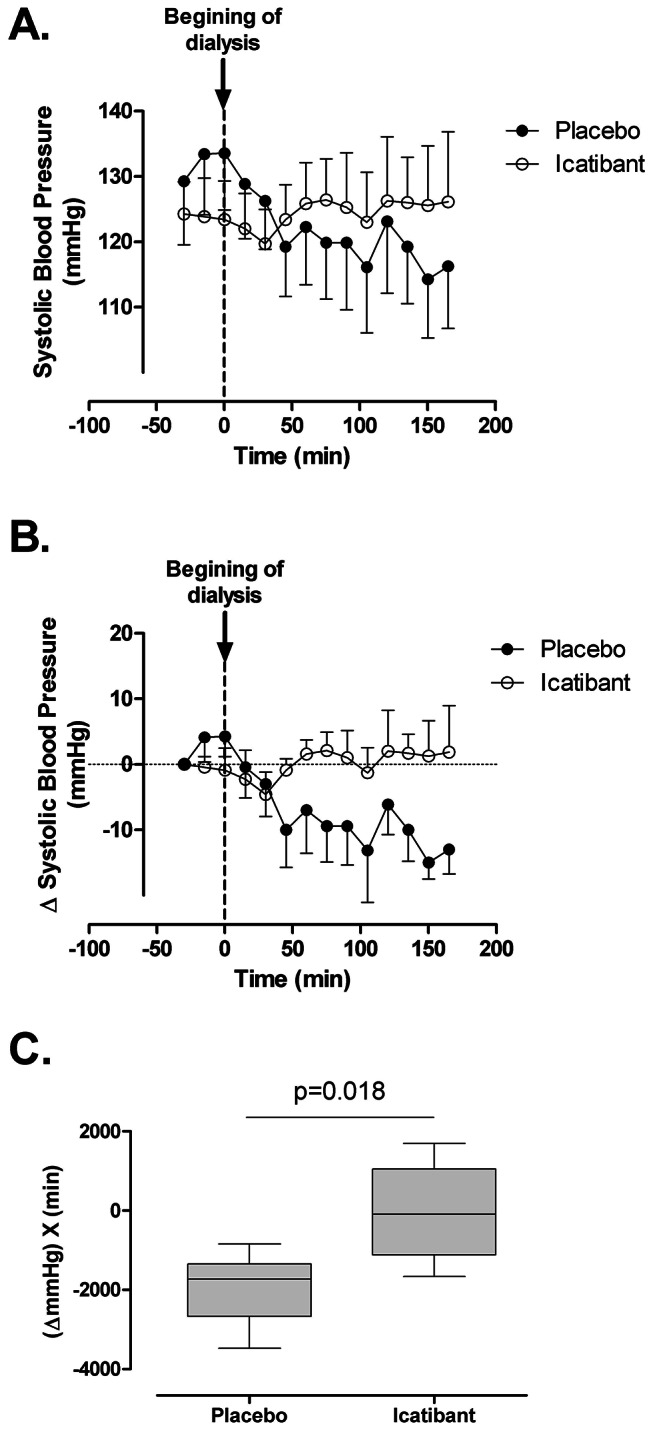
Seven of the patients had IDH, defined as a reduction of systolic blood pressure equal to or greater than 20 mmHg during hemodialysis. Stratified analysis, based on the presence of IDH, revealed that icatibant prevented the decrease in blood pressure compared to placebo in patients with IDH [blood pressure at average nadir (2.5 h after hemodialysis): Placebo,114.3 ± 8.9 vs. icatibant, 125.6 ± 9.1 mmHg, mean ± S.E.M]. Icatibant did not affect blood pressure in the group of patients without IDH.
Bradykinin B2 receptor blocker may prevent the occurrence of IDH. Further studies should evaluate the hemodynamic effects of icatibant during hemodialysis and the symptomatology associated with IDH.
透析中低血压(IDH)是一种常见的临床并发症,与接受维持性血液透析(MHD)的患者的发病率和死亡率增加有关。IDH 的发病机制归因于血液透析过程中血浆容量的快速减少以及对低血容量的补偿机制不足,例如缺乏血管收缩。这可能是由于血管舒张剂如缓激肽的产生增加。在这项研究中,我们检验了缓激肽 B 受体阻断可预防透析中低血压的假设。
我们对一项双盲、安慰剂对照、随机、2×2 交叉临床试验进行了事后分析,该试验比较了在 11 名 MHD 患者中在血液透析期间连续输注依卡替班(一种缓激肽 B 受体阻滞剂)和安慰剂。在血液透析前和血液透析期间,依卡替班或安慰剂输注 30 分钟。
7 名患者发生 IDH,定义为血液透析期间收缩压降低等于或大于 20mmHg。基于 IDH 的存在进行分层分析显示,与安慰剂相比,依卡替班在 IDH 患者中预防了血压下降[血压平均最低值(血液透析后 2.5 小时):安慰剂,114.3±8.9 与依卡替班,125.6±9.1mmHg,平均值±S.E.M]。依卡替班对无 IDH 患者的血压没有影响。
缓激肽 B2 受体阻滞剂可能预防 IDH 的发生。应进一步研究评估依卡替班在血液透析过程中的血液动力学效应以及与 IDH 相关的症状。