Kuipers Johanna, Oosterhuis Jurjen K, Krijnen Wim P, Dasselaar Judith J, Gaillard Carlo A J M, Westerhuis Ralf, Franssen Casper F M
Dialysis Center Groningen, Hanzeplein 1, 9713, GZ, Groningen, The Netherlands.
Department of Internal Medicine, Division of Nephrology, University Medical Center Groningen, University of Groningen, Groningen, The Netherlands.
BMC Nephrol. 2016 Feb 27;17:21. doi: 10.1186/s12882-016-0231-9.
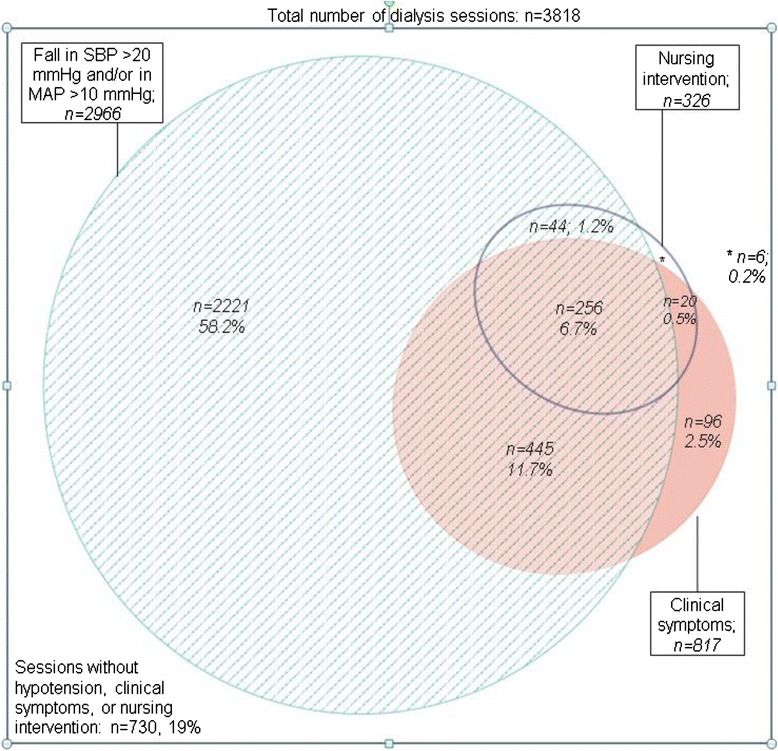
Intradialytic hypotension (IDH) is considered one of the most frequent complications of haemodialysis with an estimated prevalence of 20-50 %, but studies investigating its exact prevalence are scarce. A complicating factor is that several definitions of IDH are used. The goal of this study was, to assess the prevalence of IDH, primarily in reference to the European Best Practice Guideline (EBPG) on haemodynamic instability: A decrease in systolic blood pressure (SBP) ≥20 mmHg or in mean arterial pressure (MAP) ≥10 mmHg associated with a clinical event and the need for nursing intervention.
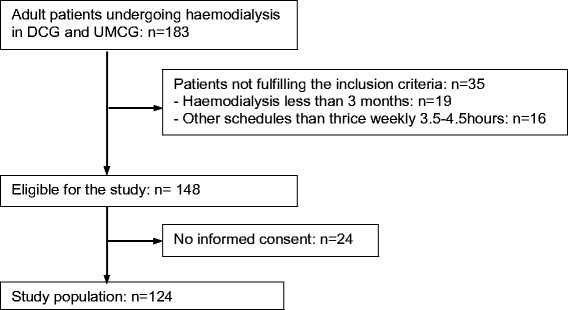
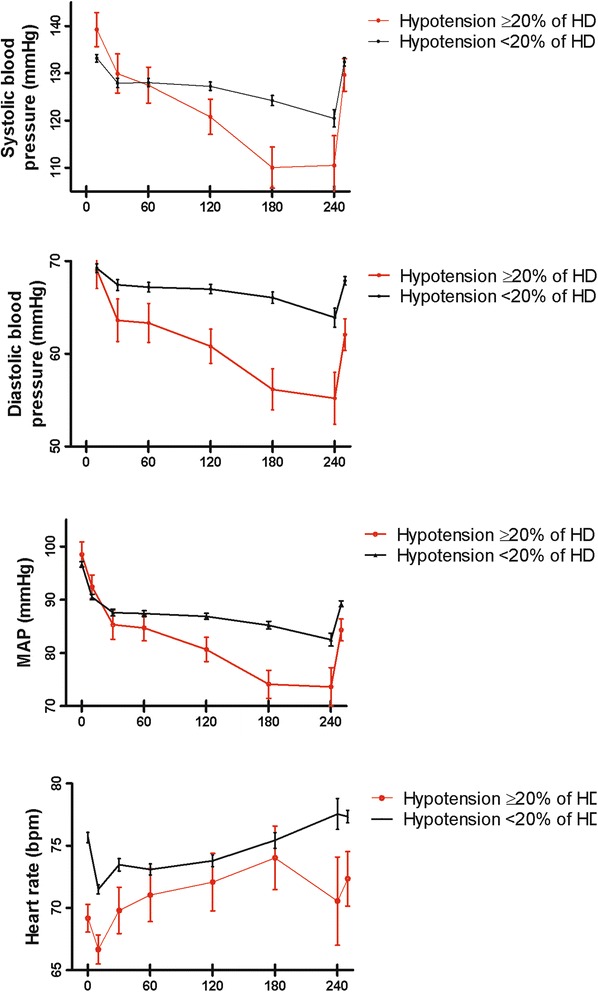
During 3 months we prospectively collected haemodynamic data, clinical events, and nursing interventions of 3818 haemodialysis sessions from 124 prevalent patients who dialyzed with constant ultrafiltration rate and dialysate conductivity. Patients were considered as having frequent IDH if it occurred in >20 % of dialysis sessions.
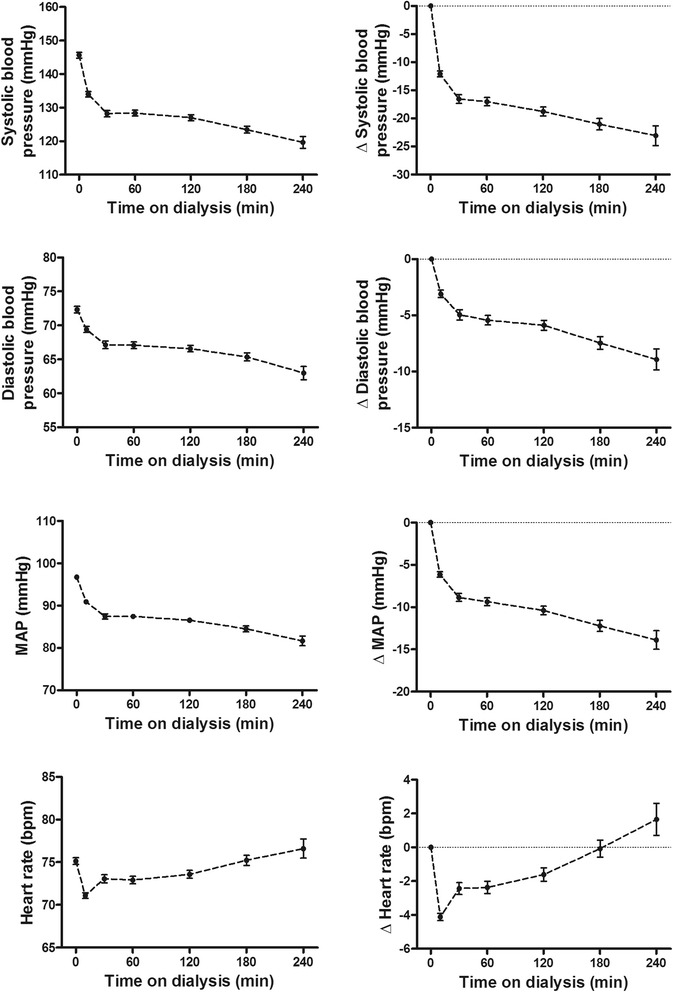
Decreases in SBP ≥20 mmHg or MAP ≥10 mmHg occurred in 77.7 %, clinical symptoms occurred in 21.4 %, and nursing interventions were performed in 8.5 % of dialysis sessions. Dialysis hypotension according to the full EBPG definition occurred in only 6.7 % of dialysis sessions. Eight percent of patients had frequent IDH.
The prevalence of IDH according to the EBPG definition is low. The dominant determinant of the EBPG definition was nursing intervention since this was the component with the lowest prevalence. IDH seems to be less common than indicated in the literature but a proper comparison with previous studies is complicated by the lack of a uniform definition.
透析中低血压(IDH)被认为是血液透析最常见的并发症之一,估计患病率为20%-50%,但调查其确切患病率的研究较少。一个复杂因素是IDH有多种定义。本研究的目的是评估IDH的患病率,主要参考欧洲血液动力学不稳定最佳实践指南(EBPG):收缩压(SBP)下降≥20 mmHg或平均动脉压(MAP)下降≥10 mmHg,伴有临床事件且需要护理干预。
在3个月期间,我们前瞻性收集了124例维持性血液透析患者3818次透析治疗的血液动力学数据、临床事件和护理干预措施,这些患者采用恒定超滤率和透析液电导率进行透析。如果IDH发生在超过20%的透析治疗中,则认为患者有频繁的IDH。
SBP下降≥20 mmHg或MAP下降≥10 mmHg的情况发生在77.7%的透析治疗中,临床症状发生在21.4%的透析治疗中,护理干预在8.5%的透析治疗中进行。根据完整的EBPG定义,透析低血压仅发生在6.7%的透析治疗中。8%的患者有频繁的IDH。
根据EBPG定义,IDH的患病率较低。EBPG定义的主要决定因素是护理干预,因为这是患病率最低的组成部分。IDH似乎比文献中指出的要少见,但由于缺乏统一的定义,与先前研究进行恰当比较较为复杂。