1 John van Geest Cambridge Centre for Brain Repair, Department of Clinical Neuroscience, University of Cambridge, Cambridge, UK.
1 John van Geest Cambridge Centre for Brain Repair, Department of Clinical Neuroscience, University of Cambridge, Cambridge, UK 2 Institute of Psychiatry, Psychology and Neuroscience, King's College London, London, UK.
Brain. 2015 Jul;138(Pt 7):1907-18. doi: 10.1093/brain/awv107. Epub 2015 May 6.
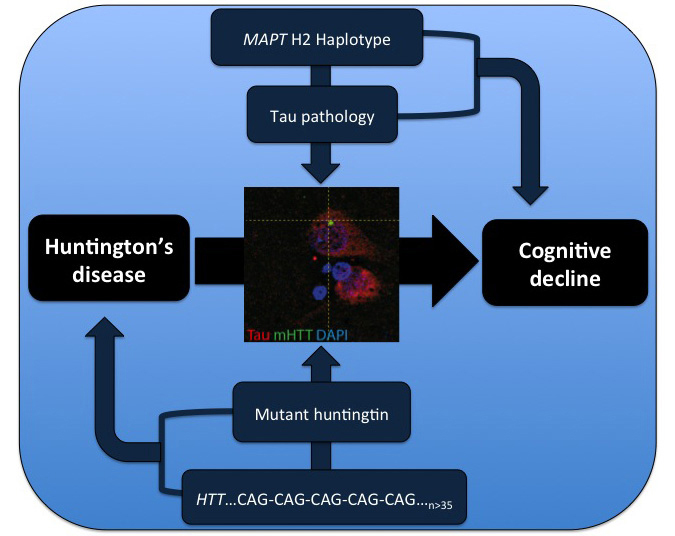
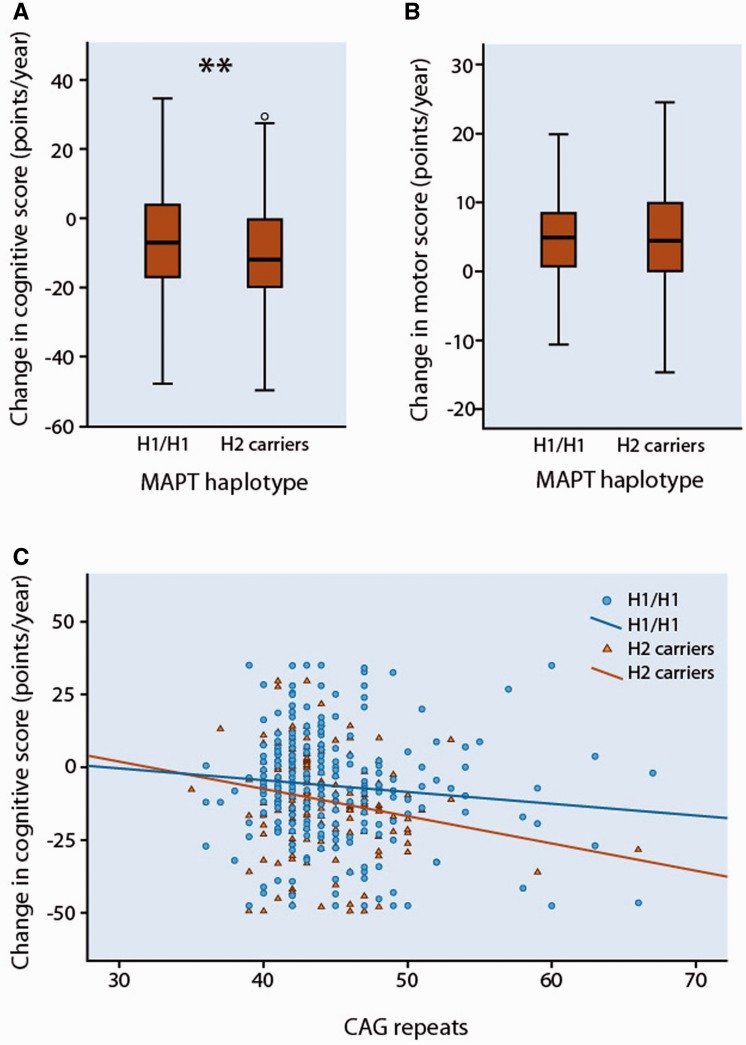
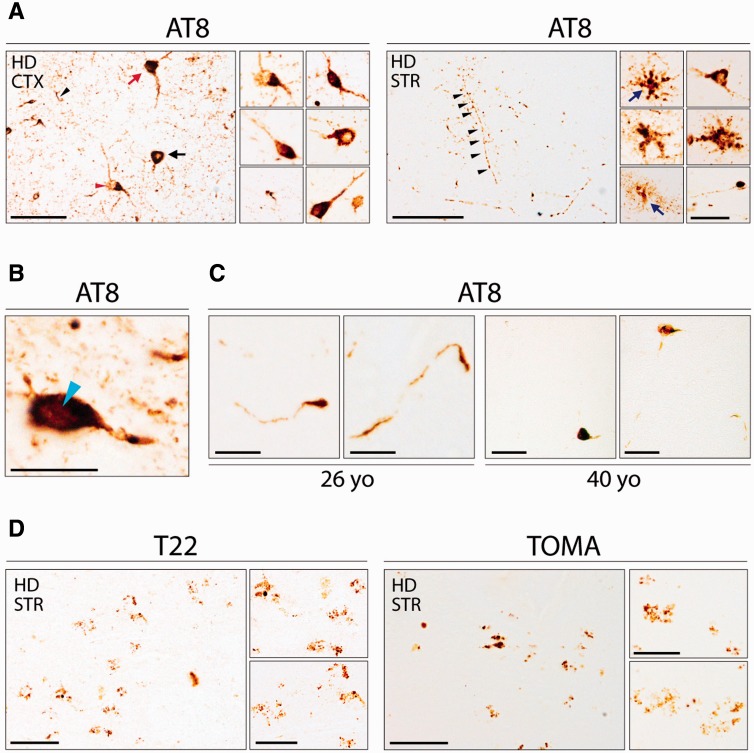
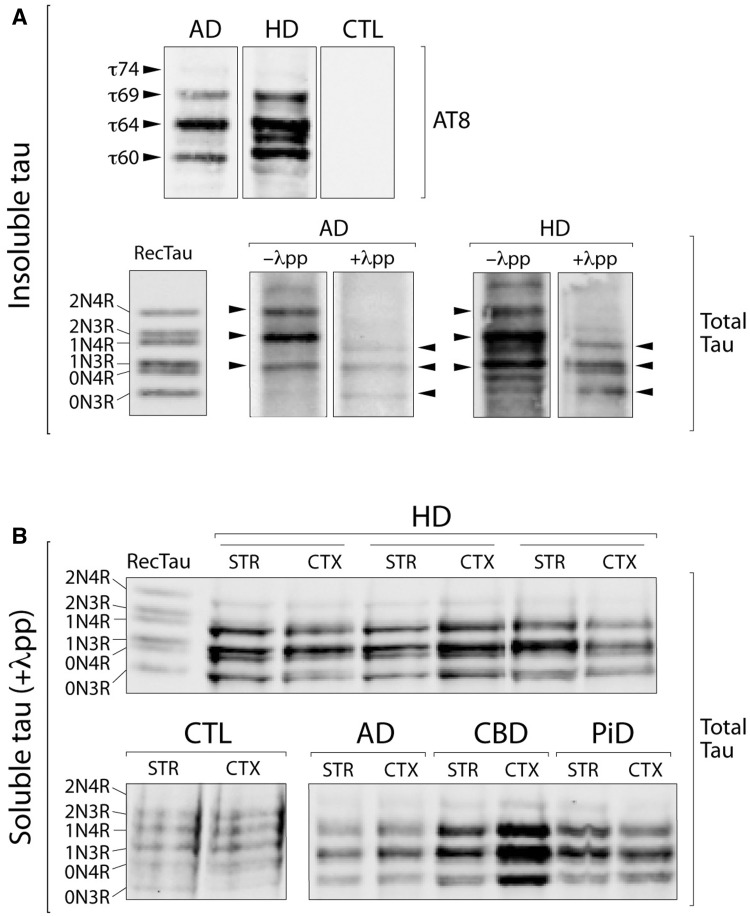
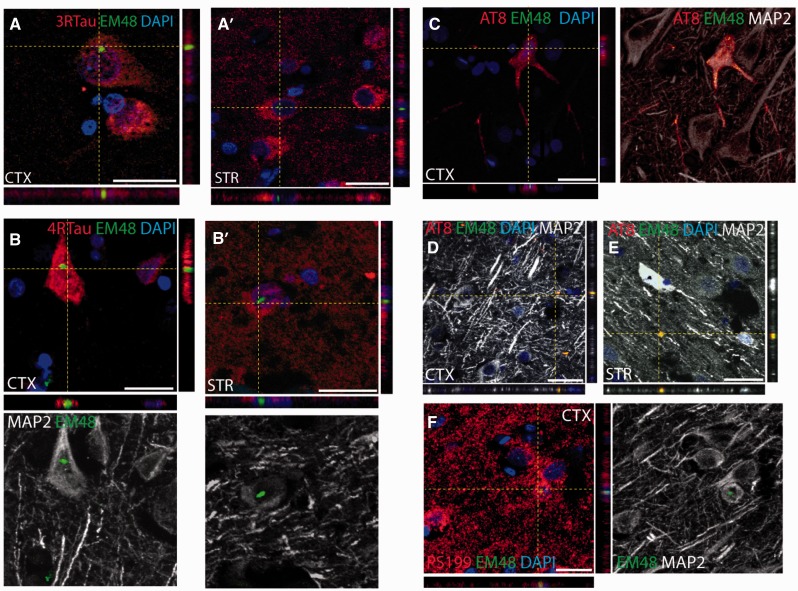
Huntington's disease is a neurodegenerative disorder caused by an abnormal CAG repeat expansion within exon 1 of the huntingtin gene HTT. While several genetic modifiers, distinct from the Huntington's disease locus itself, have been identified as being linked to the clinical expression and progression of Huntington's disease, the exact molecular mechanisms driving its pathogenic cascade and clinical features, especially the dementia, are not fully understood. Recently the microtubule associated protein tau, MAPT, which is associated with several neurodegenerative disorders, has been implicated in Huntington's disease. We explored this association in more detail at the neuropathological, genetic and clinical level. We first investigated tau pathology by looking for the presence of hyperphosphorylated tau aggregates, co-localization of tau with mutant HTT and its oligomeric intermediates in post-mortem brain samples from patients with Huntington's disease (n = 16) compared to cases with a known tauopathy and healthy controls. Next, we undertook a genotype-phenotype analysis of a large cohort of patients with Huntington's disease (n = 960) with a particular focus on cognitive decline. We report not only on the tau pathology in the Huntington's disease brain but also the association between genetic variation in tau gene and the clinical expression and progression of the disease. We found extensive pathological inclusions containing abnormally phosphorylated tau protein that co-localized in some instances with mutant HTT. We confirmed this related to the disease process rather than age, by showing it is also present in two patients with young-onset Huntington's disease (26 and 40 years old at death). In addition we demonstrate that tau oligomers (suggested to be the most likely neurotoxic tau entity) are present in the Huntington's disease brains. Finally we highlight the clinical significance of this pathology by demonstrating that the MAPT haplotypes affect the rate of cognitive decline in a large cohort of patients with Huntington's disease. Our findings therefore highlight a novel important role of tau in the pathogenic process and clinical expression of Huntington's disease, which in turn opens up new therapeutic avenues for this incurable condition.
亨廷顿病是一种神经退行性疾病,由亨廷顿基因 HTT 外显子 1 中的异常 CAG 重复扩展引起。虽然已经确定了几种与亨廷顿病的临床表达和进展相关的遗传修饰物,这些修饰物与亨廷顿病基因座本身不同,但导致其致病级联和临床特征的精确分子机制,特别是痴呆,仍不完全清楚。最近,与几种神经退行性疾病相关的微管相关蛋白 tau(MAPT)已被牵连到亨廷顿病中。我们在神经病理学、遗传学和临床水平上更详细地探讨了这种关联。我们首先通过寻找存在过度磷酸化的 tau 聚集物、tau 与突变 HTT 及其寡聚中间体的共定位,来研究亨廷顿病患者死后大脑样本中的 tau 病理学(n = 16)与已知的 tau 病和健康对照组相比。接下来,我们对一大群亨廷顿病患者(n = 960)进行了基因型-表型分析,特别关注认知能力下降。我们不仅报告了亨廷顿病大脑中的 tau 病理学,还报告了 tau 基因遗传变异与疾病的临床表达和进展之间的关联。我们发现含有异常磷酸化 tau 蛋白的广泛病理包涵体,在某些情况下与突变 HTT 共定位。我们通过证明其也存在于两名发病年龄为 26 岁和 40 岁的早发性亨廷顿病患者中,证实了这与疾病过程有关,而不是与年龄有关。此外,我们还证明 tau 寡聚物(被认为是最有可能的神经毒性 tau 实体)存在于亨廷顿病大脑中。最后,我们通过证明 MAPT 单倍型影响了一大群亨廷顿病患者的认知衰退速度,强调了这种病理学的临床意义。因此,我们的研究结果突出了 tau 在亨廷顿病的致病过程和临床表达中的新的重要作用,这反过来又为这种无法治愈的疾病开辟了新的治疗途径。