Cheon Mookyung, Hall Carol K, Chang Iksoo
Center for Proteome Biophysics, Department of Brain & Cognitive Sciences, Daegu Gyeongbuk Institute of Science and Technology (DGIST), Daegu, Korea.
Department of Chemical and Biomolecular Engineering, North Carolina State University, Raleigh, North Carolina, United States of America.
PLoS Comput Biol. 2015 May 8;11(5):e1004258. doi: 10.1371/journal.pcbi.1004258. eCollection 2015 May.
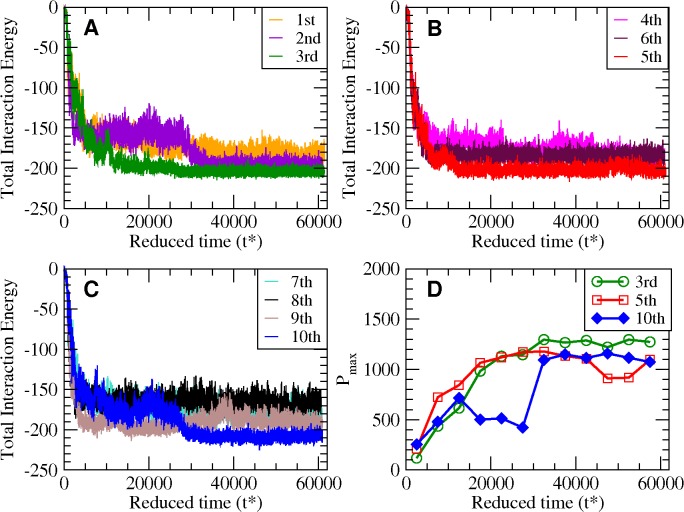
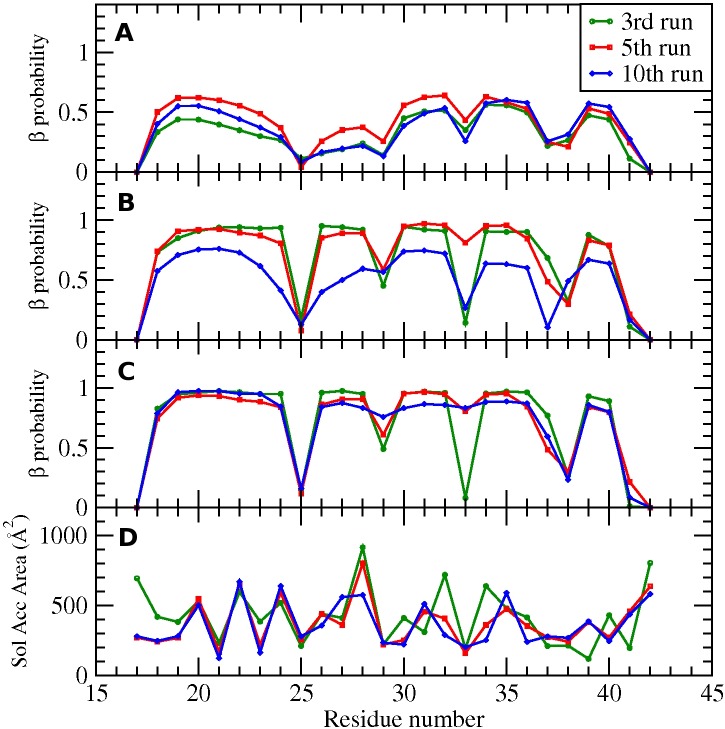
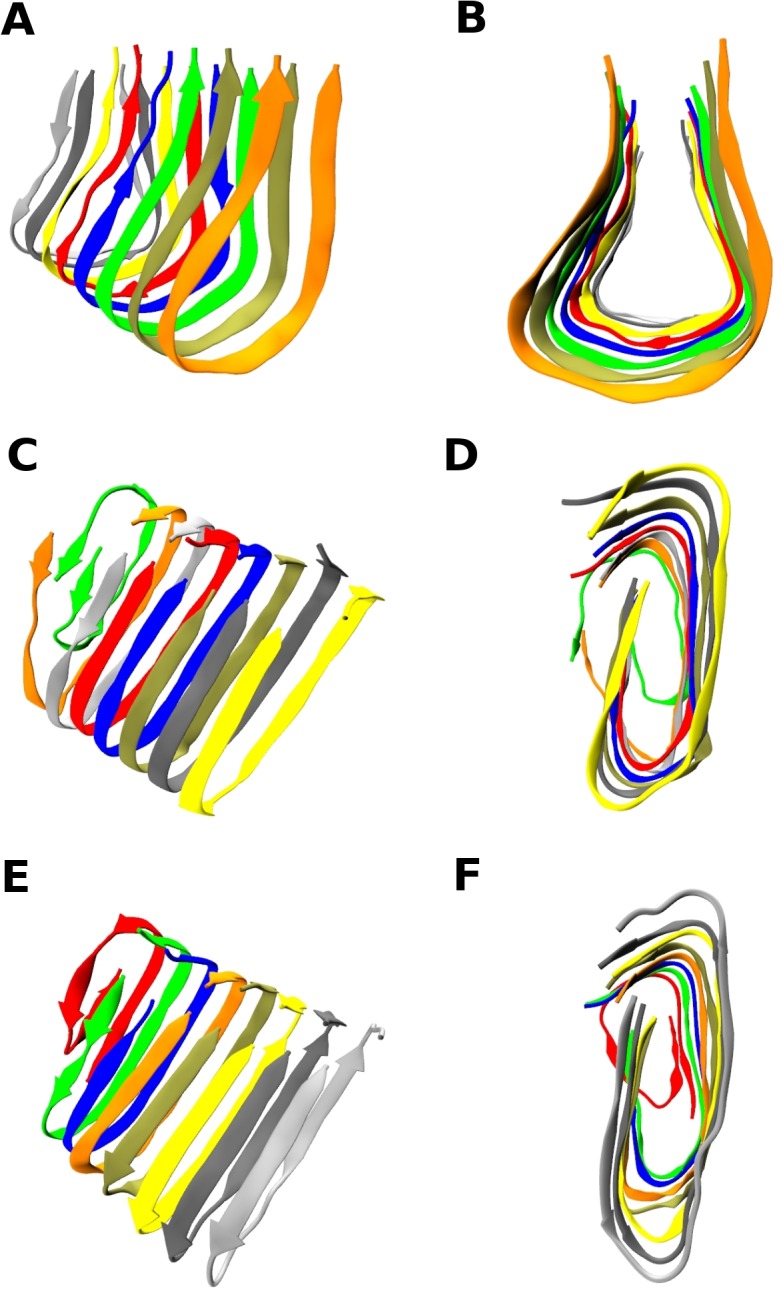
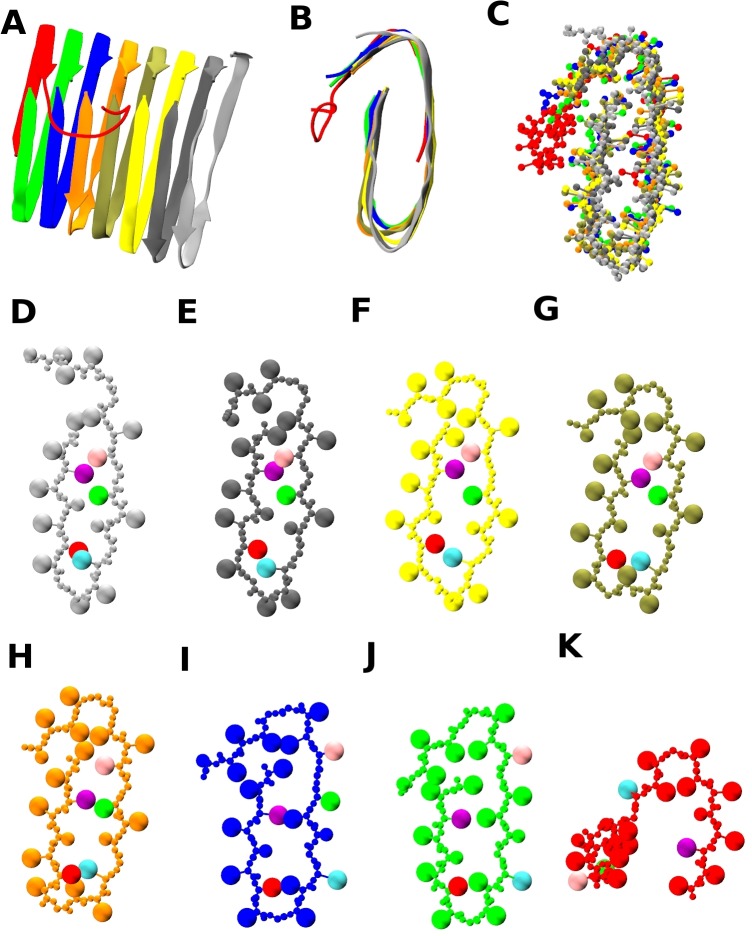
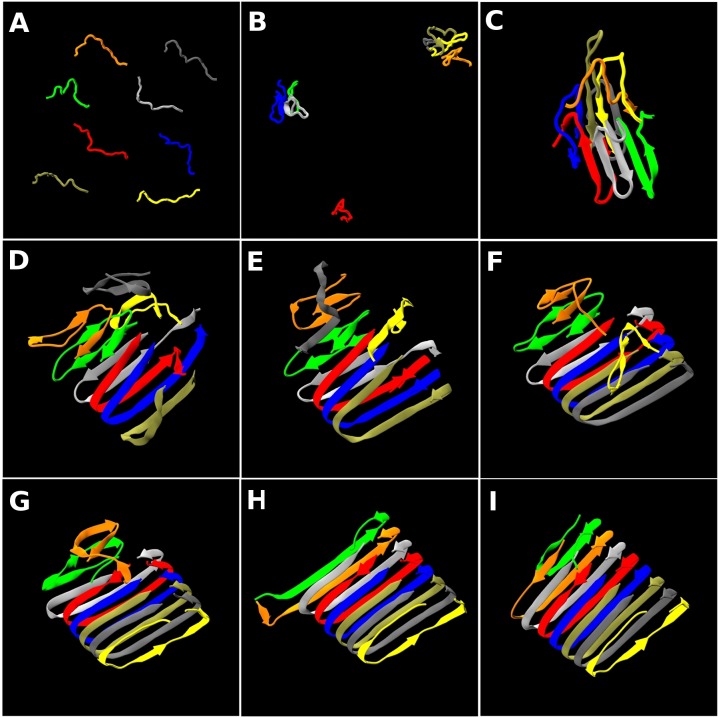
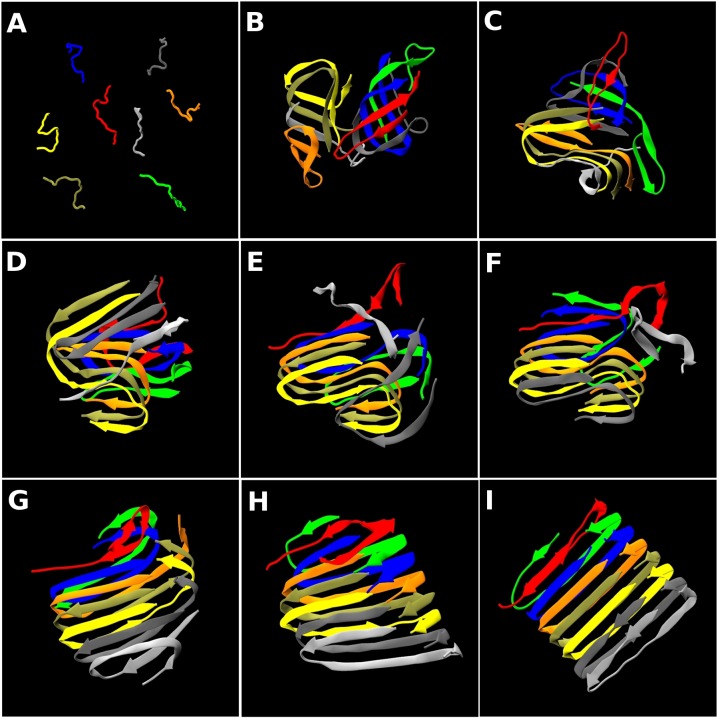
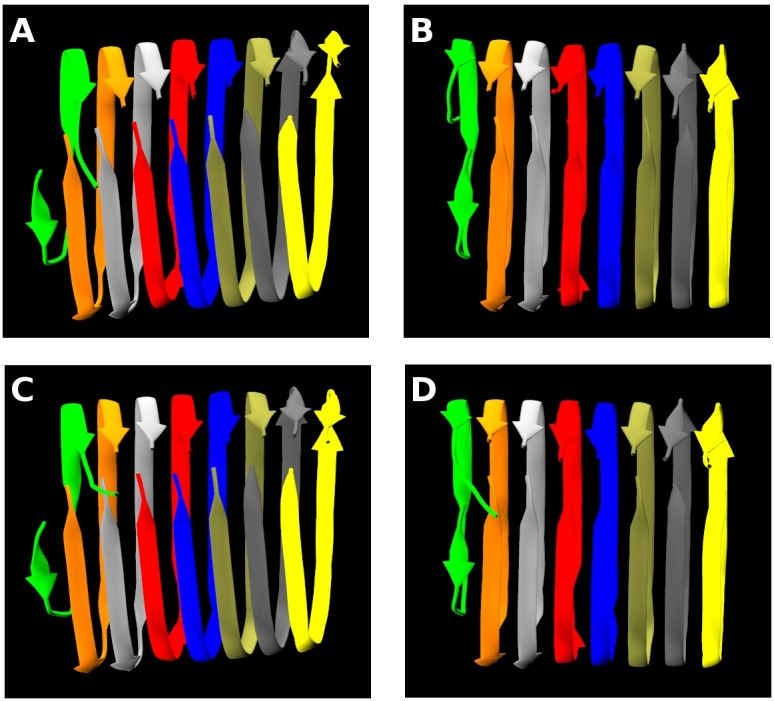
Discovering the mechanisms by which proteins aggregate into fibrils is an essential first step in understanding the molecular level processes underlying neurodegenerative diseases such as Alzheimer's and Parkinson's. The goal of this work is to provide insights into the structural changes that characterize the kinetic pathways by which amyloid-β peptides convert from monomers to oligomers to fibrils. By applying discontinuous molecular dynamics simulations to PRIME20, a force field designed to capture the chemical and physical aspects of protein aggregation, we have been able to trace out the entire aggregation process for a system containing 8 Aβ17-42 peptides. We uncovered two fibrillization mechanisms that govern the structural conversion of Aβ17-42 peptides from disordered oligomers into protofilaments. The first mechanism is monomeric conversion templated by a U-shape oligomeric nucleus into U-shape protofilament. The second mechanism involves a long-lived and on-pathway metastable oligomer with S-shape chains, having a C-terminal turn, en route to the final U-shape protofilament. Oligomers with this C-terminal turn have been regarded in recent experiments as a major contributing element to cell toxicity in Alzheimer's disease. The internal structures of the U-shape protofilaments from our PRIME20/DMD simulation agree well with those from solid state NMR experiments. The approach presented here offers a simple molecular-level framework to describe protein aggregation in general and to visualize the kinetic evolution of a putative toxic element in Alzheimer's disease in particular.
发现蛋白质聚集成纤维的机制是理解诸如阿尔茨海默病和帕金森病等神经退行性疾病背后分子水平过程的关键第一步。这项工作的目标是深入了解淀粉样β肽从单体转变为寡聚体再到纤维的动力学途径所具有的结构变化。通过将不连续分子动力学模拟应用于PRIME20(一种旨在捕捉蛋白质聚集化学和物理方面的力场),我们得以追踪一个包含8个Aβ17 - 42肽的系统的整个聚集过程。我们发现了两种控制Aβ17 - 42肽从无序寡聚体转变为原纤维的纤维化机制。第一种机制是由U形寡聚核模板化的单体转变为U形原纤维。第二种机制涉及一种具有S形链、带有C端转角的长寿命且处于途径中的亚稳寡聚体,其通向最终的U形原纤维。最近的实验认为具有这种C端转角的寡聚体是阿尔茨海默病中细胞毒性的主要促成因素。我们PRIME20/DMD模拟得到的U形原纤维的内部结构与固态核磁共振实验得到的结构非常吻合。这里提出的方法提供了一个简单的分子水平框架,用于总体描述蛋白质聚集,特别是可视化阿尔茨海默病中一种假定有毒元素的动力学演变。