Diesner Susanne C, Schultz Cornelia, Ackaert Chloé, Oostingh Gertie J, Ondracek Anna, Stremnitzer Caroline, Singer Josef, Heiden Denise, Roth-Walter Franziska, Fazekas Judit, Assmann Vera E, Jensen-Jarolim Erika, Stutz Hanno, Duschl Albert, Untersmayr Eva
Department of Pathophysiology and Allergy Research, Center of Pathophysiology, Infectiology and Immunology, Medical University of Vienna, Vienna, Austria; Department of Pediatrics and Adolescent Medicine, Medical University of Vienna, Vienna, Austria.
Department of Pathophysiology and Allergy Research, Center of Pathophysiology, Infectiology and Immunology, Medical University of Vienna, Vienna, Austria.
PLoS One. 2015 May 8;10(5):e0126279. doi: 10.1371/journal.pone.0126279. eCollection 2015.
We revealed in previous studies that nitration of food proteins reduces the risk of de novo sensitization in a murine food allergy model. In contrast, in situations with preformed specific IgE antibodies, in vitro experiments suggested an increased capacity of effector cell activation by nitrated food proteins.
The aim of this study was to investigate the influence of protein nitration on the effector phase of food allergy.
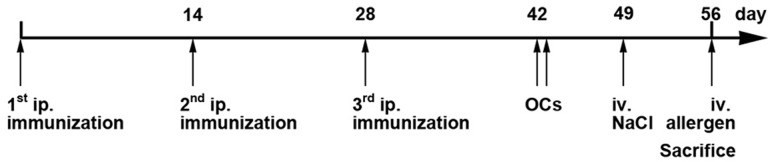
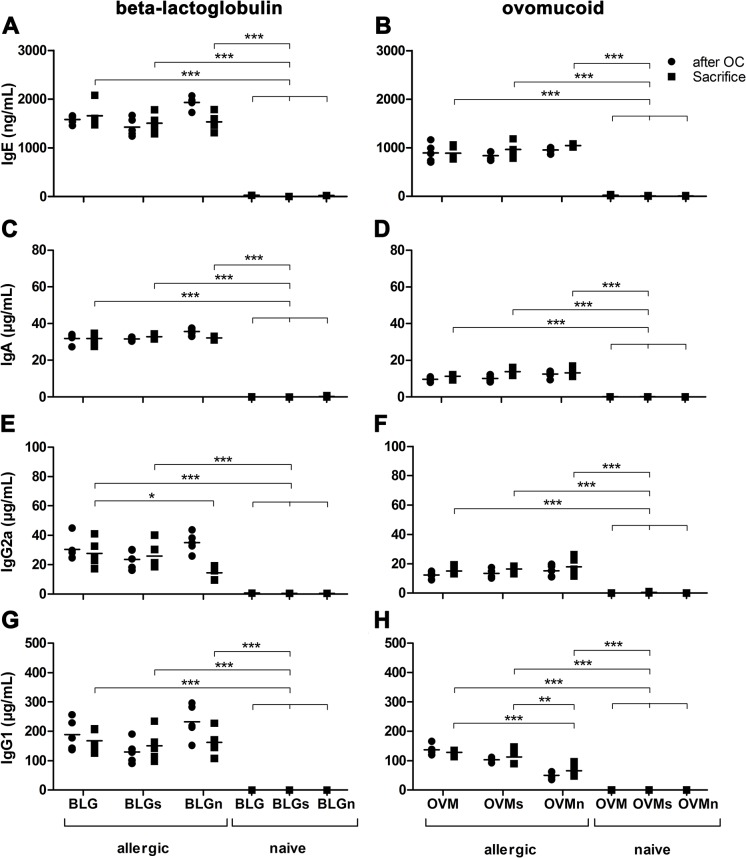
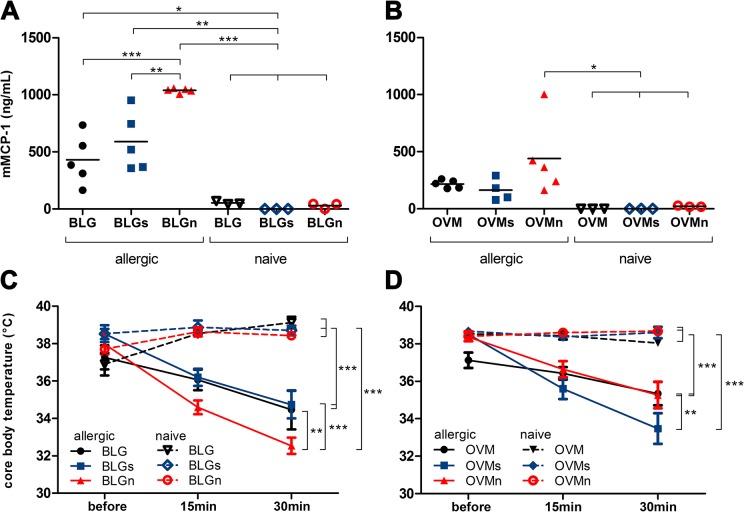
BALB/c mice were immunized intraperitoneally (i.p.) with the milk allergen β-lactoglobulin (BLG) or the egg allergen ovomucoid (OVM), followed by intragastric (i.g.) gavages to induce a strong local inflammatory response and allergen-specific antibodies. Subsequently, naïve and allergic mice were intravenously (i.v.) challenged with untreated, sham-nitrated or nitrated BLG or OVM. Anaphylaxis was monitored by measuring core body temperature and determination of mouse mast cell protease-1 (mMCP-1) levels in blood.
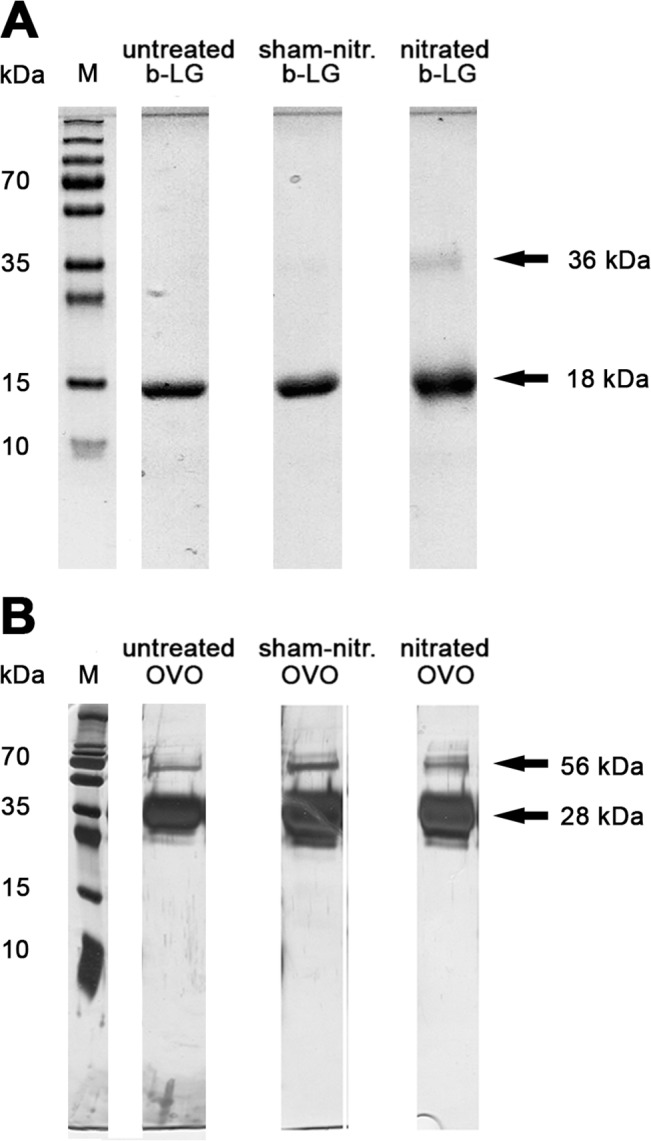
A significant drop of body temperature accompanied with significantly elevated concentrations of the anaphylaxis marker mMCP-1 were only observed in BLG allergic animals challenged with nitrated BLG and not in OVM allergic mice challenged with nitrated OVM. SDS-PAGE and circular dichroism analysis of the differentially modified allergens revealed an effect of nitration on the secondary protein structure exclusively for BLG together with enhanced protein aggregation.
Our data suggest that nitration affects differently the food allergens BLG and OVM. In the case of BLG, structural changes favored dimerization possibly explaining the increased anaphylactic reactivity in BLG allergic animals.
我们在先前的研究中发现,食物蛋白的硝化作用可降低小鼠食物过敏模型中从头致敏的风险。相比之下,在预先形成特异性IgE抗体的情况下,体外实验表明硝化食物蛋白激活效应细胞的能力增强。
本研究旨在探讨蛋白质硝化对食物过敏效应阶段的影响。
用牛奶过敏原β-乳球蛋白(BLG)或鸡蛋过敏原卵类黏蛋白(OVM)对BALB/c小鼠进行腹腔注射免疫,随后进行灌胃以诱导强烈的局部炎症反应和过敏原特异性抗体。随后,用未处理的、假硝化或硝化的BLG或OVM对未致敏和过敏的小鼠进行静脉注射攻击。通过测量核心体温和测定血液中的小鼠肥大细胞蛋白酶-1(mMCP-1)水平来监测过敏反应。
仅在接受硝化BLG攻击的BLG过敏动物中观察到体温显著下降,同时过敏反应标志物mMCP-1的浓度显著升高,而在接受硝化OVM攻击的OVM过敏小鼠中未观察到。对差异修饰的过敏原进行SDS-PAGE和圆二色性分析发现,硝化作用仅对BLG的二级蛋白质结构有影响,同时增强了蛋白质聚集。
我们的数据表明,硝化作用对食物过敏原BLG和OVM的影响不同。就BLG而言,结构变化有利于二聚化,这可能解释了BLG过敏动物中过敏反应性增加的原因。