Dudev Todor, Musset Boris, Morgan Deri, Cherny Vladimir V, Smith Susan M E, Mazmanian Karine, DeCoursey Thomas E, Lim Carmay
1] Institute of Biomedical Sciences, Academia Sinica, Taipei 115, Taiwan [2] Faculty of Chemistry and Pharmacy, Sofia University, Sofia 1164, Bulgaria.
Institute of Complex Systems (ICS-4 Zelluläre Biophysik), Forschungszentrum Jülich, Jülich, NRW, Germany.
Sci Rep. 2015 May 8;5:10320. doi: 10.1038/srep10320.
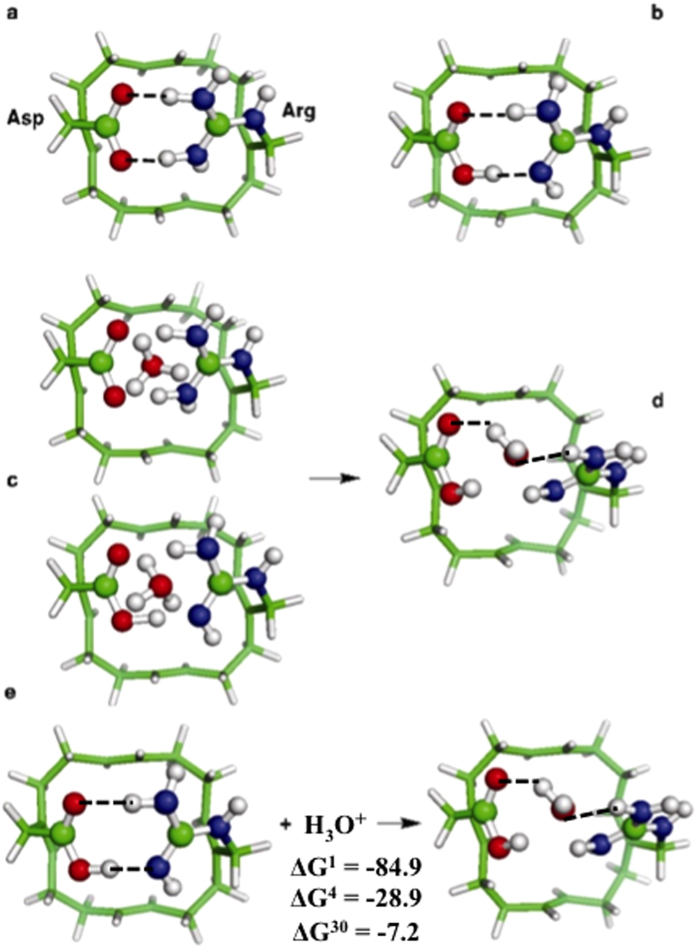
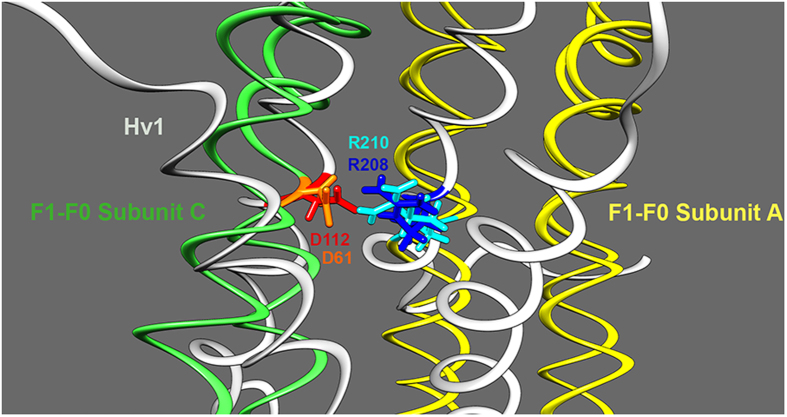
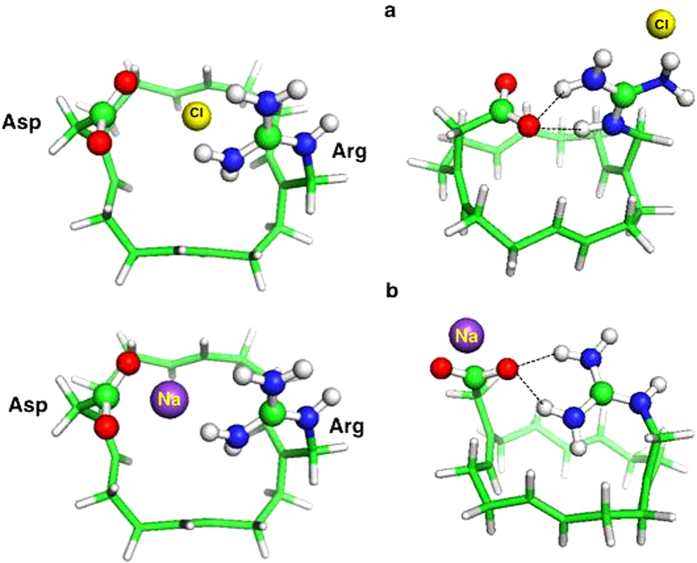
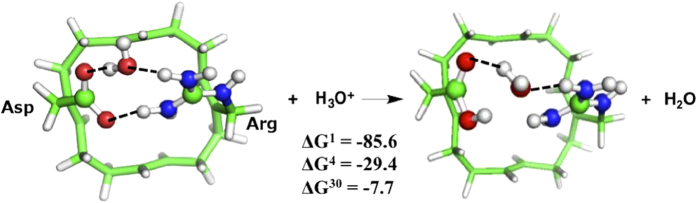
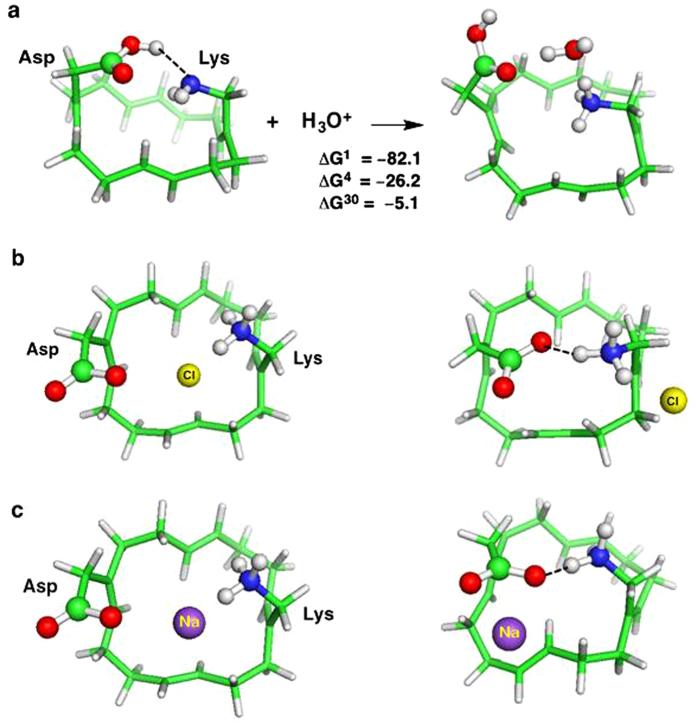
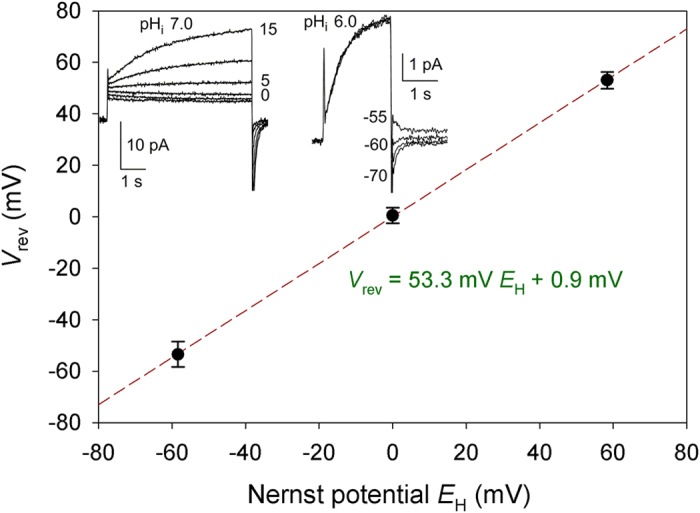
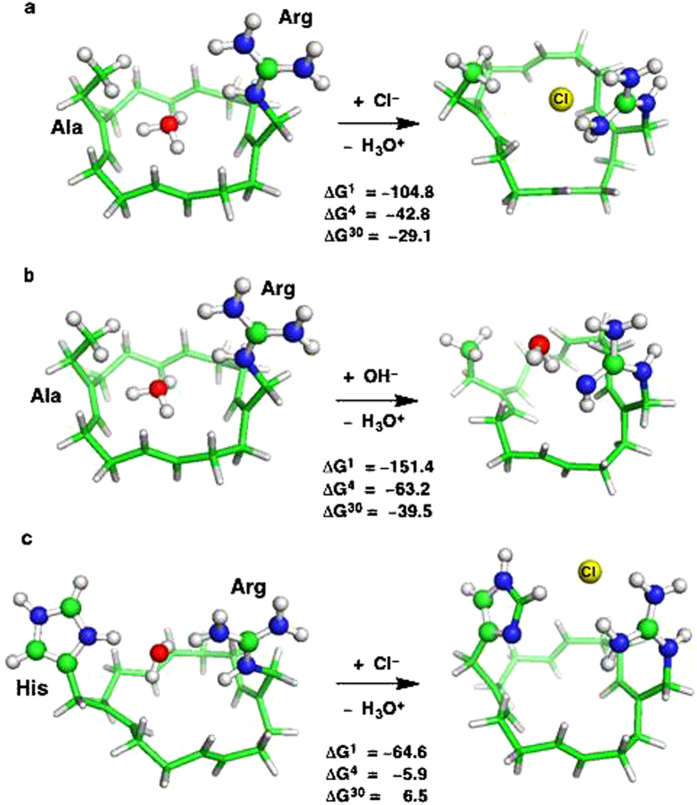
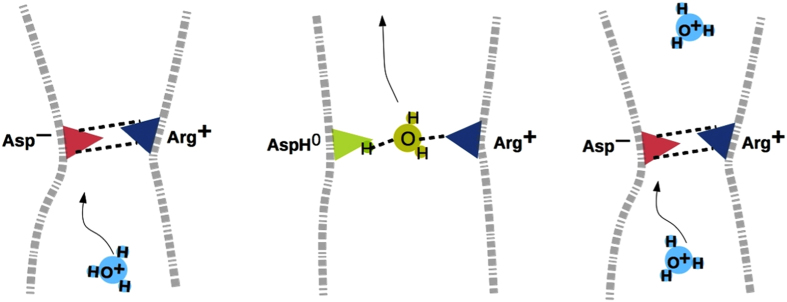
Voltage-gated proton channels, HV1, trigger bioluminescence in dinoflagellates, enable calcification in coccolithophores, and play multifarious roles in human health. Because the proton concentration is minuscule, exquisite selectivity for protons over other ions is critical to HV1 function. The selectivity of the open HV1 channel requires an aspartate near an arginine in the selectivity filter (SF), a narrow region that dictates proton selectivity, but the mechanism of proton selectivity is unknown. Here we use a reduced quantum model to elucidate how the Asp-Arg SF selects protons but excludes other ions. Attached to a ring scaffold, the Asp and Arg side chains formed bidentate hydrogen bonds that occlude the pore. Introducing H3O(+) protonated the SF, breaking the Asp-Arg linkage and opening the conduction pathway, whereas Na(+) or Cl(-) was trapped by the SF residue of opposite charge, leaving the linkage intact, thus preventing permeation. An Asp-Lys SF behaved like the Asp-Arg one and was experimentally verified to be proton-selective, as predicted. Hence, interacting acidic and basic residues form favorable AspH(0)-H2O(0)-Arg(+) interactions with hydronium but unfavorable Asp(-)-X(-)/X(+)-Arg(+) interactions with anions/cations. This proposed mechanism may apply to other proton-selective molecules engaged in bioenergetics, homeostasis, and signaling.
电压门控质子通道HV1可引发甲藻的生物发光,促进颗石藻的钙化,并在人类健康中发挥多种作用。由于质子浓度极低,因此相对于其他离子而言,对质子具有极高的选择性对于HV1的功能至关重要。开放的HV1通道的选择性需要在选择性过滤器(SF)中的精氨酸附近有一个天冬氨酸,该狭窄区域决定了质子的选择性,但质子选择性的机制尚不清楚。在这里,我们使用简化的量子模型来阐明天冬氨酸-精氨酸选择性过滤器如何选择质子但排除其他离子。附着在环状支架上,天冬氨酸和精氨酸侧链形成双齿氢键,从而堵塞了通道。引入水合氢离子会使选择性过滤器质子化,破坏天冬氨酸-精氨酸连接并打开传导通道,而钠离子或氯离子则被带相反电荷的选择性过滤器残基捕获,使连接保持完整,从而阻止渗透。天冬氨酸-赖氨酸选择性过滤器的行为与天冬氨酸-精氨酸选择性过滤器相似,并且如预测的那样,经实验验证具有质子选择性。因此,相互作用的酸性和碱性残基与水合氢离子形成有利的天冬氨酸氢(0)-水(0)-精氨酸(+)相互作用,但与阴离子/阳离子形成不利的天冬氨酸(-)-X(-)/X(+)-精氨酸(+)相互作用。这种提出的机制可能适用于参与生物能量学、体内平衡和信号传导的其他质子选择性分子。