Zhao Wei, Bai Jia-Ke, Li Hong-Mei, Chen Tao, Tang Ya-Jie
Key Laboratory of Fermentation Engineering (Ministry of Education), Hubei Provincial Cooperative Innovation Center of Industrial Fermentation, Hubei University of Technology, Wuhan 430068 China.
Key Laboratory of Systems Bioengineering (Ministry of Education), School of Chemical Engineering and Technology, Tianjin University, Tianjin 300072 China.
Sci Rep. 2015 May 11;5:10172. doi: 10.1038/srep10172.
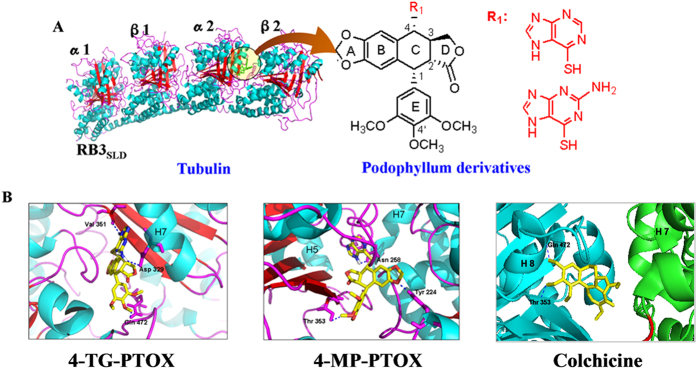
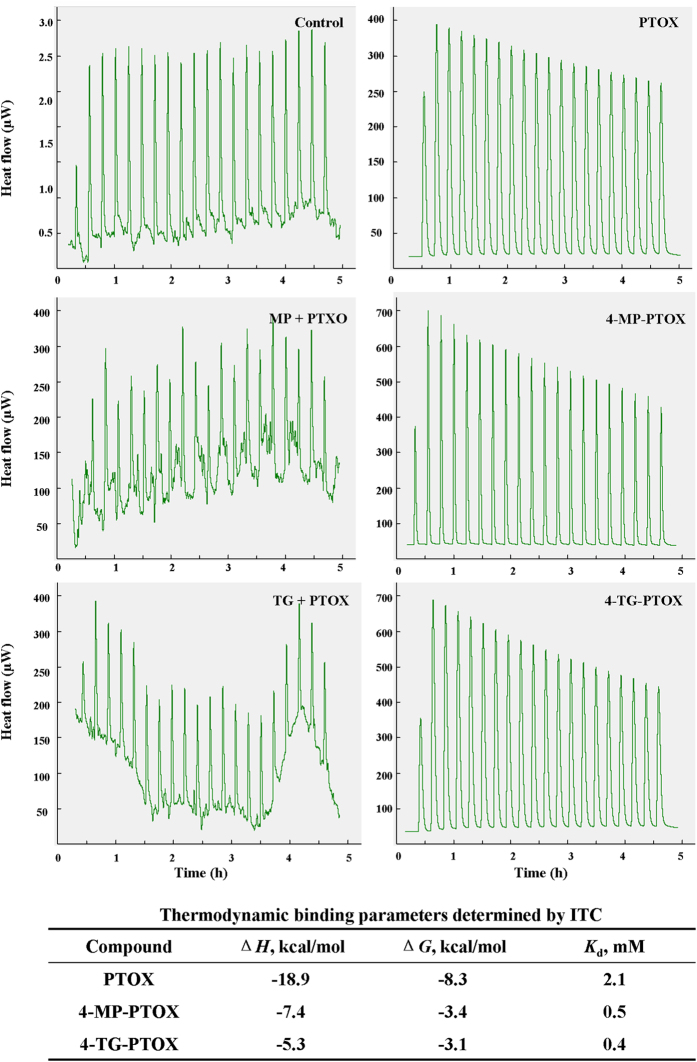
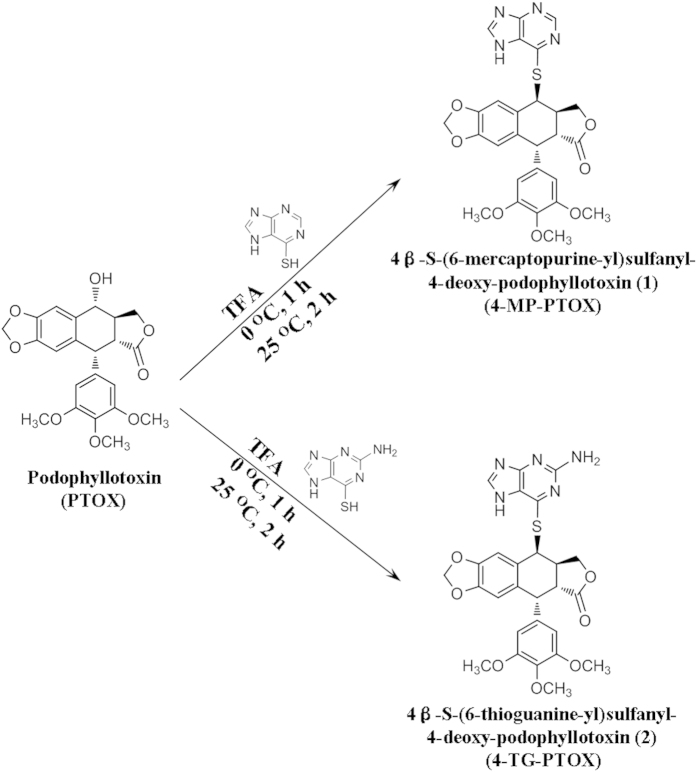
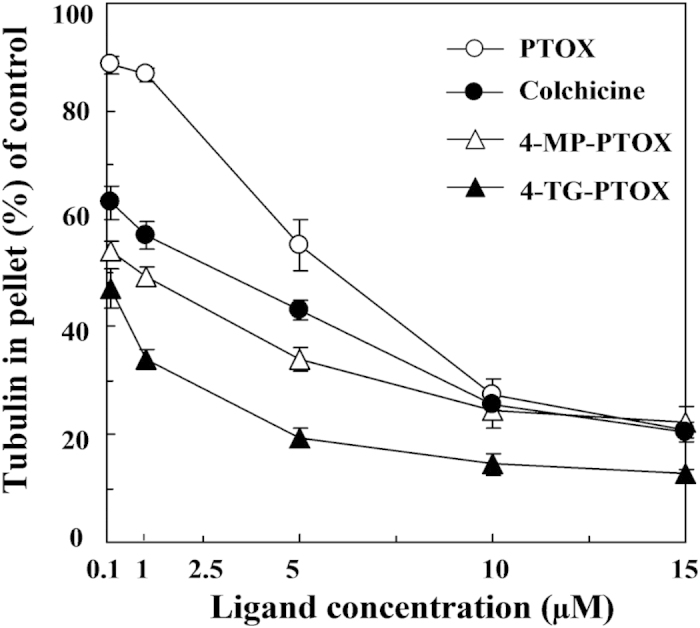
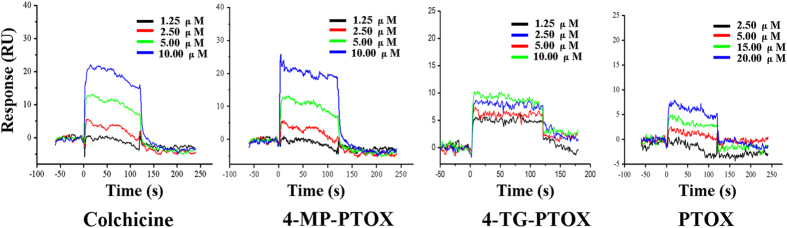
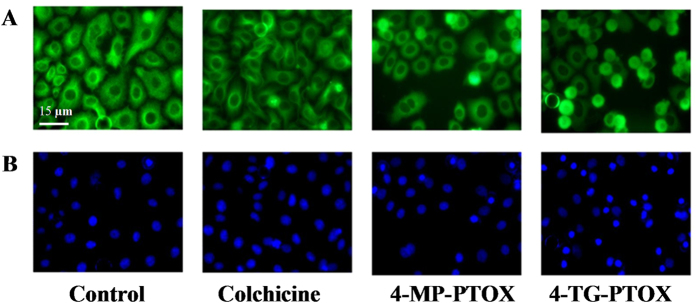
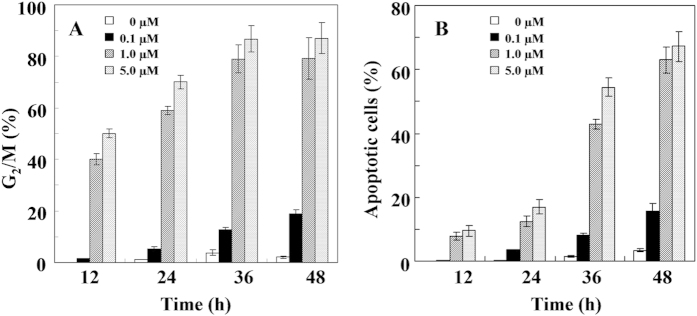
The well-characterized anti-tubulin agent, podophyllotoxin (PTOX), with the 4'-position methoxyl group, targets the colchicines domain located between α- and β-tubulin. Two guanosine triphosphate (GTP) analogs of the tubulin-binding region were synthesized from PTOX, where a hydroxyl group was substituted with a carbon-sulfur bond. These compounds, 4-MP-PTOX and 4-TG-PTOX, reduce the dosage and greatly improve the therapeutic effect for microtubule damage in cancer cells. Here we characterize the anti-tubulin properties of these compounds. We found the stronger inhibition of tubulin polymerization (the concentration of 50% growth inhibition, GI50<2 μM) for compounds 4-TG-PTOX and 4-MP-PTOX, which were better than that of PTOX or colchicine. The cytotoxicity of two designed compounds on tumor cells was also significantly enhanced by comparing to those of PTOX and colchicines. The ΔH value of 4-MP-PTOX and 4-TG-PTOX binding to tubulin by isothermal titration calorimetry (ITC) was found to be -7.4 and -5.3 kcal·mol(-1), respectively. The wide range of enthalpy values across the series may reflect entropy/enthalpy compensation effects. Fragments 6-mercaptopurine (MP) and 6-thioguanine (TG) likely enhance the affinity of 4-MP-PTOX and 4-TG-PTOX binding to tubulin by increasing the number of binding sites. The correctness of rational drug design was strictly demonstrated by a bioactivity test.
特征明确的抗微管蛋白剂鬼臼毒素(PTOX),其4'-位带有甲氧基,作用于α-和β-微管蛋白之间的秋水仙碱结构域。从PTOX合成了微管蛋白结合区域的两种鸟苷三磷酸(GTP)类似物,其中羟基被碳硫键取代。这些化合物,4-MP-PTOX和4-TG-PTOX,降低了剂量并极大地提高了对癌细胞微管损伤的治疗效果。在此我们描述这些化合物的抗微管蛋白特性。我们发现化合物4-TG-PTOX和4-MP-PTOX对微管蛋白聚合的抑制作用更强(50%生长抑制浓度,GI50<2 μM),优于PTOX或秋水仙碱。与PTOX和秋水仙碱相比,两种设计化合物对肿瘤细胞的细胞毒性也显著增强。通过等温滴定量热法(ITC)发现4-MP-PTOX和4-TG-PTOX与微管蛋白结合的ΔH值分别为-7.4和-5.3 kcal·mol⁻¹。该系列中广泛的焓值范围可能反映了熵/焓补偿效应。片段6-巯基嘌呤(MP)和6-硫鸟嘌呤(TG)可能通过增加结合位点数量来增强4-MP-PTOX和4-TG-PTOX与微管蛋白结合的亲和力。生物活性测试严格证明了合理药物设计的正确性。