Schiffer Mario, Teng Beina, Gu Changkyu, Shchedrina Valentina A, Kasaikina Marina, Pham Vincent A, Hanke Nils, Rong Song, Gueler Faikah, Schroder Patricia, Tossidou Irini, Park Joon-Keun, Staggs Lynne, Haller Hermann, Erschow Sergej, Hilfiker-Kleiner Denise, Wei Changli, Chen Chuang, Tardi Nicholas, Hakroush Samy, Selig Martin K, Vasilyev Aleksandr, Merscher Sandra, Reiser Jochen, Sever Sanja
1] Department of Nephrology, Hannover Medical School, Hannover, Germany. [2] Mount Desert Island Biological Laboratory, Salsbury Cove, Maine, USA.
Department of Nephrology, Hannover Medical School, Hannover, Germany.
Nat Med. 2015 Jun;21(6):601-9. doi: 10.1038/nm.3843. Epub 2015 May 11.
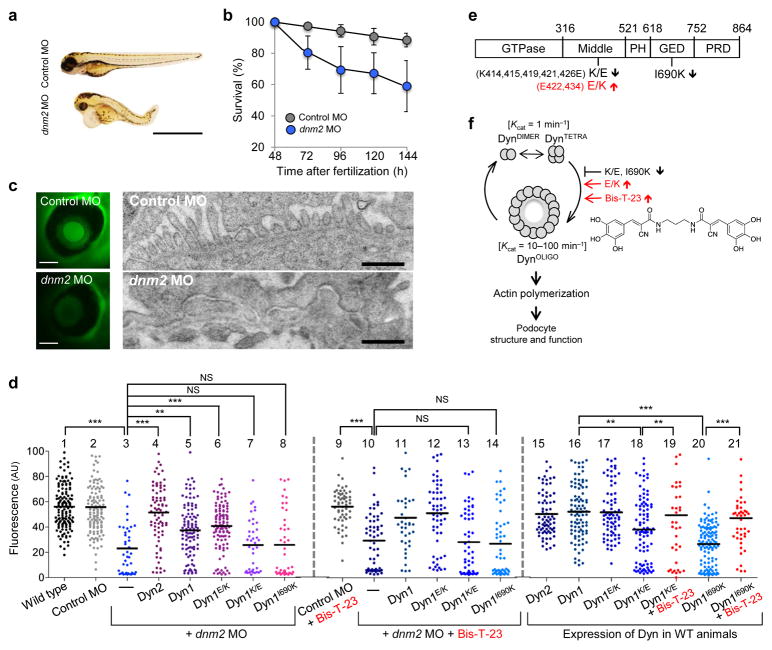
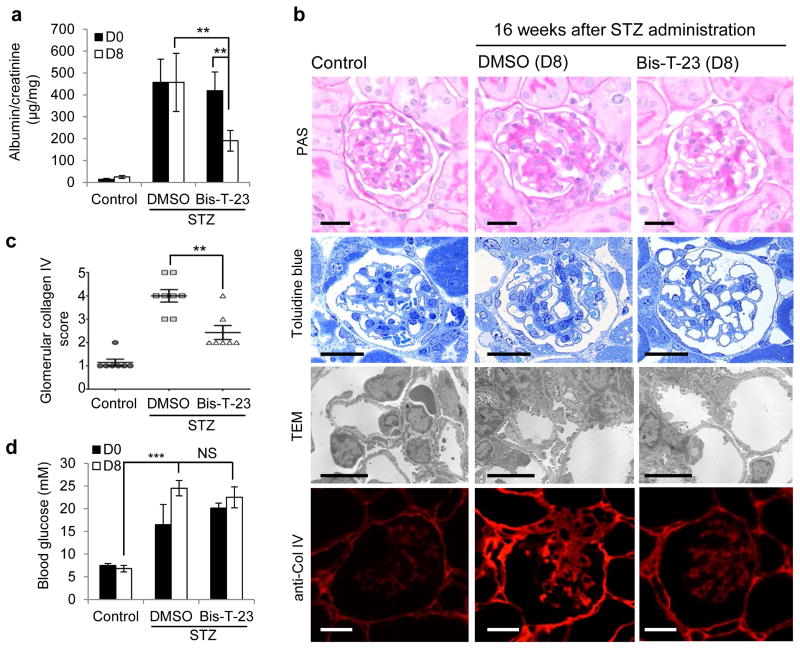
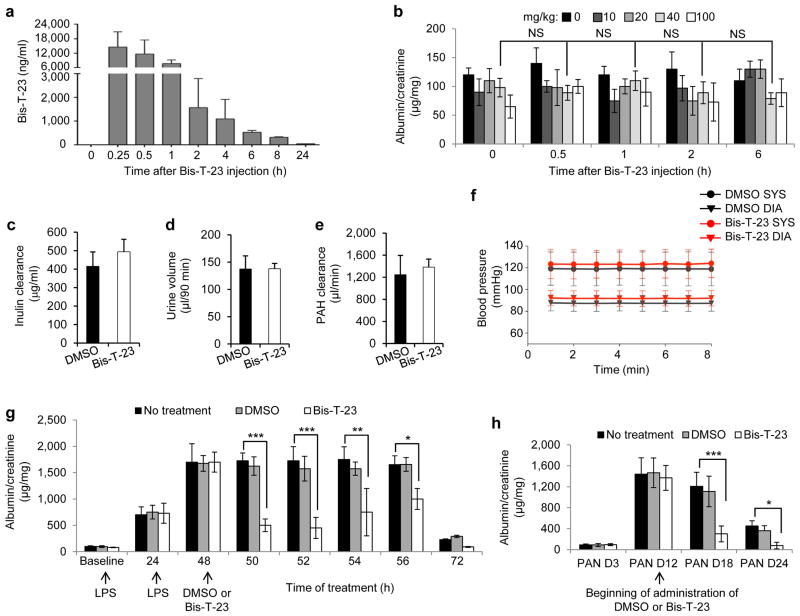
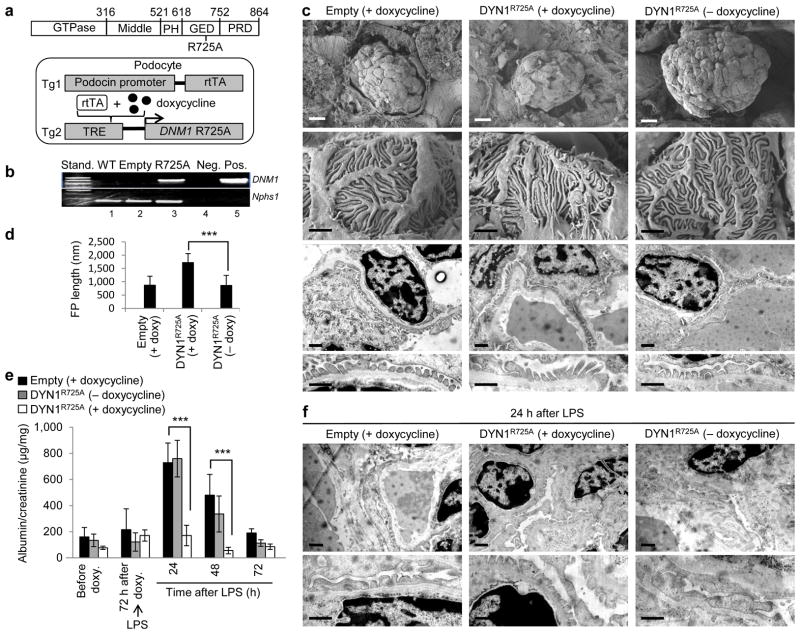
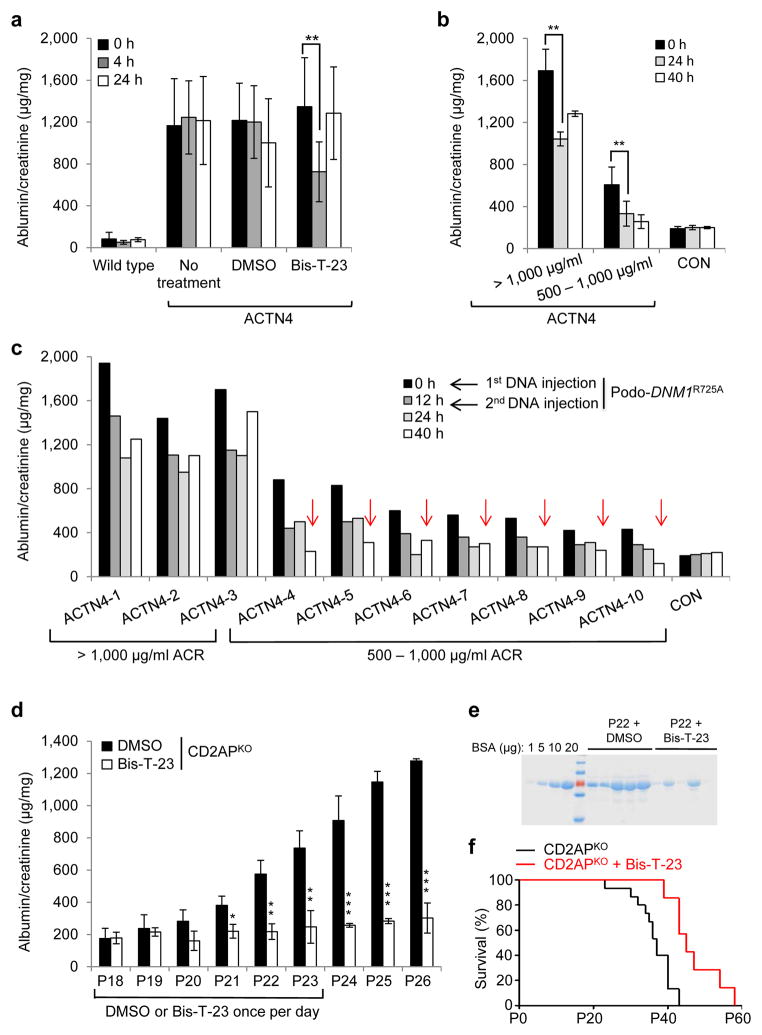
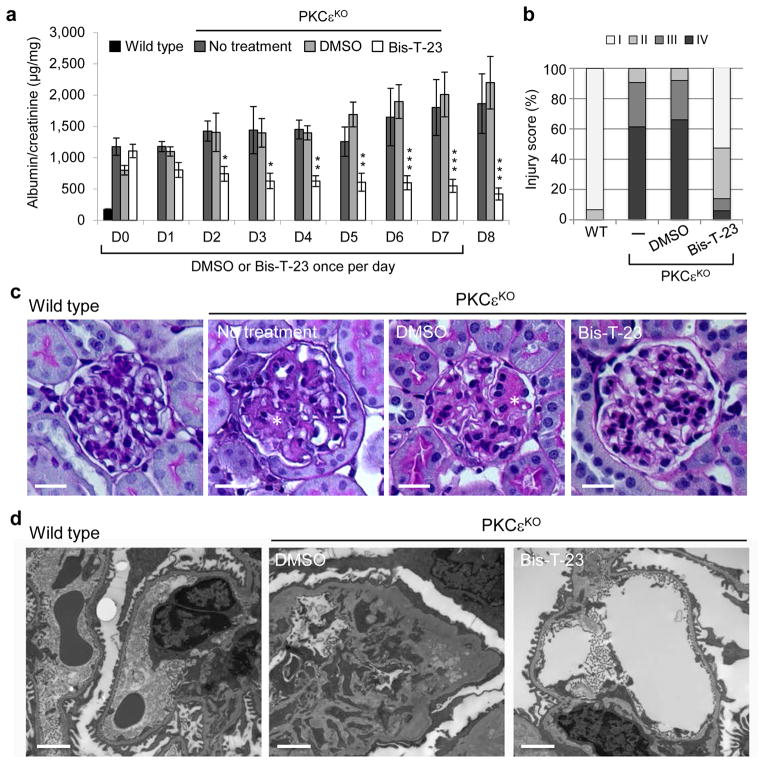
Dysregulation of the actin cytoskeleton in podocytes represents a common pathway in the pathogenesis of proteinuria across a spectrum of chronic kidney diseases (CKD). The GTPase dynamin has been implicated in the maintenance of cellular architecture in podocytes through its direct interaction with actin. Furthermore, the propensity of dynamin to oligomerize into higher-order structures in an actin-dependent manner and to cross-link actin microfilaments into higher-order structures has been correlated with increased actin polymerization and global organization of the actin cytoskeleton in the cell. We found that use of the small molecule Bis-T-23, which promotes actin-dependent dynamin oligomerization and thus increased actin polymerization in injured podocytes, was sufficient to improve renal health in diverse models of both transient kidney disease and CKD. In particular, administration of Bis-T-23 in these renal disease models restored the normal ultrastructure of podocyte foot processes, lowered proteinuria, lowered collagen IV deposits in the mesangial matrix, diminished mesangial matrix expansion and extended lifespan. These results further establish that alterations in the actin cytoskeleton of kidney podocytes is a common hallmark of CKD, while also underscoring the substantial regenerative potential of injured glomeruli and identifying the oligomerization cycle of dynamin as an attractive potential therapeutic target to treat CKD.
足细胞中肌动蛋白细胞骨架的失调是各种慢性肾脏病(CKD)蛋白尿发病机制中的一条常见途径。GTP酶发动蛋白通过与肌动蛋白直接相互作用,参与维持足细胞的细胞结构。此外,发动蛋白以肌动蛋白依赖的方式寡聚形成高阶结构并将肌动蛋白微丝交联成高阶结构的倾向,与细胞中肌动蛋白聚合增加和肌动蛋白细胞骨架的整体组织有关。我们发现,使用小分子Bis-T-23可促进肌动蛋白依赖的发动蛋白寡聚化,从而增加受损足细胞中的肌动蛋白聚合,这足以改善多种急性肾病和CKD模型中的肾脏健康。特别是,在这些肾病模型中给予Bis-T-23可恢复足细胞足突的正常超微结构,降低蛋白尿,减少系膜基质中IV型胶原沉积,减轻系膜基质扩张并延长寿命。这些结果进一步证实,肾足细胞肌动蛋白细胞骨架的改变是CKD的一个共同特征,同时也强调了受损肾小球具有巨大的再生潜力,并确定发动蛋白的寡聚化循环是治疗CKD的一个有吸引力的潜在治疗靶点。