Li Dan, Zhao Xiang, Xiao Yong, Mei Hong, Pu Jiarui, Xiang Xuan, Jiao Wanju, Song Huajie, Qu Hongxia, Huang Kai, Zheng Liduan, Tong Qiangsong
Department of Surgery, Union Hospital, Tongji Medical College, Huazhong University of Science and Technology, Wuhan, P. R. China.
Department of Pathology, Union Hospital, Tongji Medical College, Huazhong University of Science and Technology, Wuhan, P. R. China.
Oncotarget. 2015 Jun 30;6(18):16168-82. doi: 10.18632/oncotarget.3753.
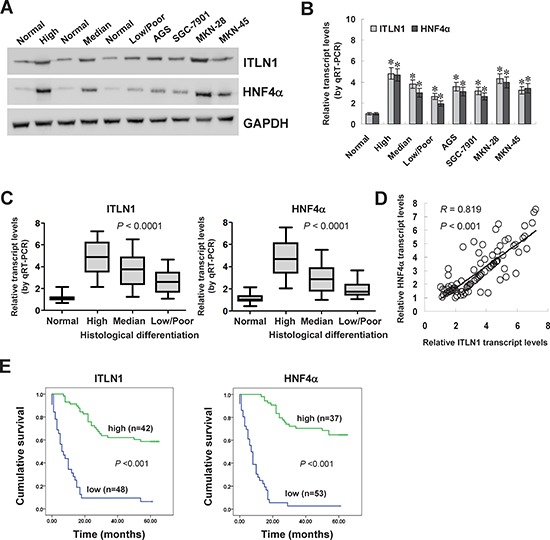
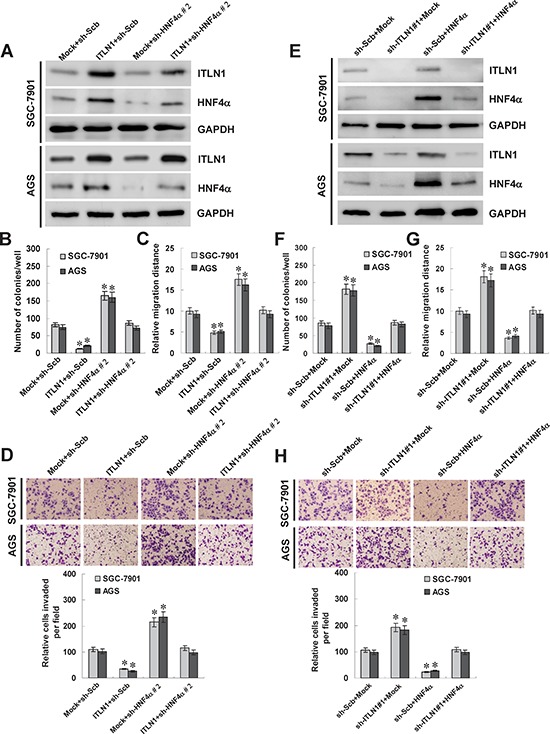
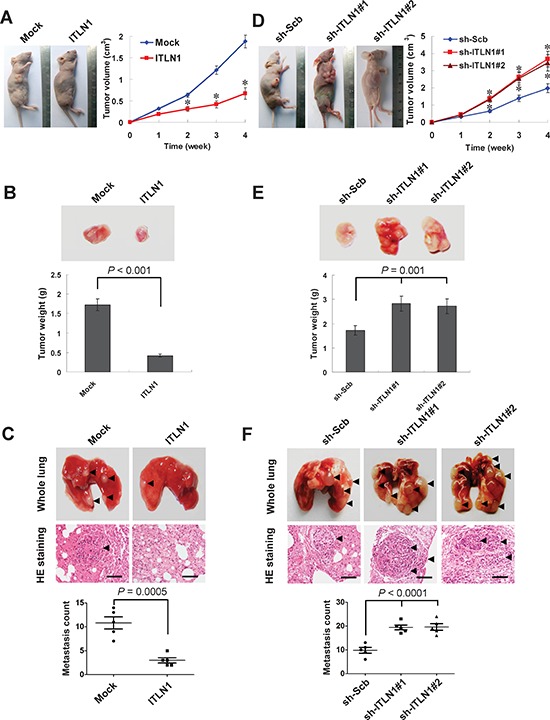
Recent evidence shows the emerging roles of intelectin 1 (ITLN1), a secretory lectin, in human cancers. Our previous studies have implicated the potential roles of ITLN1 in the aggressiveness of gastric cancer. Herein, we investigated the functions, downstream targets, and clinical significance of ITLN1 in the progression of gastric cancer. We demonstrated that ITLN1 increased the levels of hepatocyte nuclear factor 4 alpha (HNF4α), resulting in suppression of nuclear translocation and transcriptional activity of β-catenin in gastric cancer cells. Mechanistically, ITLN1 attenuated the activity of nuclear factor-kappa B, a transcription factor repressing the HNF4α expression, in gastric cancer cells through inactivating the phosphoinositide 3-kinase/AKT/Ikappa B kinase signaling. Gain- and loss-of-function studies demonstrated that ITLN1 suppressed the growth, invasion, and metastasis of gastric cancer cells in vitro and in vivo. In addition, restoration of HNF4α expression prevented the gastric cancer cells from ITLN1-mediated changes in these biological features. In clinical gastric cancer tissues, HNF4α expression was positively correlated with that of ITLN1. Patients with high ITLN1 or HNF4α expression had greater survival probability. Taken together, these data indicate that ITLN1 suppresses the progression of gastric cancer through up-regulation of HNF4α, and is associated with improved survival in patients with gastric cancer.
近期证据显示,分泌型凝集素肝免疫球蛋白样凝集素1(ITLN1)在人类癌症中发挥着新作用。我们之前的研究表明ITLN1在胃癌侵袭性方面具有潜在作用。在此,我们研究了ITLN1在胃癌进展中的功能、下游靶点及临床意义。我们证明ITLN1可提高肝细胞核因子4α(HNF4α)水平,从而抑制胃癌细胞中β-连环蛋白的核转位和转录活性。机制上,ITLN1通过使磷酸肌醇3激酶/AKT/核因子κB抑制蛋白激酶信号失活,减弱了胃癌细胞中转录因子核因子κB(其可抑制HNF4α表达)的活性。功能获得和缺失研究表明,ITLN1在体外和体内均抑制胃癌细胞的生长、侵袭和转移。此外,恢复HNF4α表达可使胃癌细胞免受ITLN1介导的这些生物学特性变化的影响。在临床胃癌组织中,HNF4α表达与ITLN1表达呈正相关。ITLN1或HNF4α高表达的患者生存概率更高。综上所述,这些数据表明ITLN1通过上调HNF4α抑制胃癌进展,并与胃癌患者生存率提高相关。