Ni Zhen, Lu Wenquan, Li Qi, Han Chuan, Yuan Ting, Sun Nina, Shi Yongquan
State Key Laboratory of Cancer Biology & Institute of Digestive Diseases, Xijing Hospital, Air Force Medical University of PLA, Xi'an 710032, China.
Department of Gastroenterology, General Hospital of Western Theater Command, Chengdu 610083, China.
Cancer Biol Med. 2021 Mar 12;18(2):530-46. doi: 10.20892/j.issn.2095-3941.2020.0131.
Hepatocyte nuclear factor 4α (HNF4A) has been demonstrated to be an oncogene in gastric cancer (GC). However, the roles of different isoforms derived from the 2 different promoters (P1 and P2) and the underlying mechanisms remain obscure.
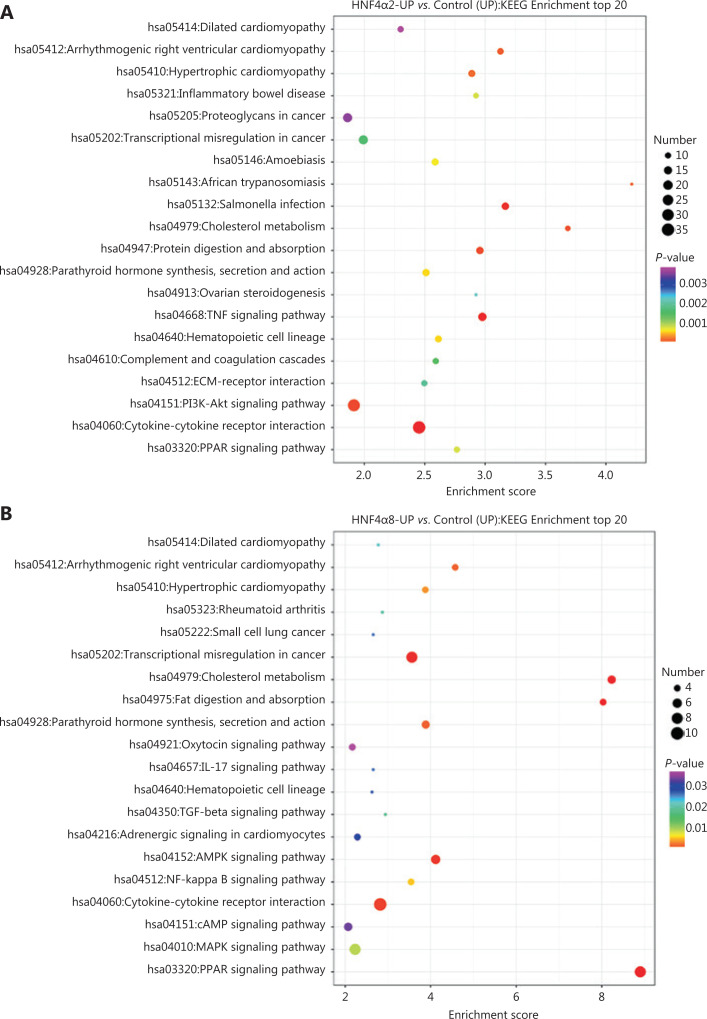
The expression and prognostic values of P1- and P2- were evaluated in The Cancer Genome Atlas (TCGA) databases and GC tissues. Then, functional assays of P1- and P2- were conducted both and . High-throughput RNA-seq was employed to profile downstream pathways in P1- and P2--overexpressing GC cells. The expression and gene regulation network of the candidate target genes identified by RNA-seq were characterized based on data mining and functional assays.
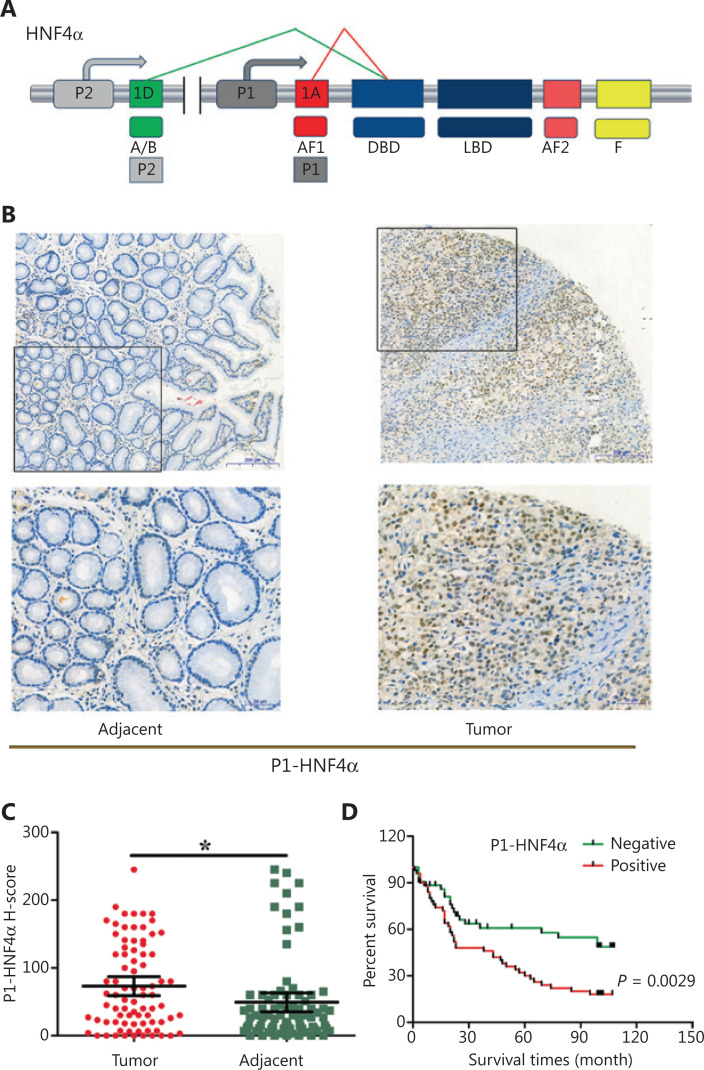
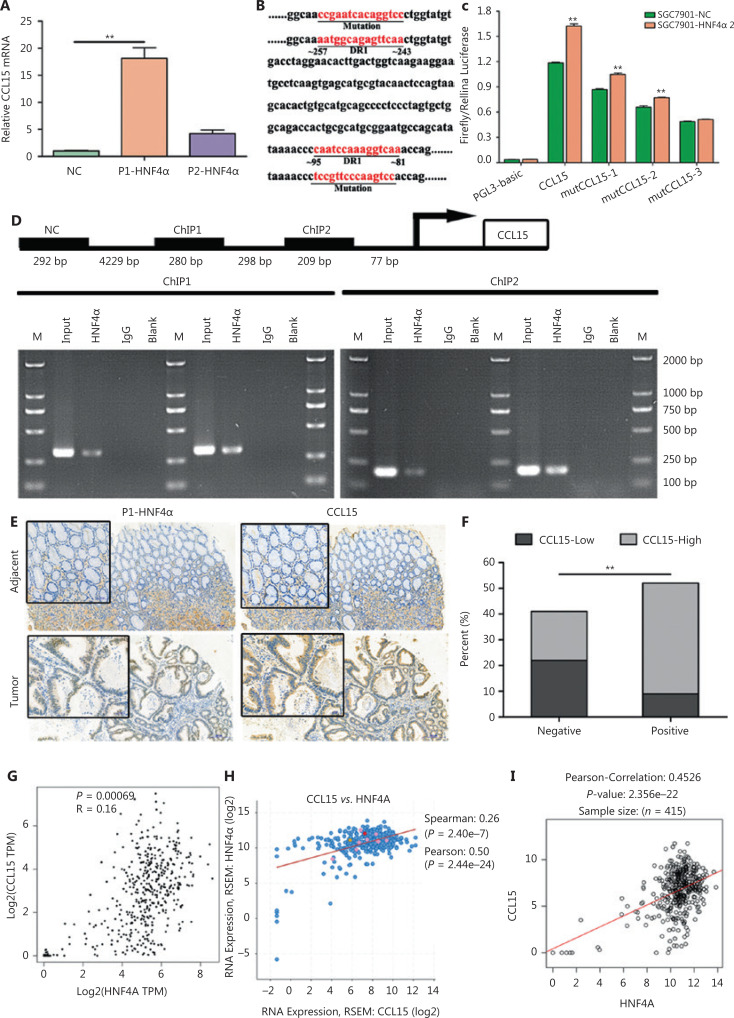
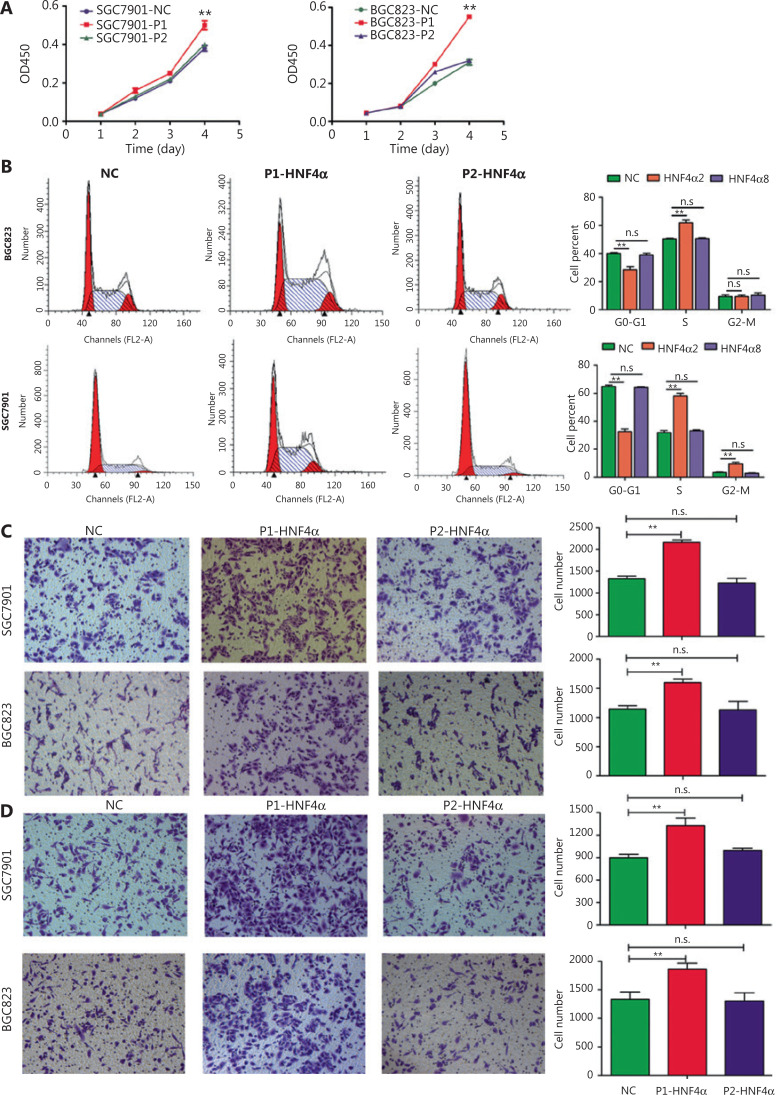
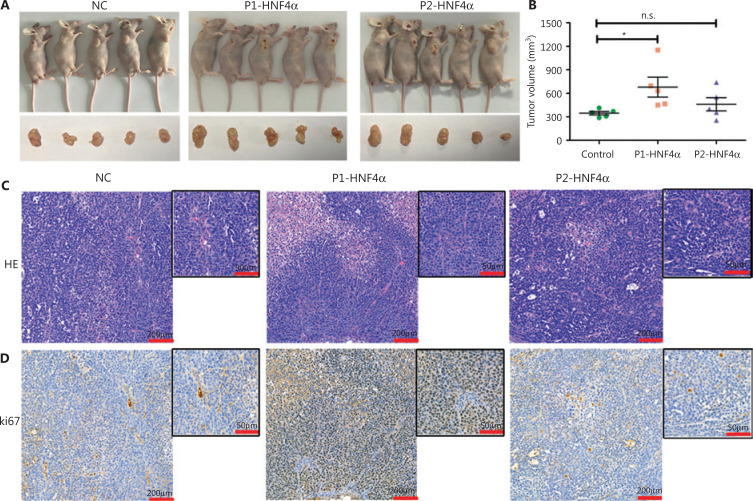
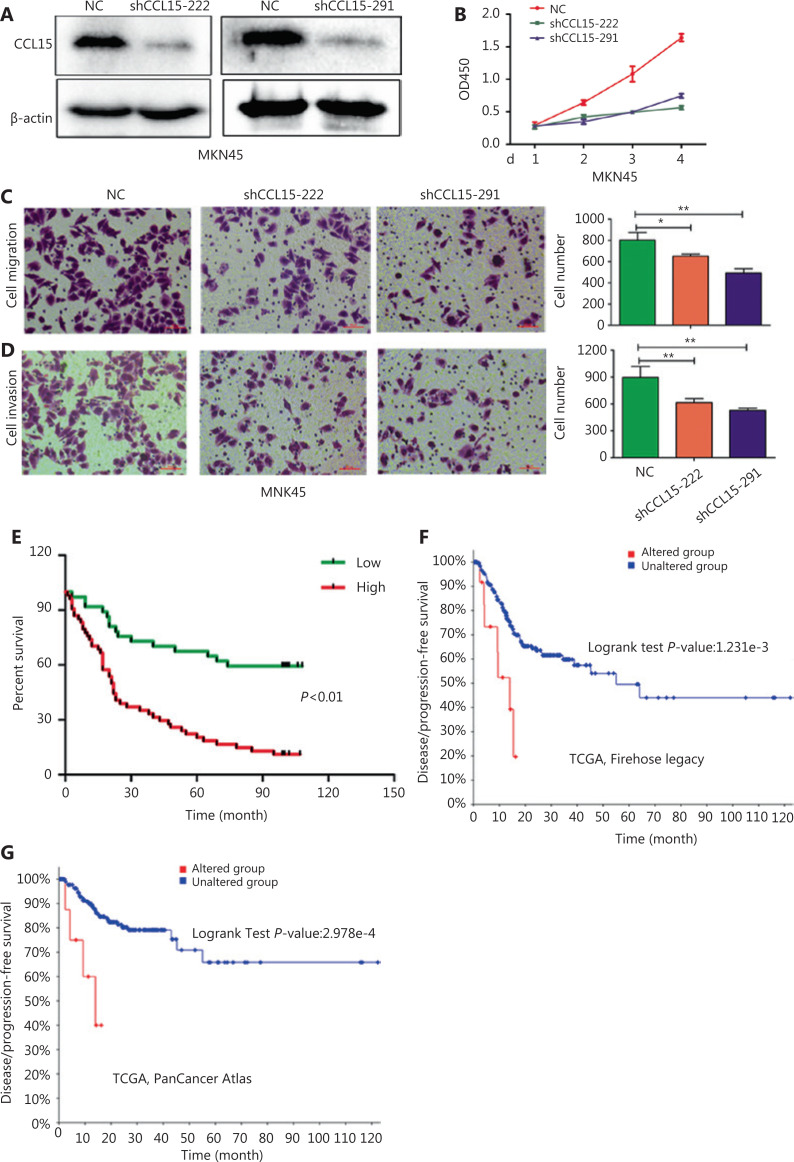
amplification was a key characteristic of GC in TCGA databases, especially for the intestinal type and early stage. Moreover, P1- expression was significantly higher in tumor tissues than in adjacent non-tumor tissues ( < 0.05), but no significant differences were found in P2- expression ( > 0.05). High P1- expression indicated poor prognoses in GC patients ( < 0.01). Furthermore, P1- overexpression significantly promoted SGC7901 and BGC823 cell proliferation, invasion and migration ( < 0.01). Murine xenograft experiments showed that P1- overexpression promoted tumor growth ( < 0.05). Mechanistically, RNA-seq showed that the cytokine-cytokine receptor interactions pathway was mostly enriched in P1--overexpressing GC cells. Finally, chemokine (C-C motif) ligand 15 was identified as a direct target of P1- in GC tissues.
P1- was the main oncogene during GC progression. The cytokine-cytokine receptor interaction pathway played a pivotal role and may be a promising therapeutic target.
肝细胞细胞核因子4α(HNF4A)已被证明是胃癌(GC)中的一种癌基因。然而,源自2种不同启动子(P1和P2)的不同异构体的作用及其潜在机制仍不清楚。
在癌症基因组图谱(TCGA)数据库和GC组织中评估P1和P2的表达及预后价值。然后,在体外和体内进行P1和P2的功能实验。采用高通量RNA测序分析P1和P2过表达的GC细胞中的下游通路。基于数据挖掘和功能实验对RNA测序鉴定的候选靶基因的表达和基因调控网络进行表征。
扩增是TCGA数据库中GC的关键特征,尤其是肠型和早期。此外,肿瘤组织中P1的表达显著高于相邻非肿瘤组织(P<0.05),但P2的表达无显著差异(P>0.05)。GC患者中高P1表达提示预后不良(P<0.01)。此外,P1过表达显著促进SGC7901和BGC823细胞增殖、侵袭和迁移(P<0.01)。小鼠异种移植实验表明,P1过表达促进肿瘤生长(P<0.05)。机制上,RNA测序显示细胞因子-细胞因子受体相互作用通路在P1过表达的GC细胞中富集最多。最后,趋化因子(C-C基序)配体15被确定为GC组织中P1的直接靶点。
P1是GC进展过程中的主要癌基因。细胞因子-细胞因子受体相互作用通路起关键作用,可能是一个有前景的治疗靶点。