Valera Elvira, Mante Michael, Anderson Scott, Rockenstein Edward, Masliah Eliezer
Department of Neurosciences, University of California San Diego, 9500 Gilman Drive, La Jolla, CA, 92093-0624, USA.
Department of Pathology, University of California San Diego, 9500 Gilman Drive, La Jolla, CA, 92093-0624, USA.
J Neuroinflammation. 2015 May 14;12:93. doi: 10.1186/s12974-015-0320-x.
Parkinson's disease (PD) is one of the most common causes of dementia and motor deficits in the elderly. PD is characterized by the abnormal accumulation of the synaptic protein alpha-synuclein (α-syn) and degeneration of dopaminergic neurons in substantia nigra, which leads to neurodegeneration and neuroinflammation. Currently, there are no disease modifying alternatives for PD; however, targeting neuroinflammation might be a viable option for reducing motor deficits and neurodegeneration. Lenalidomide is a thalidomide derivative designed for reduced toxicity and increased immunomodulatory properties. Lenalidomide has shown protective effects in an animal model of amyotrophic lateral sclerosis, and its mechanism of action involves modulation of cytokine production and inhibition of NF-κB signaling.
In order to assess the effect of lenalidomide in an animal model of PD, mThy1-α-syn transgenic mice were treated with lenalidomide or the parent molecule thalidomide at 100 mg/kg for 4 weeks.
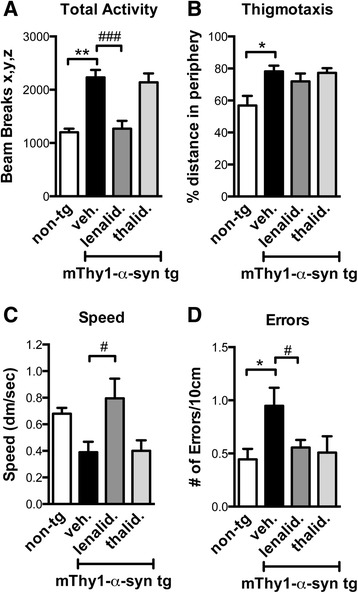
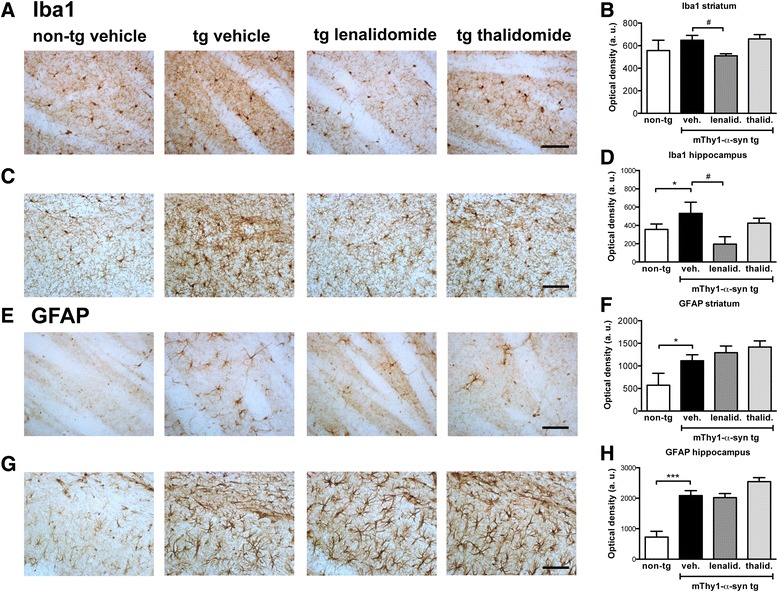
Lenalidomide reduced motor behavioral deficits and ameliorated dopaminergic fiber loss in the striatum. This protective action was accompanied by a reduction in microgliosis both in striatum and hippocampus. Central expression of pro-inflammatory cytokines was diminished in lenalidomide-treated transgenic animals, together with reduction in NF-κB activation.
These results support the therapeutic potential of lenalidomide for reducing maladaptive neuroinflammation in PD and related neuropathologies.
帕金森病(PD)是老年人痴呆和运动功能障碍最常见的病因之一。PD的特征是突触蛋白α-突触核蛋白(α-syn)异常聚集以及黑质中多巴胺能神经元变性,进而导致神经退行性变和神经炎症。目前,尚无改变PD病程的替代疗法;然而,针对神经炎症可能是减轻运动功能障碍和神经退行性变的可行选择。来那度胺是一种沙利度胺衍生物,其设计目的是降低毒性并增强免疫调节特性。来那度胺在肌萎缩侧索硬化动物模型中已显示出保护作用,其作用机制涉及调节细胞因子产生和抑制NF-κB信号传导。
为了评估来那度胺在PD动物模型中的作用,将mThy1-α-syn转基因小鼠用100mg/kg的来那度胺或母体分子沙利度胺处理4周。
来那度胺减少了运动行为缺陷,并改善了纹状体中多巴胺能纤维的损失。这种保护作用伴随着纹状体和海马中小胶质细胞增生的减少。在接受来那度胺治疗的转基因动物中,促炎细胞因子的中枢表达减少,同时NF-κB激活也减少。
这些结果支持来那度胺在减少PD及相关神经病理学中适应性不良神经炎症方面的治疗潜力。