Kim Seok Jin, Ryu Kyung Ju, Hong Mineui, Ko Young Hyeh, Kim Won Seog
Division of Hematology and Oncology, Department of Medicine, Samsung Medical Center, Sungkyunkwan University School of Medicine, Seoul, Korea.
Department of Health Sciences and Technology, SAIHST, Sungkyunkwan University School of Medicine, Seoul, Korea.
J Hematol Oncol. 2015 May 14;8:49. doi: 10.1186/s13045-015-0142-4.
The Glasgow Prognostic Score (GPS) measures inflammation and proves its prognostic value in patients with extranodal natural killer (NK)/T-cell lymphoma (ENKTL) which is commonly combined with inflammatory lesion. Given inflammatory chemokines play an important role in tumor progression, we hypothesized that chemokines might influence ENKTL aggressiveness through interaction with their receptors in the tumor tissue.
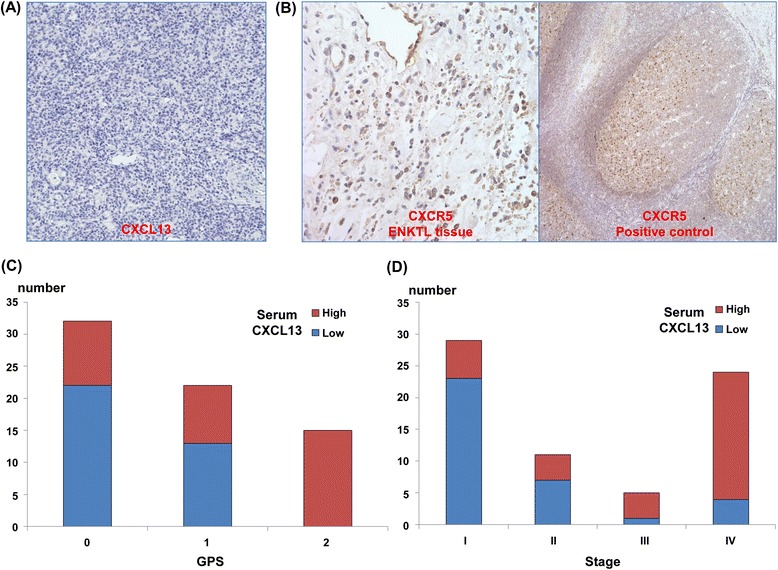
We measured the serum levels of C-X-C motif ligand 13 (CXCL13) in 69 patients with ENKTL who received non-anthracycline-based chemotherapy and/or concurrent chemoradiotherapy because CXCL13 is thought to have a pro-tumor effect through interaction with its receptor, the C-X-C chemokine receptor 5 (CXCR5). We analyzed the association of serum CXCL13 with the GPS, and their prognostic relevance. The levels of CXCL13 were measured using a multiplex chemokine assay on archived frozen serum samples.
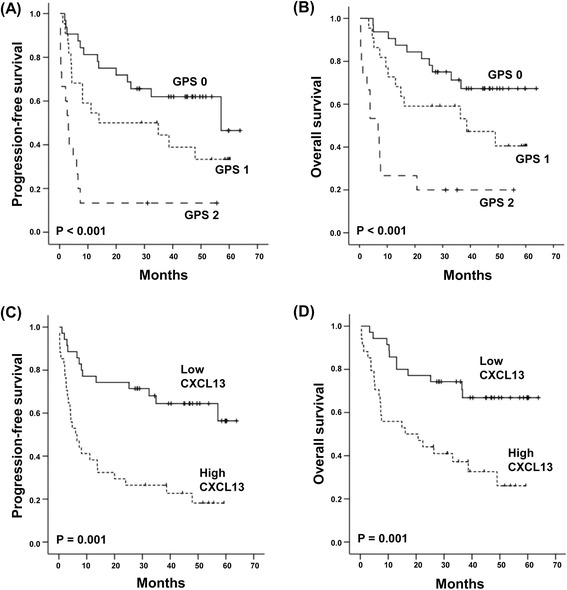
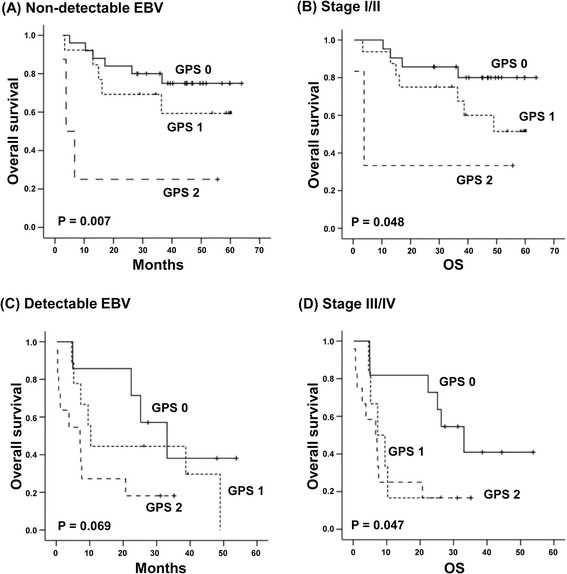
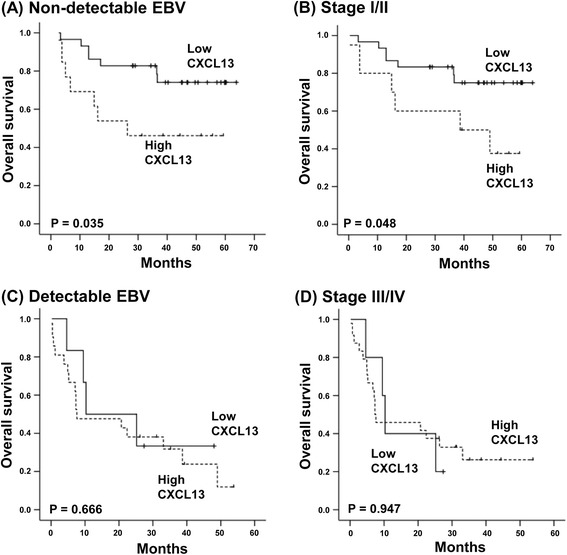
Patients were categorized into high and low CXCL13 groups if they had CXCL13 levels above or below the median value of 29.1 pg/mL, respectively. The high CXCL13 group and grouping by the GPS showed a significant association with poor progression-free survival. The elevated serum levels of CXCL13 were also significantly associated with a high score of the GPS. High CXCL13 levels and GPS were significantly associated with high tumor burden predicting poor prognosis including stages III/IV, extranasal presentation, bone marrow invasion, and presence of Epstein-Barr virus (EBV) DNA in blood. Furthermore, serum CXCL13 and GPS discriminated patients at risk of treatment failure among patients with low tumor burden (stage I/II) and non-detectable EBV DNA.
Serum levels of CXCL13 were associated with the prognostic value of GPS. Grouping by the serum CXCL13 might predict survival outcomes in patients with ENKTL, suggesting that it is a potential therapeutic target.
格拉斯哥预后评分(GPS)用于评估炎症反应,并已证实其在结外自然杀伤(NK)/T细胞淋巴瘤(ENKTL)患者中的预后价值,这类患者常合并炎症性病变。鉴于炎症趋化因子在肿瘤进展中起重要作用,我们推测趋化因子可能通过与肿瘤组织中的受体相互作用来影响ENKTL的侵袭性。
我们检测了69例接受非蒽环类化疗和/或同步放化疗的ENKTL患者血清中C-X-C基序配体13(CXCL13)的水平,因为CXCL13被认为通过与其受体C-X-C趋化因子受体5(CXCR5)相互作用而具有促肿瘤作用。我们分析了血清CXCL13与GPS的相关性及其预后意义。CXCL13水平通过对存档的冷冻血清样本进行多重趋化因子检测来测定。
根据CXCL13水平高于或低于中位数29.1 pg/mL,将患者分别分为高CXCL13组和低CXCL13组。高CXCL13组以及按GPS分组与无进展生存期差显著相关。血清CXCL13水平升高也与GPS高分显著相关。高CXCL13水平和GPS与高肿瘤负荷显著相关,提示预后不良,包括III/IV期、鼻外表现、骨髓侵犯以及血液中存在EB病毒(EBV)DNA。此外,血清CXCL13和GPS可区分低肿瘤负荷(I/II期)且未检测到EBV DNA患者中存在治疗失败风险的患者。
血清CXCL13水平与GPS的预后价值相关。按血清CXCL13分组可能预测ENKTL患者的生存结局,提示其可能是一个潜在的治疗靶点。