Kim Hae Jin, Silva Jillian E, Vu Hieu Sy, Mockaitis Keithanne, Nam Jeong-Won, Cahoon Edgar B
Department of Biochemistry and Center for Plant Science Innovation, University of Nebraska-Lincoln, Lincoln, NE 68588, USA.
Department of Biology, and Center for Genomics and Bioinformatics, Indiana University, Bloomington, IN 47405, USA.
J Exp Bot. 2015 Jul;66(14):4251-65. doi: 10.1093/jxb/erv225. Epub 2015 May 11.
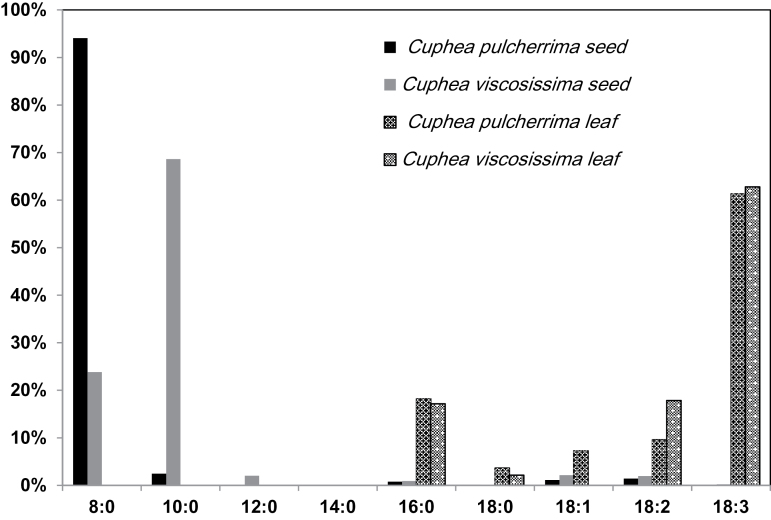
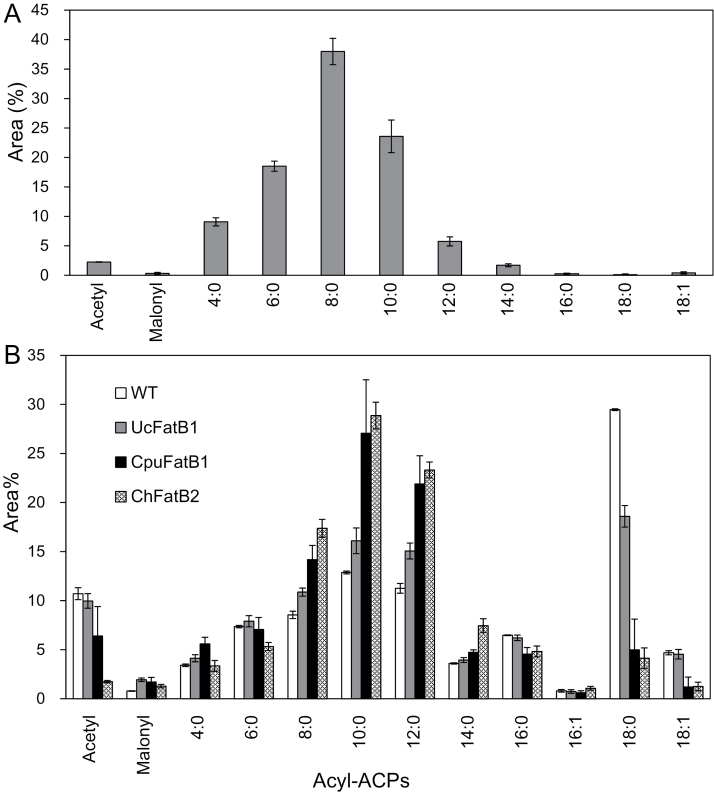
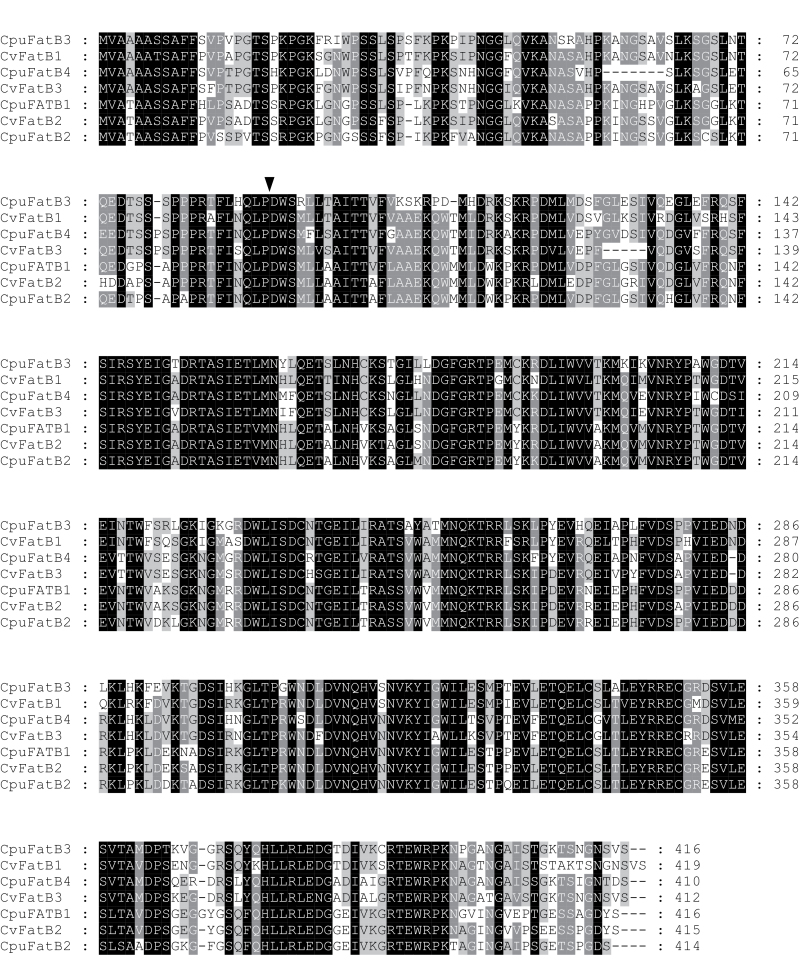
Seeds of members of the genus Cuphea accumulate medium-chain fatty acids (MCFAs; 8:0-14:0). MCFA- and palmitic acid- (16:0) rich vegetable oils have received attention for jet fuel production, given their similarity in chain length to Jet A fuel hydrocarbons. Studies were conducted to test genes, including those from Cuphea, for their ability to confer jet fuel-type fatty acid accumulation in seed oil of the emerging biofuel crop Camelina sativa. Transcriptomes from Cuphea viscosissima and Cuphea pulcherrima developing seeds that accumulate >90% of C8 and C10 fatty acids revealed three FatB cDNAs (CpuFatB3, CvFatB1, and CpuFatB4) expressed predominantly in seeds and structurally divergent from typical FatB thioesterases that release 16:0 from acyl carrier protein (ACP). Expression of CpuFatB3 and CvFatB1 resulted in Camelina oil with capric acid (10:0), and CpuFatB4 expression conferred myristic acid (14:0) production and increased 16:0. Co-expression of combinations of previously characterized Cuphea and California bay FatBs produced Camelina oils with mixtures of C8-C16 fatty acids, but amounts of each fatty acid were less than obtained by expression of individual FatB cDNAs. Increases in lauric acid (12:0) and 14:0, but not 10:0, in Camelina oil and at the sn-2 position of triacylglycerols resulted from inclusion of a coconut lysophosphatidic acid acyltransferase specialized for MCFAs. RNA interference (RNAi) suppression of Camelina β-ketoacyl-ACP synthase II, however, reduced 12:0 in seeds expressing a 12:0-ACP-specific FatB. Camelina lines presented here provide platforms for additional metabolic engineering targeting fatty acid synthase and specialized acyltransferases for achieving oils with high levels of jet fuel-type fatty acids.
萼距花属植物的种子积累中链脂肪酸(MCFAs;8:0 - 14:0)。富含MCFA和棕榈酸(16:0)的植物油因其链长与喷气燃料A的碳氢化合物相似,在喷气燃料生产方面受到关注。开展了多项研究,以测试包括来自萼距花属的基因在内的多种基因,看它们能否使新兴生物燃料作物亚麻荠种子油中积累喷气燃料型脂肪酸。来自黏毛萼距花和美丽萼距花发育种子的转录组,这些种子积累了超过90%的C8和C10脂肪酸,从中发现了三个主要在种子中表达的FatB cDNA(CpuFatB3、CvFatB1和CpuFatB4),其结构与从酰基载体蛋白(ACP)释放16:0的典型FatB硫酯酶不同。CpuFatB3和CvFatB1的表达使亚麻荠油中产生癸酸(10:0),CpuFatB4的表达使肉豆蔻酸(14:0)得以产生并增加了16:0的含量。先前鉴定的萼距花属和加州月桂树的FatB组合共表达,使亚麻荠油中含有C8 - C16脂肪酸的混合物,但每种脂肪酸的含量都低于单个FatB cDNA表达所获得的含量。通过引入专门用于MCFAs的椰子溶血磷脂酸酰基转移酶,亚麻荠油以及三酰甘油的sn - 2位置上的月桂酸(12:0)和14:0含量增加,但10:0含量未增加。然而,对亚麻荠β - 酮脂酰 - ACP合酶II进行RNA干扰(RNAi)抑制,降低了表达12:0 - ACP特异性FatB的种子中12:0的含量。本文展示的亚麻荠株系为进一步的代谢工程提供了平台,该工程针对脂肪酸合酶和专门的酰基转移酶,以获得富含喷气燃料型脂肪酸的油脂。