Horvath Steve, Levine Andrew J
Department of Human Genetics Department of Biostatistics, School of Public Health, University of California-Los Angeles.
Department of Neurology, David Geffen School of Medicine.
J Infect Dis. 2015 Nov 15;212(10):1563-73. doi: 10.1093/infdis/jiv277. Epub 2015 May 12.
Infection with human immunodeficiency virus type 1 (HIV) is associated with clinical symptoms of accelerated aging, as evidenced by the increased incidence and diversity of age-related illnesses at relatively young ages and supporting findings of organ and cellular pathologic analyses. But it has been difficult to detect an accelerated aging effect at a molecular level.
Here, we used an epigenetic biomarker of aging based on host DNA methylation levels to study accelerated aging effects due to HIV infection. DNA from brain and blood tissue was assayed via the Illumina Infinium Methylation 450 K platform.
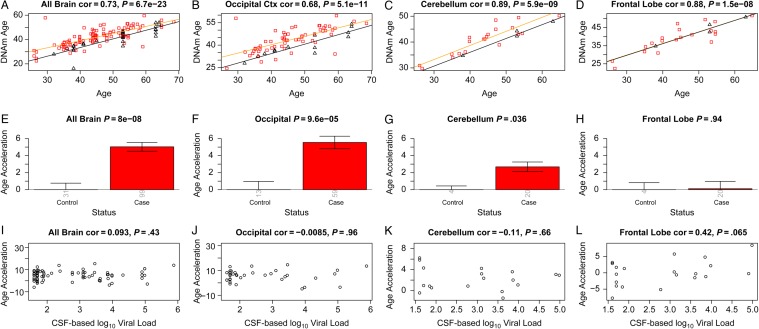
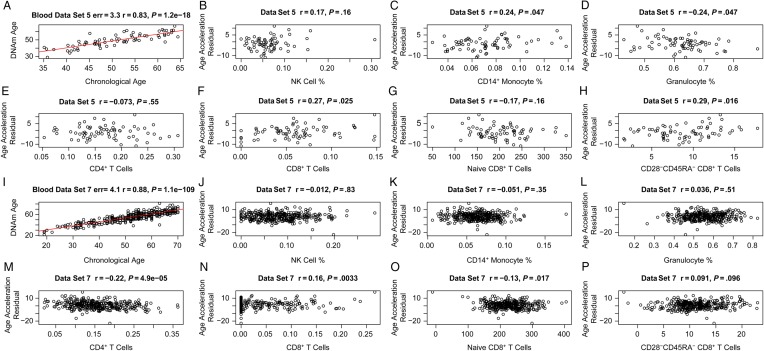
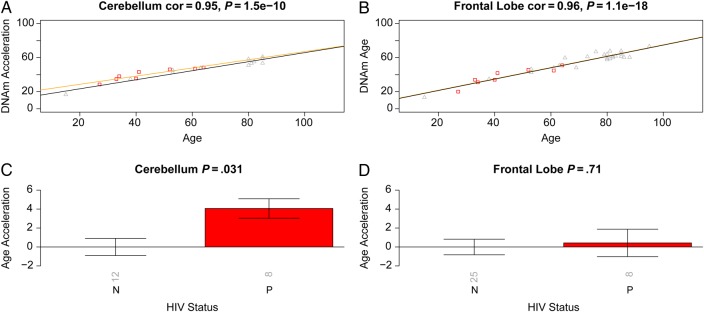
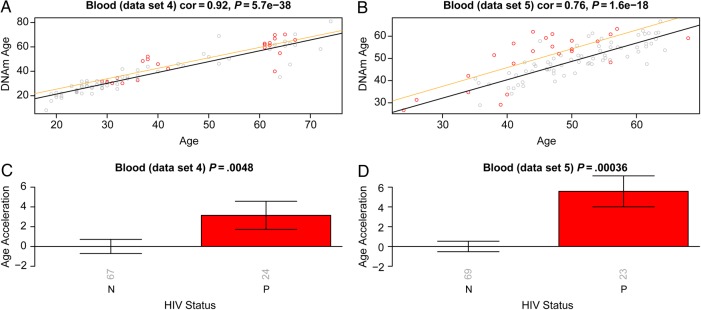
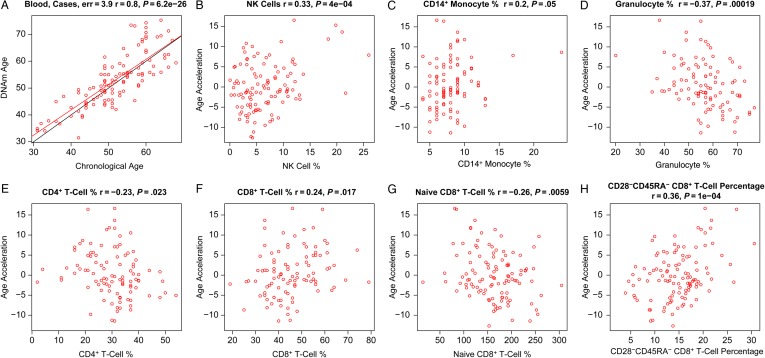
Using 6 novel DNA methylation data sets, we show that HIV infection leads to an increase in epigenetic age both in brain tissue (7.4 years) and blood (5.2 years). While the observed accelerated aging effects in blood may reflect changes in blood cell composition (notably exhausted cytotoxic T cells), it is less clear what explains the observed accelerated aging effects in brain tissue.
Overall, our results demonstrate that the epigenetic clock is a useful biomarker for detecting accelerated aging effects due to HIV infection. This tool can be used to accurately determine the extent of age acceleration in individual tissues and cells.
1型人类免疫缺陷病毒(HIV)感染与加速衰老的临床症状相关,相对年轻时与年龄相关疾病的发病率增加和多样性增加以及器官和细胞病理分析的支持性发现证明了这一点。但在分子水平上很难检测到加速衰老的效应。
在这里,我们使用基于宿主DNA甲基化水平的衰老表观遗传生物标志物来研究HIV感染导致的加速衰老效应。通过Illumina Infinium甲基化450 K平台对来自脑和血液组织的DNA进行检测。
使用6个新的DNA甲基化数据集,我们表明HIV感染导致脑组织(7.4岁)和血液(5.2岁)的表观遗传年龄增加。虽然在血液中观察到的加速衰老效应可能反映了血细胞组成的变化(特别是耗竭的细胞毒性T细胞),但尚不清楚是什么解释了在脑组织中观察到的加速衰老效应。
总体而言,我们的结果表明表观遗传时钟是检测HIV感染导致的加速衰老效应的有用生物标志物。该工具可用于准确确定个体组织和细胞中年龄加速的程度。