Gockley Jake, Willsey A Jeremy, Dong Shan, Dougherty Joseph D, Constantino John N, Sanders Stephan J
Department of Genetics, Yale University School of Medicine, 333 Cedar Street, New Haven, CT 06520 USA.
Department of Genetics, Yale University School of Medicine, 333 Cedar Street, New Haven, CT 06520 USA ; Department of Psychiatry, University of California, San Francisco, 401 Parnassus Avenue, San Francisco, CA 94143 USA.
Mol Autism. 2015 May 13;6:25. doi: 10.1186/s13229-015-0014-3. eCollection 2015.
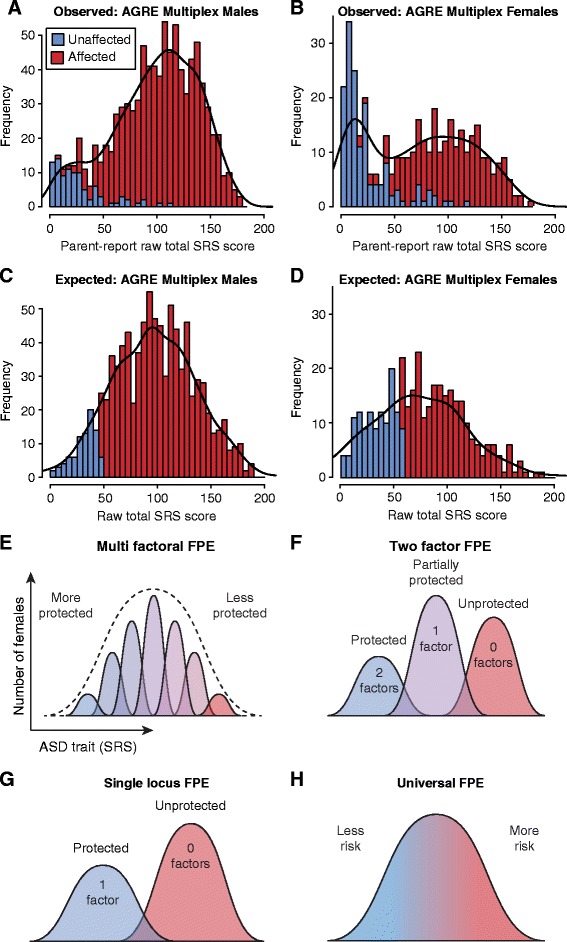
A 4:1 male to female sex bias has consistently been observed in autism spectrum disorder (ASD). Epidemiological and genetic studies suggest a female protective effect (FPE) may account for part of this bias; however, the mechanism of such protection is unknown. Quantitative assessment of ASD symptoms using the Social Responsiveness Scale (SRS) shows a bimodal distribution unique to females in multiplex families. This leads to the hypothesis that a single, common genetic locus on chromosome X might mediate the FPE and produce the ASD sex bias. Such a locus would represent a major therapeutic target and is likely to have been missed by conventional genome-wide association study (GWAS) analysis.
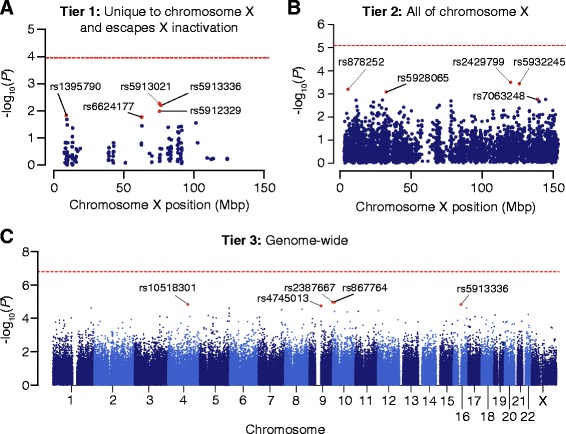
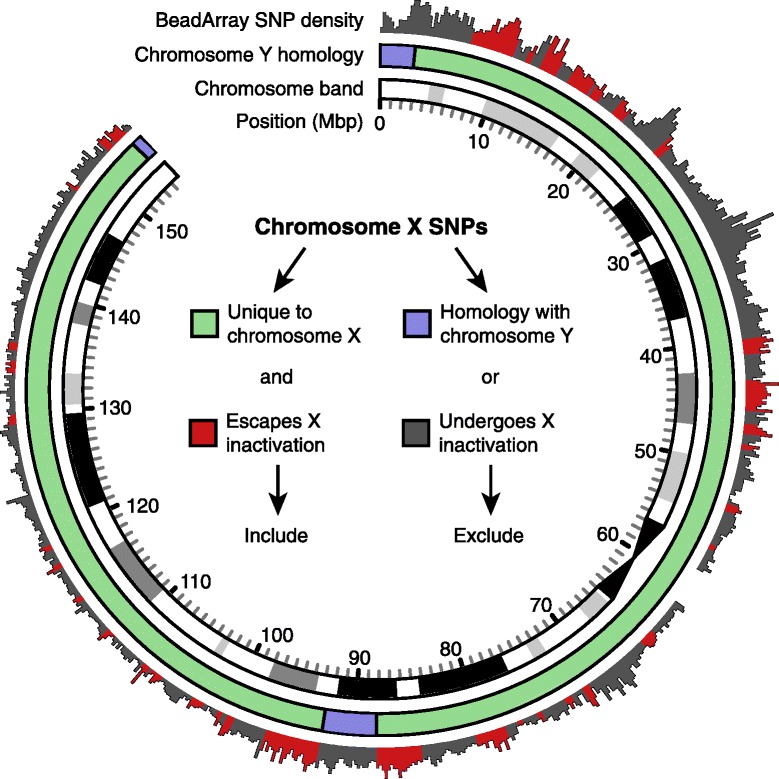
To explore this possibility, we performed an association study in affected versus unaffected females, considering three tiers of single nucleotide polymorphisms (SNPs) as follows: 1) regions of chromosome X that escape X-inactivation, 2) all of chromosome X, and 3) genome-wide.
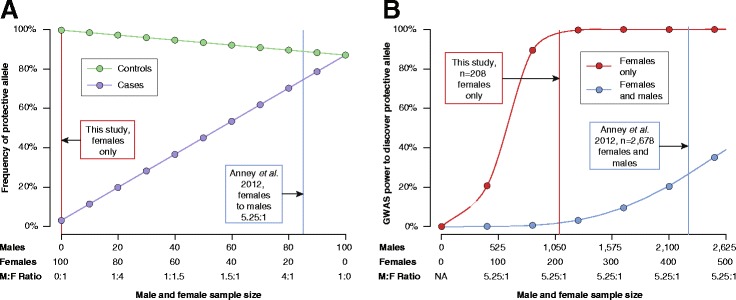
No evidence of a SNP meeting the criteria for a single FPE locus was observed, despite the analysis being well powered to detect this effect.
The results do not support the hypothesis that the FPE is mediated by a single genetic locus; however, this does not exclude the possibility of multiple genetic loci playing a role in the FPE.
在自闭症谱系障碍(ASD)中一直观察到男性与女性的性别比例为4:1。流行病学和遗传学研究表明,女性保护效应(FPE)可能是这种性别比例偏差的部分原因;然而,这种保护机制尚不清楚。使用社会反应量表(SRS)对ASD症状进行定量评估显示,在多重家庭中女性存在独特的双峰分布。这导致了一个假设,即X染色体上的一个单一的、常见的基因座可能介导FPE并产生ASD性别偏差。这样一个基因座将代表一个主要的治疗靶点,并且很可能被传统的全基因组关联研究(GWAS)分析所遗漏。
为了探索这种可能性,我们对受影响和未受影响的女性进行了一项关联研究,考虑了以下三层单核苷酸多态性(SNP):1)逃避X染色体失活的X染色体区域,2)整个X染色体,以及3)全基因组。
尽管分析有足够的效力来检测这种效应,但未观察到符合单一FPE基因座标准的SNP的证据。
结果不支持FPE由单一基因座介导的假设;然而,这并不排除多个基因座在FPE中起作用的可能性。