Restrepo Manuel, Bussaneli Diego G, Jeremias Fabiano, Cordeiro Rita C L, Magalhães Ana C, Palomari Spolidorio Denise M, Santos-Pinto Lourdes
Department of Orthodontics and Pediatric Dentistry, Araraquara School of Dentistry, Universidade Estadual Paulista (Unesp), Rua Humaitá 1680, 14801-903 Araraquara, SP, Brazil.
Department of Biological Sciences, Bauru School of Dentistry, University of São Paulo (USP), Alameda Octávio Pinheiro Brisolla 9-75, 17012-191 Bauru, SP, Brazil.
ScientificWorldJournal. 2015;2015:218452. doi: 10.1155/2015/218452. Epub 2015 Apr 20.
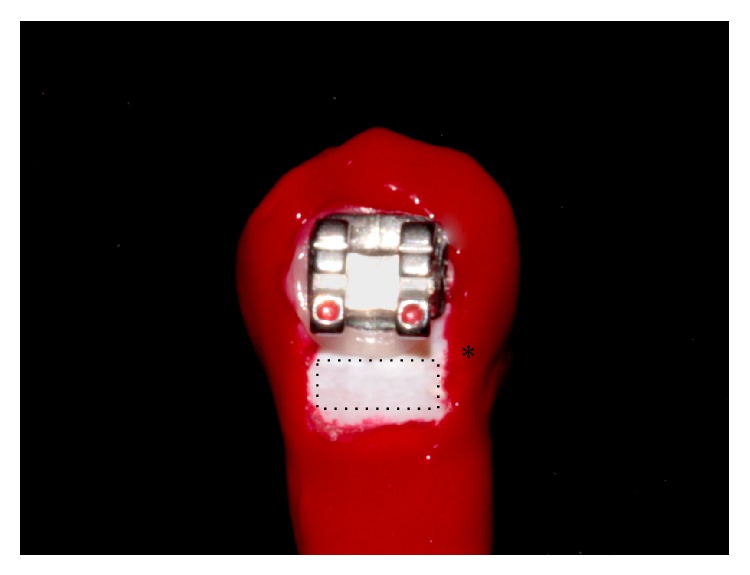
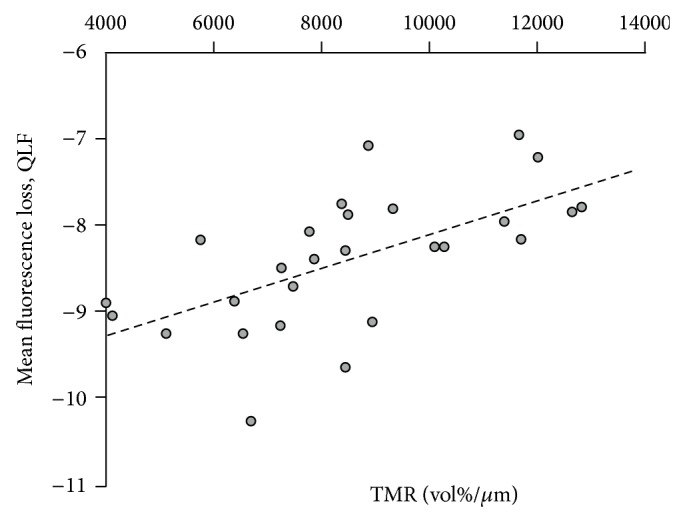
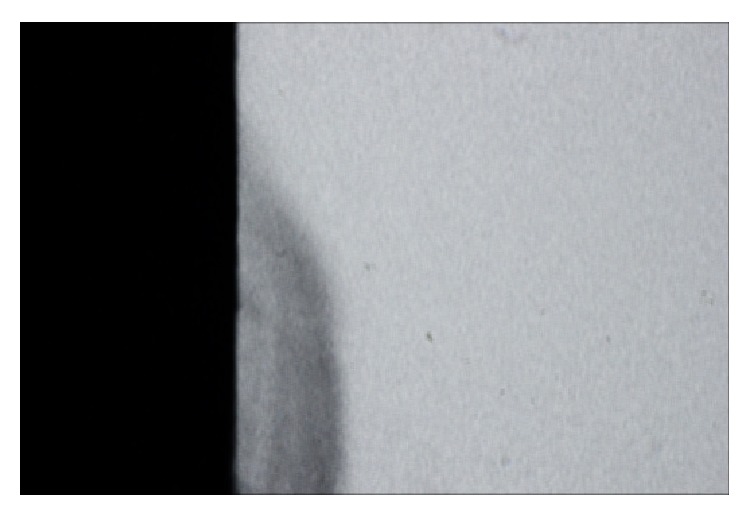
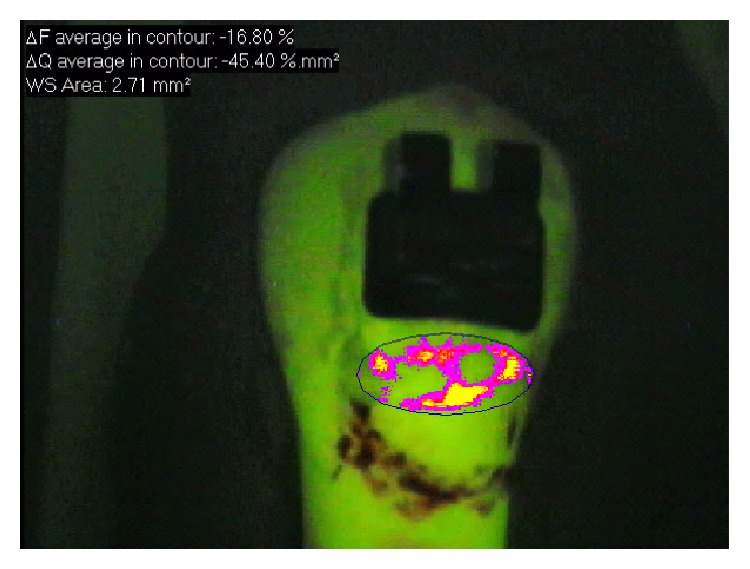
The aims of this study were to compare the effectiveness of fluoride varnish and chlorhexidine gel in controlling white spot lesions (WSLs) adjacent to orthodontic brackets and to compare the ability of Quantitative Light-Induced Fluorescence (QLF) to measure mineral uptake with that of transverse microradiography (TMR). Thirty premolars with artificially induced WSLs were randomly assigned to three groups: (1) two applications of 5% NaF-varnish (F), with one-week interval, (2) two applications of 2% chlorhexidine gel (CHX), with one-week interval, and (3) control (CO), no treatment. QLF was used to measure changes in fluorescence before and after caries induction, 1 week after each application and 1, 2, and 3 months after the last application of F or CHX. TMR was performed to quantify lesion depth and mineral content after caries induction to evaluate the effects of F, CHX, and CO 3 months after the last application of agents. The data were analyzed by repeated measures ANOVA and Tukey's test. All treatments increased the mineral content during the experimental period; however, F induced faster remineralization than CHX. The correlation between QLF and TMR was significantly moderate. Two applications of fluoride varnish or 2% chlorhexidine gel at one-week intervals were effective in controlling WSLs.
本研究的目的是比较氟化物漆和氯己定凝胶在控制正畸托槽周围白斑病变(WSLs)方面的有效性,并比较定量光诱导荧光(QLF)与横向显微放射照相术(TMR)测量矿物质摄取的能力。30颗人工诱导产生WSLs的前磨牙被随机分为三组:(1)两次涂抹5%氟化钠漆(F),间隔一周;(2)两次涂抹2%氯己定凝胶(CHX),间隔一周;(3)对照组(CO),不进行治疗。在龋病诱导前、每次涂抹后1周以及最后一次涂抹F或CHX后1、2和3个月,使用QLF测量荧光变化。在最后一次涂抹试剂3个月后,进行TMR以量化龋病诱导后的病变深度和矿物质含量,以评估F、CHX和CO的效果。数据采用重复测量方差分析和Tukey检验进行分析。在实验期间,所有治疗均增加了矿物质含量;然而,F诱导的再矿化比CHX更快。QLF与TMR之间的相关性显著中等。每隔一周两次涂抹氟化物漆或2%氯己定凝胶在控制WSLs方面有效。