Litwinoff Ems, Hurtado Del Pozo C, Ramasamy R, Schmidt A M
Diabetes Research Program, Division of Endocrinology, Department of Medicine, New York University School of Medicine, New York, New York, USA.
Clin Pharmacol Ther. 2015 Aug;98(2):135-44. doi: 10.1002/cpt.148. Epub 2015 Jun 25.
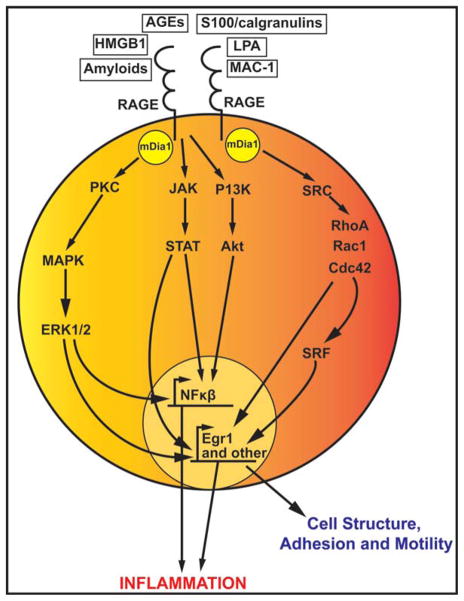
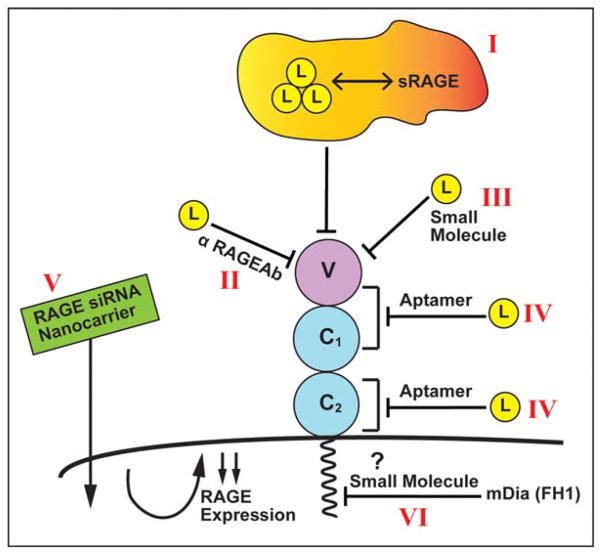
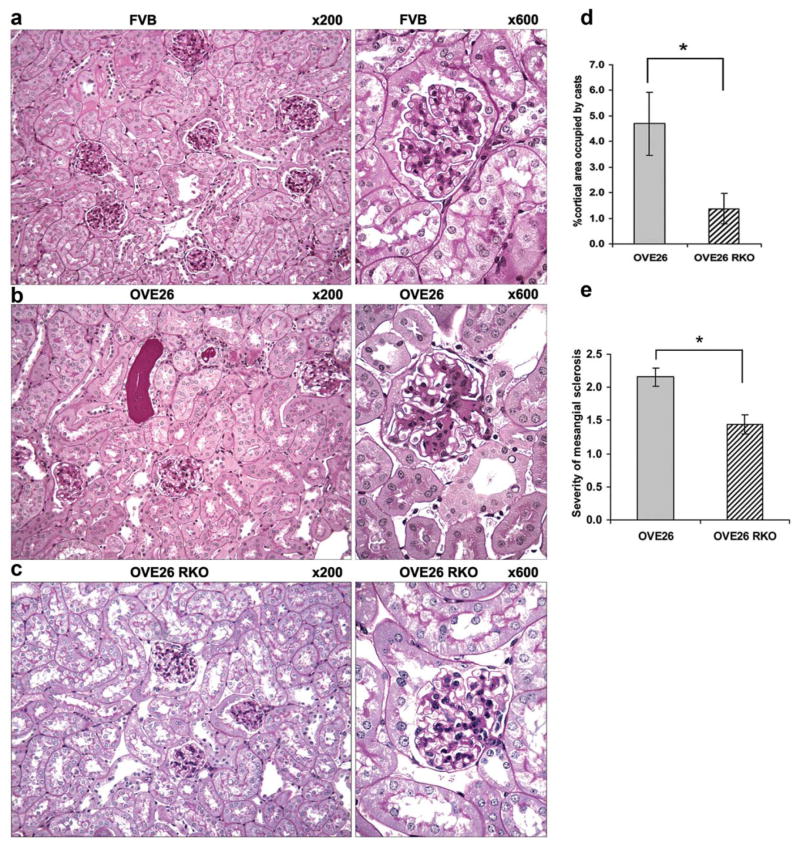
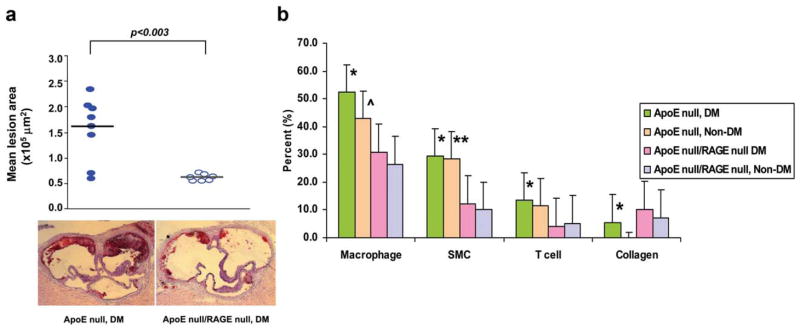
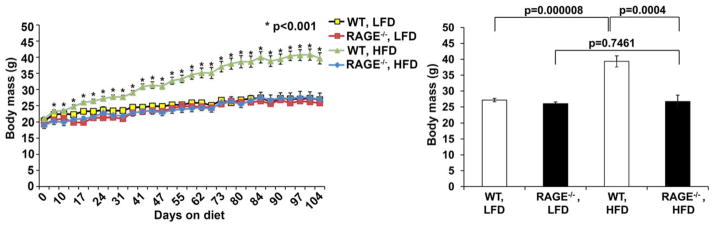
Types 1 and 2 diabetes are on the rise worldwide. Although the treatment of hyperglycemia has benefited from recent advances, aggressive efforts to maintain euglycemia may be fraught with risk, especially in older subjects or in subjects vulnerable to hypoglycemic unawareness. Hence, strategies to prevent and treat the complications of hyperglycemia are essential. In this review we summarize recent updates on the biology of the receptor for advanced glycation endproducts (RAGE) in the pathogenesis of both micro- and macrovascular complications of diabetes, insights from the study of mouse models of obesity and diabetic complications, and from associative studies in human subjects. The study of the mechanisms and consequences of the interaction of the RAGE cytoplasmic domain with the formin, mDia1, in RAGE signal transduction, will be discussed. Lastly, we review the "state-of-the-art" on RAGE-directed therapeutics. Tackling RAGE/mDia1 may identify a novel class of therapeutics preventing diabetes and its complications.
1型和2型糖尿病在全球范围内呈上升趋势。尽管高血糖治疗受益于近期进展,但积极维持血糖正常的努力可能充满风险,尤其是在老年患者或易发生低血糖无意识的患者中。因此,预防和治疗高血糖并发症的策略至关重要。在本综述中,我们总结了关于晚期糖基化终产物受体(RAGE)生物学在糖尿病微血管和大血管并发症发病机制方面的最新进展,肥胖和糖尿病并发症小鼠模型研究以及人类受试者关联研究的见解。将讨论RAGE细胞质结构域与formin、mDia1在RAGE信号转导中的相互作用机制及后果。最后,我们综述了RAGE导向治疗的“最新进展”。针对RAGE/mDia1可能会发现一类预防糖尿病及其并发症的新型治疗方法。