Li Pu, Zhang Lei
Department of Cardiac Surgery, The Third Hospital of Hebei Medical University, Hebei, Shijiazhuang 050017, P.R. China.
Department of Histology and Embryology, Hebei Medical University, Hebei, Shijiazhuang 050017, P.R. China.
Mol Med Rep. 2015 Aug;12(2):2607-21. doi: 10.3892/mmr.2015.3775. Epub 2015 May 12.
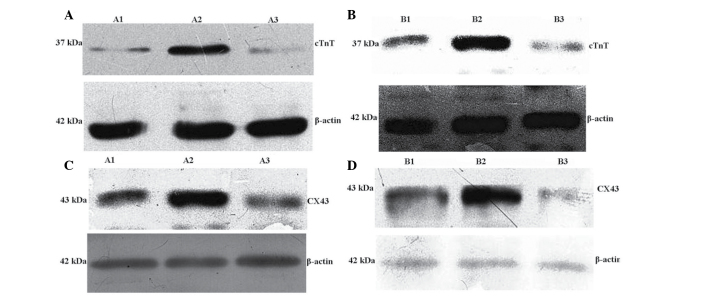
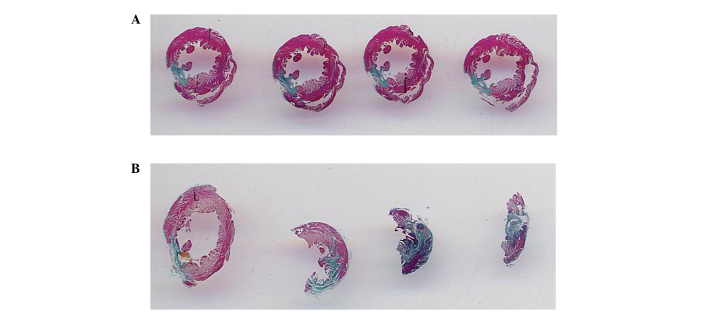
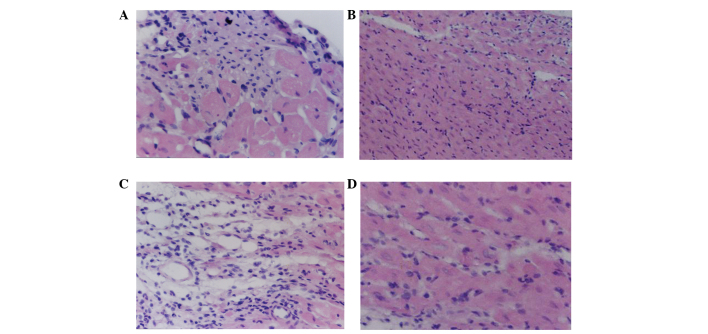
The present study aimed to investigate the effects of Nkx2.5 or GATA-4 transfection with myocardial extracellular environment co-culture on the transformation of bone marrow mesenchymal stem cells (BMSCs) into differentiated cardiomyocytes. Nkx2.5 or GATA-4 were transfected into myocardial extracellular environment co-cultured BMSCs, and then injected into the periphery of infarcted myocardium of a myocardial infarction rabbit model. The effects of these gene transfections and culture on the infarcted myocardium were observed and the results may provide an experimental basis for the efficient myocardial cell differentiation of BMSCs. The present study also suggested that these cells may provide a source and clinical basis for myocardial injury repair via stem cell transplantation. The present study examined whether Nkx2.5 or GATA-4 exogenous gene transfection with myocardial cell extracellular environment co-culture were able to induce the differentiation of BMSCs into cardiac cells. In addition, the effect of these transfected BMSCs on the repair of the myocardium following myocardial infarction was determined using New Zealand rabbit models. The results demonstrated that myocardial cell differentiation was significantly less effective following exogenous gene transfection of Nkx2.5 or GATA-4 alone compared with that of transfection in combination with extracellular environment co-culture. In addition, the results of the present study showed that exogenous gene transfection of Nkx2.5 or GATA-4 into myocardial cell extracellular environment co-cultured BMSCs was able to significantly enhance the ability to repair, mitigating the death of myocardial cells and activation of the myocardium in rabbits with myocardial infarction compared with those of the rabbits transplanted with untreated BMSCs. In conclusion, the exogenous Nkx2.5 and GATA-4 gene transfection into myocardial extracellular environment co-cultured BMSCs induced increased differentiation into myocardial cells compared with that of gene transfection alone. Furthermore, significantly enhanced reparative effects were observed in the myocardium of rabbits following treatment with Nkx2.5-or GATA-4-transfected myocardial cell extracellular environment co-cultured BMSCs compared with those treated with untreated BMSCs.
本研究旨在探讨在心肌细胞外环境共培养条件下,转染Nkx2.5或GATA-4对骨髓间充质干细胞(BMSCs)向分化心肌细胞转化的影响。将Nkx2.5或GATA-4转染到心肌细胞外环境共培养的BMSCs中,然后注射到心肌梗死兔模型梗死心肌的周边区域。观察这些基因转染和培养对梗死心肌的影响,结果可为BMSCs高效分化为心肌细胞提供实验依据。本研究还表明,这些细胞可能为通过干细胞移植修复心肌损伤提供来源和临床依据。本研究检测了在心肌细胞外环境共培养条件下,转染Nkx2.5或GATA-4外源基因是否能够诱导BMSCs分化为心肌细胞。此外,使用新西兰兔模型确定了这些转染的BMSCs对心肌梗死后心肌修复的作用。结果表明,单独转染Nkx2.5或GATA-4外源基因后,心肌细胞分化效果明显低于与细胞外环境共培养转染的效果。此外,本研究结果显示,与移植未处理BMSCs的兔子相比,将Nkx2.5或GATA-4转染到心肌细胞外环境共培养的BMSCs中,能够显著增强修复能力,减轻心肌梗死兔子心肌细胞的死亡并激活心肌。总之,与单独基因转染相比,将外源Nkx2.5和GATA-4基因转染到心肌细胞外环境共培养的BMSCs中可诱导其向心肌细胞的分化增加。此外,与未处理BMSCs治疗的兔子相比,用Nkx2.5或GATA-4转染的心肌细胞外环境共培养的BMSCs治疗的兔子心肌修复效果显著增强。