Gagliardi Paolo Armando, Puliafito Alberto, di Blasio Laura, Chianale Federica, Somale Desiana, Seano Giorgio, Bussolino Federico, Primo Luca
1] Department of Oncology, University of Torino, Torino, 10043, Italy [2] Candiolo Cancer Institute-FPO IRCCS, Candiolo, 10060, Italy.
Candiolo Cancer Institute-FPO IRCCS, Candiolo, 10060, Italy.
Sci Rep. 2015 May 15;5:10206. doi: 10.1038/srep10206.
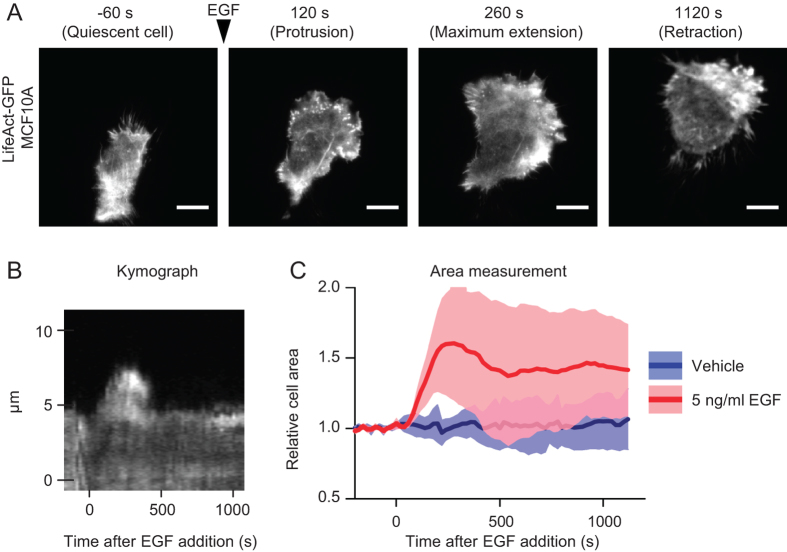
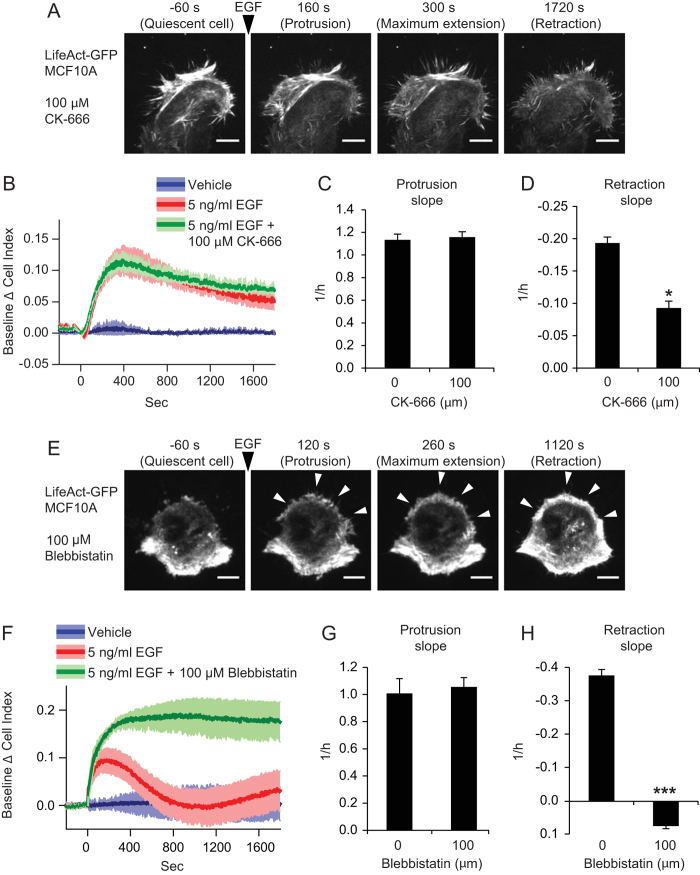
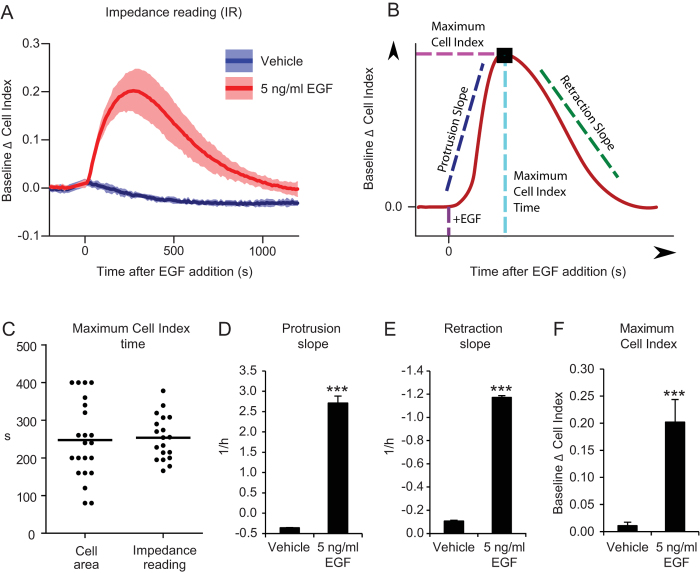
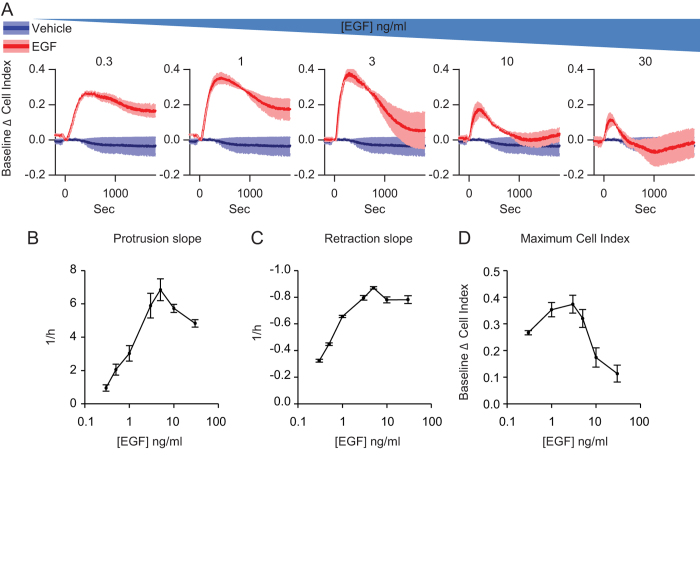
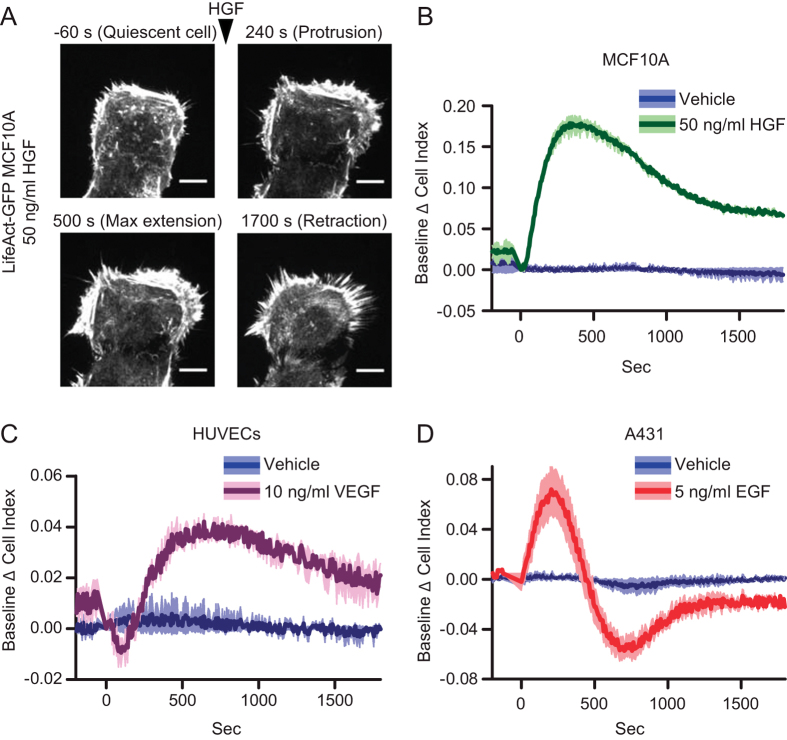
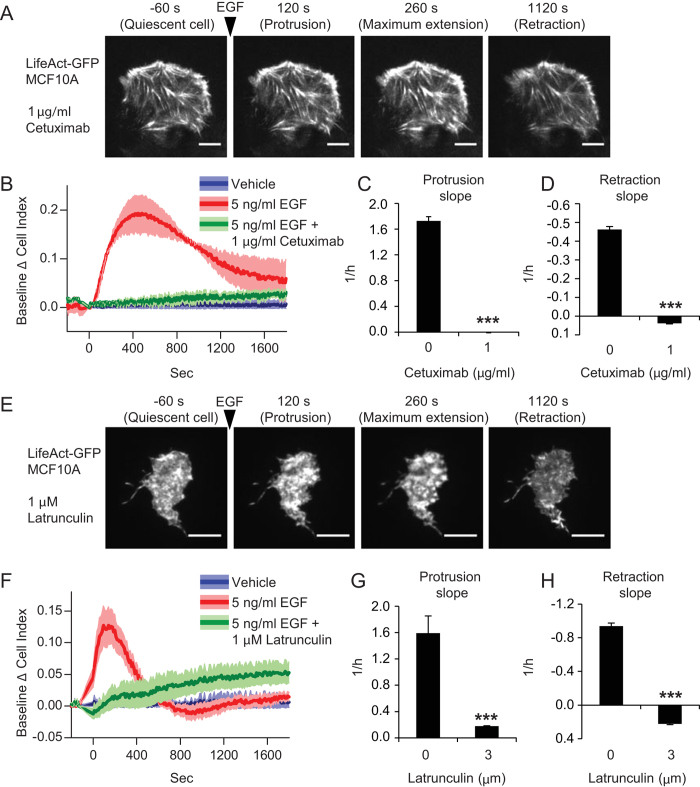
Cellular protrusions are highly dynamic structures involved in fundamental processes, including cell migration and invasion. For a cell to migrate, its leading edge must form protrusions, and then adhere or retract. The spatial and temporal coordination of protrusions and retraction is yet to be fully understood. The study of protrusion dynamics mainly relies on live-microscopy often coupled to fluorescent labeling. Here we report the use of an alternative, label-free, quantitative and rapid assay to analyze protrusion dynamics in a cell population based on the real-time recording of cell activity by means of electronic sensors. Cells are seeded on a plate covered with electrodes and their shape changes map into measured impedance variations. Upon growth factor stimulation the impedance increases due to protrusive activity and decreases following retraction. Compared to microscopy-based methods, impedance measurements are suitable to high-throughput studies on different cell lines, growth factors and chemical compounds. We present data indicating that this assay lends itself to dissect the biochemical signaling pathways controlling adhesive protrusions. Indeed, we show that the protrusion phase is sustained by actin polymerization, directly driven by growth factor stimulation. Contraction instead mainly relies on myosin action, pointing at a pivotal role of myosin in lamellipodia retraction.
细胞突起是参与包括细胞迁移和侵袭在内的基本过程的高度动态结构。细胞迁移时,其前沿必须形成突起,然后附着或缩回。突起和缩回的时空协调仍有待充分了解。突起动力学的研究主要依赖于通常与荧光标记相结合的活细胞显微镜观察。在此,我们报告了一种基于电子传感器实时记录细胞活动的替代方法,用于分析细胞群体中的突起动力学,该方法无需标记、定量且快速。将细胞接种在覆盖有电极的平板上,其形状变化映射为测量到的阻抗变化。生长因子刺激后,由于突起活动,阻抗增加,缩回后阻抗降低。与基于显微镜的方法相比,阻抗测量适用于对不同细胞系、生长因子和化合物的高通量研究。我们提供的数据表明,该检测方法有助于剖析控制粘附突起的生化信号通路。事实上,我们表明突起阶段由肌动蛋白聚合维持,直接由生长因子刺激驱动。相反,收缩主要依赖于肌球蛋白的作用,这表明肌球蛋白在片足缩回中起关键作用。