Rajagopalan Balasubramaniyan, Hur Seung Hyun, Chung Jin Suk
School of Chemical Engineering, University of Ulsan, 93 Daehakro, Namgu, Ulsan, 680-749 Republic of Korea.
Nanoscale Res Lett. 2015 Apr 16;10:183. doi: 10.1186/s11671-015-0888-1. eCollection 2015.
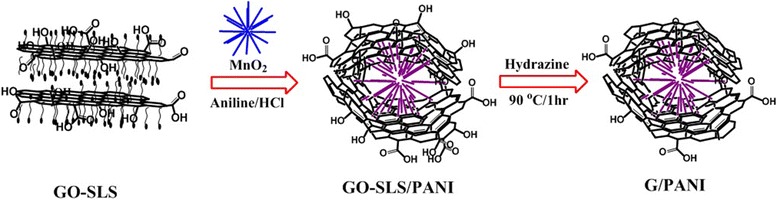
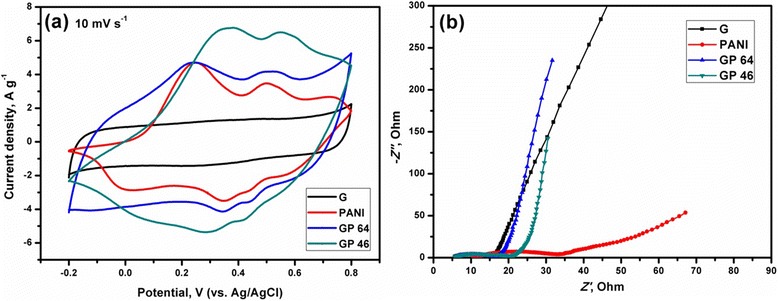
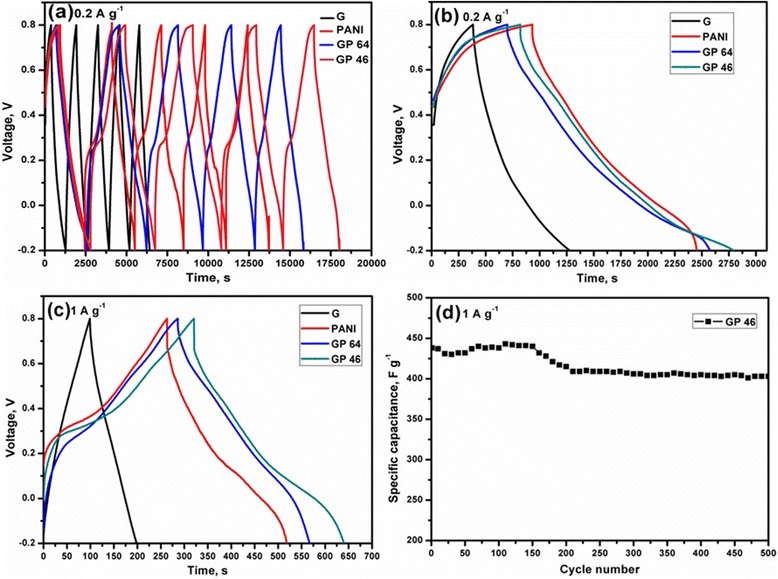
Surfactant-treated graphene/polyaniline (G/PANI) nanocomposites were prepared by the MnO2 template-aided oxidative polymerization of aniline (ANI) on the surfactant-treated graphene sheets. The electrochemical performances of the G/PANI nanocomposites in a three-electrode system using an aqueous sulfuric acid as an electrolyte exhibited a specific capacitance of 436 F g(-1) at 1 A g(-1), which is much higher than the specific capacitance of pure PANI (367 F g(-1)). Such a higher specific capacitance of the G/PANI nanocomposite inferred an excellent synergistic effect of respective pseudocapacitance and electrical double-layer capacitance of PANI and graphene.
通过在经表面活性剂处理的石墨烯片上进行二氧化锰模板辅助的苯胺(ANI)氧化聚合反应,制备了经表面活性剂处理的石墨烯/聚苯胺(G/PANI)纳米复合材料。在以硫酸水溶液为电解质的三电极体系中,G/PANI纳米复合材料的电化学性能在1 A g(-1) 时表现出436 F g(-1) 的比电容,这远高于纯聚苯胺的比电容(367 F g(-1))。G/PANI纳米复合材料如此高的比电容表明聚苯胺和石墨烯各自的赝电容和双电层电容具有优异的协同效应。