Park Ji Hun, Lee Yeong Ju, Bae Jong-Seong, Kim Bum-Su, Cho Yong Chan, Moriyoshi Chikako, Kuroiwa Yoshihiro, Lee Seunghun, Jeong Se-Young
Department of Cogno-Mechatronics Engineering, Pusan National University, Miryang, 627-706 South Korea.
Department of Cogno-Mechatronics Engineering, Pusan National University, Miryang, 627-706 South Korea ; Department of Nanofusion Engineering, Pusan National University, Busan, 609-735 South Korea.
Nanoscale Res Lett. 2015 Apr 18;10:186. doi: 10.1186/s11671-015-0887-2. eCollection 2015.
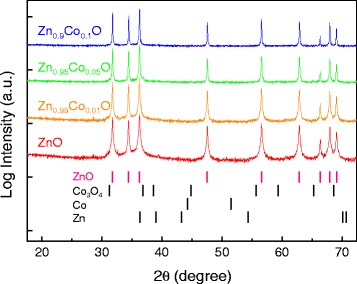
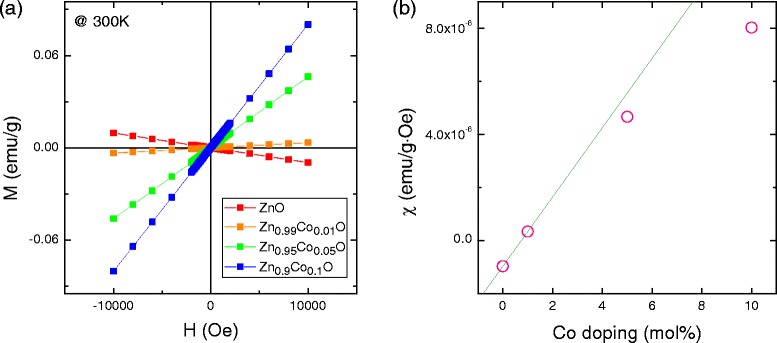
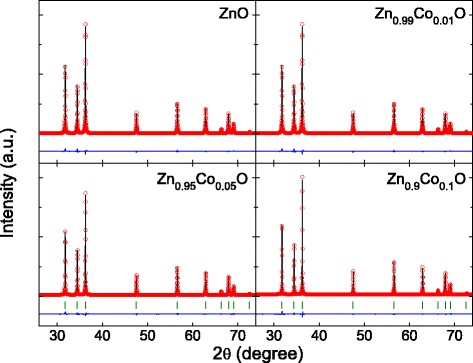
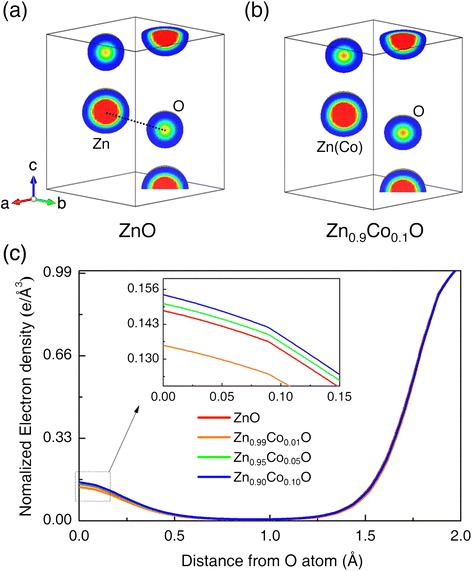
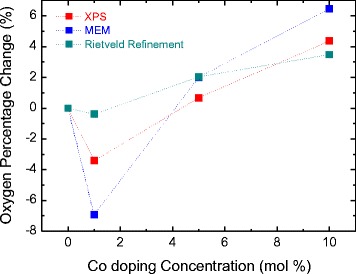
Oxygen vacancy (VO) strongly affects the properties of oxides. In this study, we used X-ray diffraction (XRD) to study changes in the VO concentration as a function of the Co-doping level of ZnO. Rietveld refinement yielded a different result from that determined via X-ray photoelectron spectroscopy (XPS), but additional maximum entropy method (MEM) analysis led it to compensate for the difference. VO tended to gradually decrease with increased Co doping, and ferromagnetic behavior was not observed regardless of the Co-doping concentration. MEM analysis demonstrated that reliable information related to the defects in the ZnO-based system can be obtained using X-ray diffraction alone.
氧空位(VO)对氧化物的性质有强烈影响。在本研究中,我们使用X射线衍射(XRD)来研究VO浓度随ZnO中Co掺杂水平的变化。Rietveld精修得到的结果与通过X射线光电子能谱(XPS)测定的结果不同,但额外的最大熵方法(MEM)分析使其弥补了这种差异。随着Co掺杂量的增加,VO趋于逐渐减少,并且无论Co掺杂浓度如何均未观察到铁磁行为。MEM分析表明,仅使用X射线衍射就可以获得与ZnO基体系中的缺陷相关的可靠信息。