Muller Cécile, Cacaci Margherita, Sauvageot Nicolas, Sanguinetti Maurizio, Rattei Thomas, Eder Thomas, Giard Jean-Christophe, Kalinowski Jörn, Hain Torsten, Hartke Axel
U2RM-Stress and Virulence, University of Caen Basse-Normandie, EA4655, 14032 Caen, France.
U2RM-Stress and Virulence, University of Caen Basse-Normandie, EA4655, 14032 Caen, France; Institute of Microbiology, Catholic University of Sacred Heart, 00168, Rome, Italy.
PLoS One. 2015 May 15;10(5):e0126143. doi: 10.1371/journal.pone.0126143. eCollection 2015.
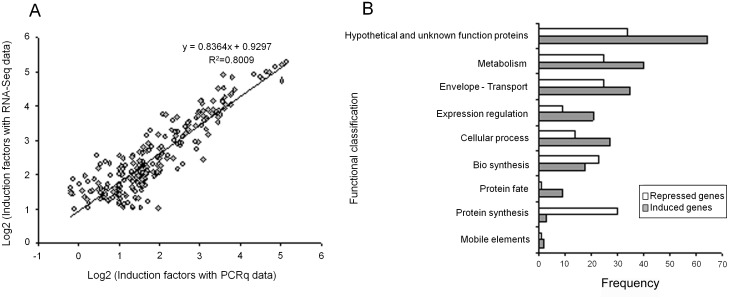
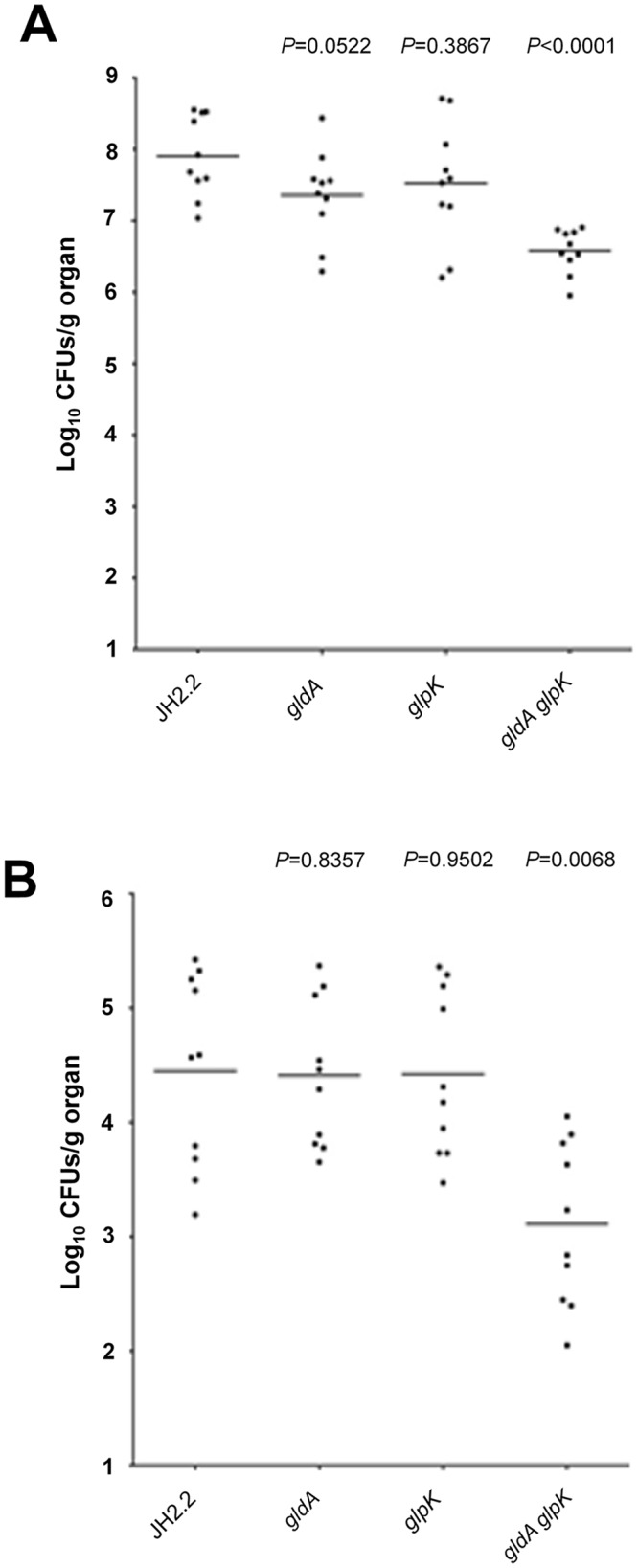
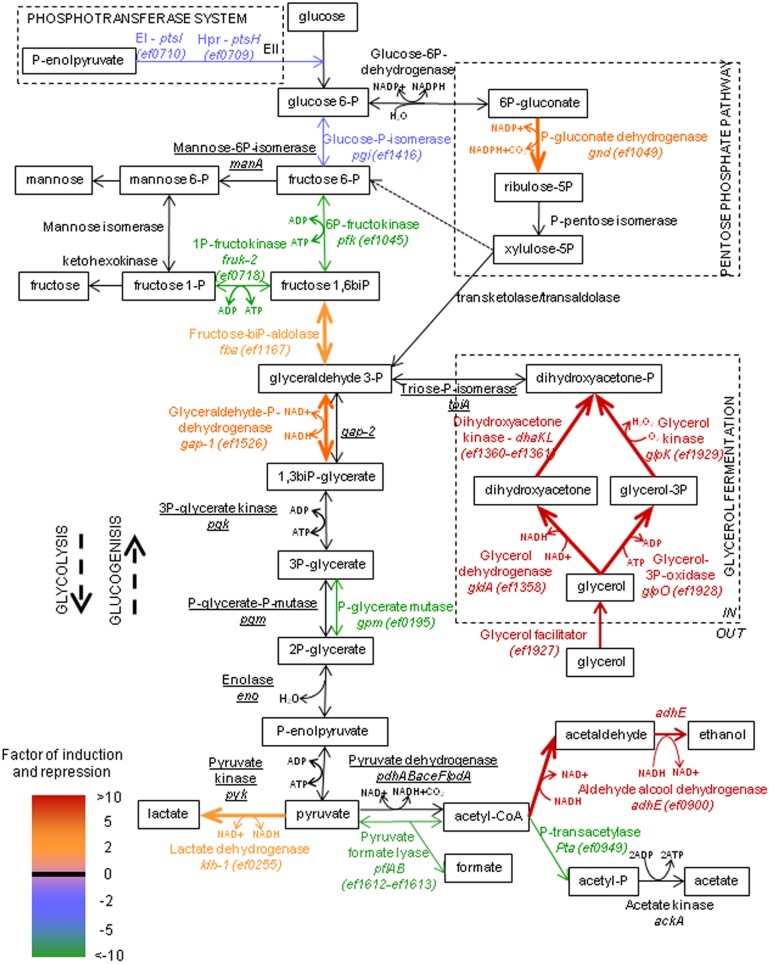
Enterococcus faecalis is a Gram-positive lactic acid intestinal opportunistic bacterium with virulence potential. For a better understanding of the adapation of this bacterium to the host conditions, we performed a transcriptome analysis of bacteria isolated from an infection site (mouse peritonitis) by RNA-sequencing. We identified a total of 211 genes with significantly higher transcript levels and 157 repressed genes. Our in vivo gene expression database reflects well the infection process since genes encoding important virulence factors like cytolysin, gelatinase or aggregation substance as well as stress response proteins, are significantly induced. Genes encoding metabolic activities are the second most abundant in vivo induced genes demonstrating that the bacteria are metabolically active and adapt to the special nutrient conditions of the host. α- and β- glucosides seem to be important substrates for E. faecalis inside the host. Compared to laboratory conditions, the flux through the upper part of glycolysis seems to be reduced and more carbon may enter the pentose phosphate pathway. This may reflect the need of the bacteria under infection conditions to produce more reducing power for biosynthesis. Another important substrate is certainly glycerol since both pathways of glycerol catabolism are strongly induced. Strongly in vivo induced genes should be important for the infection process. This assumption has been verified in a virulence test using well characterized mutants affected in glycerol metabolism. This showed indeed that mutants unable to metabolize this sugar alcohol are affected in organ colonisation in a mouse model.
粪肠球菌是一种具有潜在毒力的革兰氏阳性肠道乳酸机会致病菌。为了更好地了解这种细菌对宿主环境的适应性,我们通过RNA测序对从感染部位(小鼠腹膜炎)分离出的细菌进行了转录组分析。我们总共鉴定出211个转录水平显著升高的基因和157个受抑制的基因。我们的体内基因表达数据库很好地反映了感染过程,因为编码重要毒力因子(如细胞溶素、明胶酶或聚集物质)以及应激反应蛋白的基因被显著诱导。编码代谢活动的基因是体内诱导的第二丰富的基因,表明细菌具有代谢活性并适应宿主的特殊营养条件。α-和β-糖苷似乎是宿主内粪肠球菌的重要底物。与实验室条件相比,糖酵解上游部分的通量似乎降低,更多的碳可能进入磷酸戊糖途径。这可能反映了感染条件下细菌为生物合成产生更多还原力的需求。另一个重要的底物肯定是甘油,因为甘油分解代谢的两条途径都被强烈诱导。体内强烈诱导的基因对感染过程应该很重要。这一假设在使用甘油代谢受影响的特征明确的突变体进行的毒力试验中得到了验证。这确实表明,无法代谢这种糖醇的突变体在小鼠模型中的器官定殖受到影响。