McLendon Jared M, Joshi Sachindra R, Sparks Jeff, Matar Majed, Fewell Jason G, Abe Kohtaro, Oka Masahiko, McMurtry Ivan F, Gerthoffer William T
Department of Biochemistry and Molecular Biology, University of South Alabama College of Medicine, Mobile, AL 36688, USA; Center for Lung Biology, University of South Alabama College of Medicine, Mobile, AL 36688, USA.
Department of Biochemistry and Molecular Biology, University of South Alabama College of Medicine, Mobile, AL 36688, USA; Center for Lung Biology, University of South Alabama College of Medicine, Mobile, AL 36688, USA.
J Control Release. 2015 Jul 28;210:67-75. doi: 10.1016/j.jconrel.2015.05.261. Epub 2015 May 13.
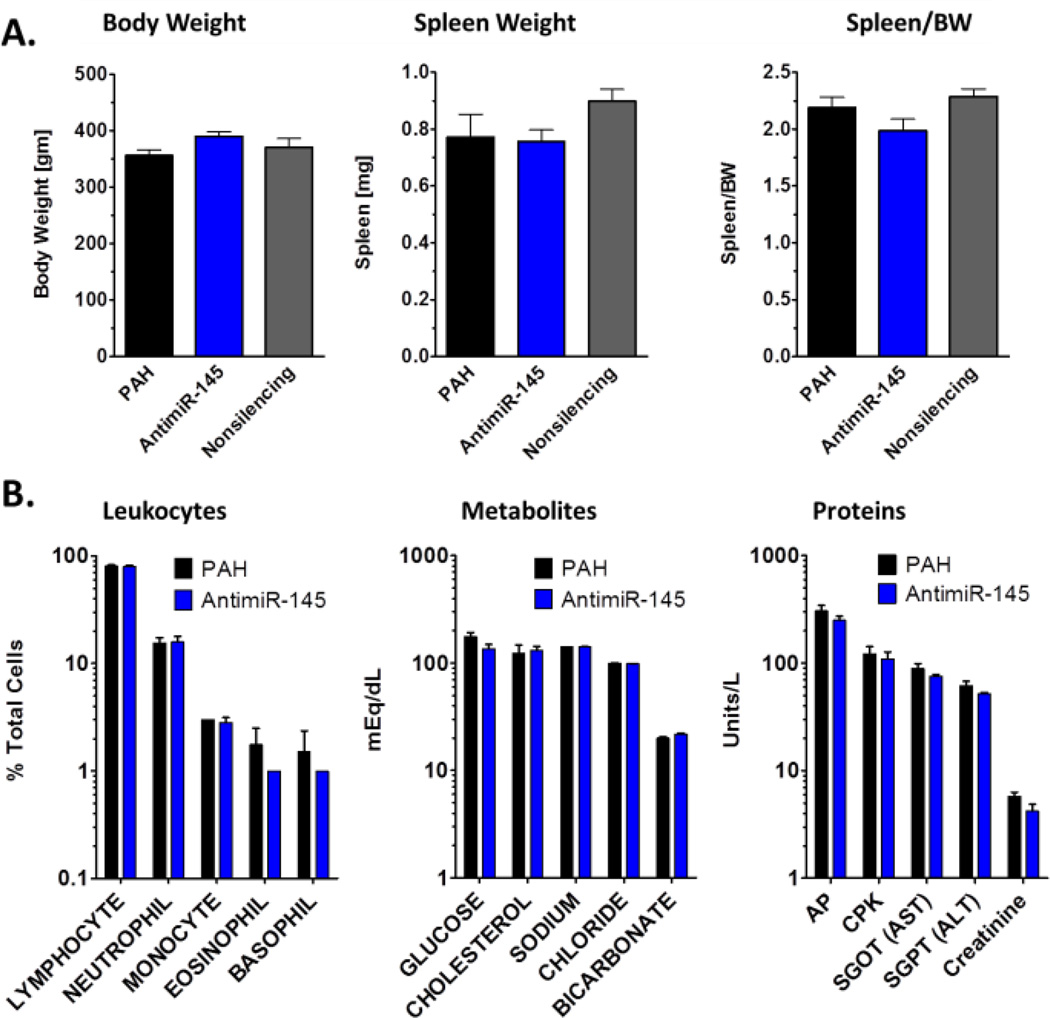
Therapies that exploit RNA interference (RNAi) hold great potential for improving disease outcomes. However, there are several challenges that limit the application of RNAi therapeutics. One of the most important challenges is effective delivery of oligonucleotides to target cells and reduced delivery to non-target cells. We have previously developed a functionalized cationic lipopolyamine (Star:Star-mPEG-550) for in vivo delivery of siRNA to pulmonary vascular cells. This optimized lipid formulation enhances the retention of siRNA in mouse lungs and achieves significant knockdown of target gene expression for at least 10days following a single intravenous injection. Although this suggests great potential for developing lung-directed RNAi-based therapies, the application of Star:Star-mPEG mediated delivery of RNAi based therapies for pulmonary vascular diseases such as pulmonary arterial hypertension (PAH) remains unknown. We identified differential expression of several microRNAs known to regulate cell proliferation, cell survival and cell fate that are associated with development of PAH, including increased expression of microRNA-145 (miR-145). Here we test the hypothesis that Star:Star-mPEG mediated delivery of an antisense oligonucleotide against miR-145 (antimiR-145) will improve established PAH in rats. We performed a series of experiments testing the in vivo distribution, toxicity, and efficacy of Star:Star-mPEG mediated delivery of antimiR-145 in rats with Sugen-5416/hypoxia induced PAH. We showed that after subchronic therapy of three intravenous injections over 5weeks at 2mg/kg, antimiR-145 accumulated in rat lung tissue and reduced expression of endogenous miR-145. Using a novel in situ hybridization approach, we demonstrated substantial distribution of antimiR-145 in the lungs as well as the liver, kidney, and spleen. We assessed toxic effects of Star:Star-mPEG/antimiR-145 with serial complete blood counts of leukocytes and serum metabolic panels, gross pathology, and histopathology and did not detect significant off-target effects. AntimiR-145 reduced the degree of pulmonary arteriopathy, reduced the severity of pulmonary hypertension, and reduced the degree of cardiac dysfunction. The results establish effective and low toxicity of lung delivery of a miRNA-145 inhibitor using functionalized cationic lipopolyamine nanoparticles to repair pulmonary arteriopathy and improve cardiac function in rats with severe PAH.
利用RNA干扰(RNAi)的疗法在改善疾病预后方面具有巨大潜力。然而,存在几个限制RNAi疗法应用的挑战。最重要的挑战之一是将寡核苷酸有效递送至靶细胞,并减少对非靶细胞的递送。我们之前开发了一种功能化阳离子脂多胺(Star:Star-mPEG-550),用于将小干扰RNA(siRNA)体内递送至肺血管细胞。这种优化的脂质制剂增强了siRNA在小鼠肺中的保留,并在单次静脉注射后至少10天实现了靶基因表达的显著敲低。尽管这表明开发基于肺靶向RNAi的疗法具有巨大潜力,但Star:Star-mPEG介导的RNAi疗法在诸如肺动脉高压(PAH)等肺血管疾病中的应用仍不清楚。我们鉴定了几种已知调节细胞增殖、细胞存活和细胞命运且与PAH发展相关的微小RNA的差异表达,包括微小RNA-145(miR-145)表达增加。在此,我们测试了以下假设:Star:Star-mPEG介导的针对miR-145的反义寡核苷酸(抗miR-145)递送将改善大鼠已形成的PAH。我们进行了一系列实验,测试Star:Star-mPEG介导的抗miR-145在Sugen-5416/低氧诱导的PAH大鼠中的体内分布、毒性和疗效。我们发现,在以2mg/kg的剂量进行为期5周的三次静脉注射的亚慢性治疗后,抗miR-145在大鼠肺组织中积累,并降低了内源性miR-145的表达。使用一种新型原位杂交方法,我们证明抗miR-145在肺以及肝脏、肾脏和脾脏中大量分布。我们通过对白细胞进行连续全血细胞计数和血清代谢指标检测、大体病理学检查以及组织病理学检查来评估Star:Star-mPEG/抗miR-145的毒性作用,未检测到明显的脱靶效应。抗miR-145减轻了肺动脉病变程度,降低了肺动脉高压的严重程度,并减轻了心脏功能障碍的程度。这些结果证实了使用功能化阳离子脂多胺纳米颗粒进行肺递送miRNA-145抑制剂在修复严重PAH大鼠的肺动脉病变和改善心脏功能方面具有有效性且低毒性。