Qiu Xiaofu, Zhu Jin, Sun Yin, Fan Kun, Yang Dong-Rong, Li Gonghui, Yang Guosheng, Chang Chawnshang
Department of Urology, Guangdong No. 2 Provincial People's Hospital, Guangzhou, China.
George Whipple Lab for Cancer Research, Departments of Pathology, Urology, and Radiation Oncology and The Wilmot Cancer Center, University of Rochester Medical Center, Rochester, NY, USA.
Oncotarget. 2015 Jun 20;6(17):15397-409. doi: 10.18632/oncotarget.3778.
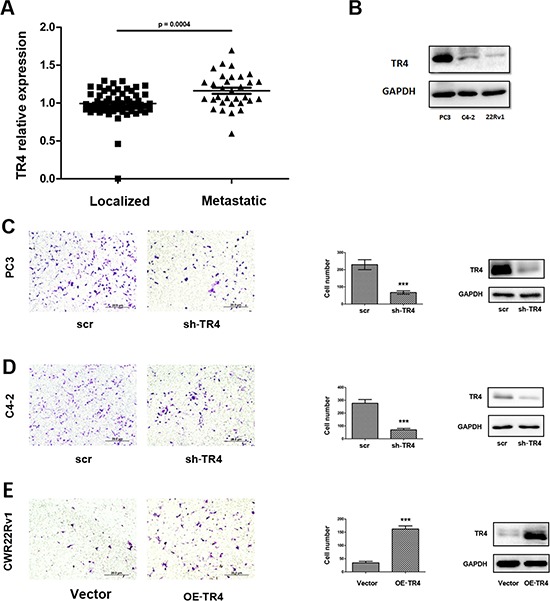
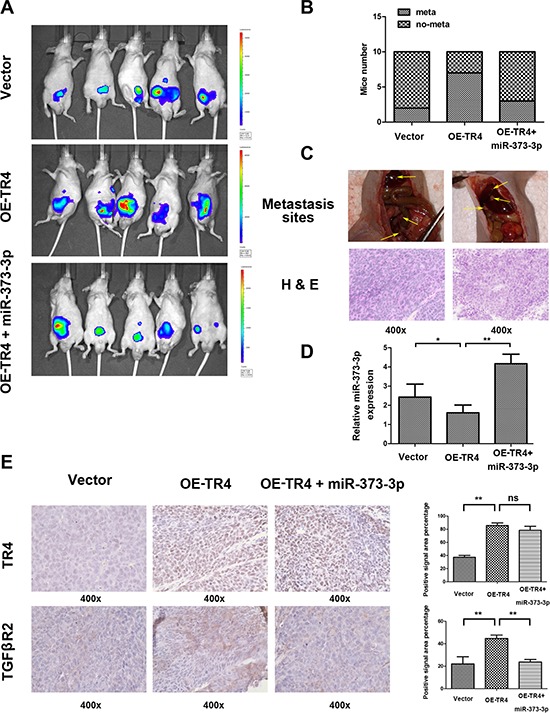
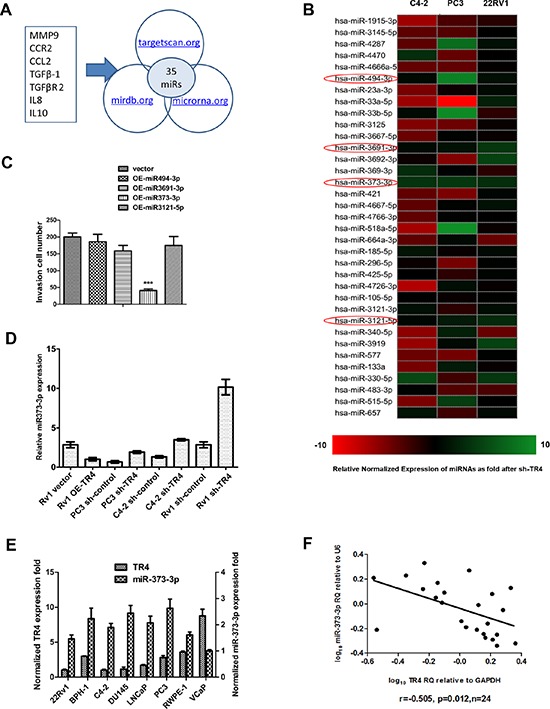
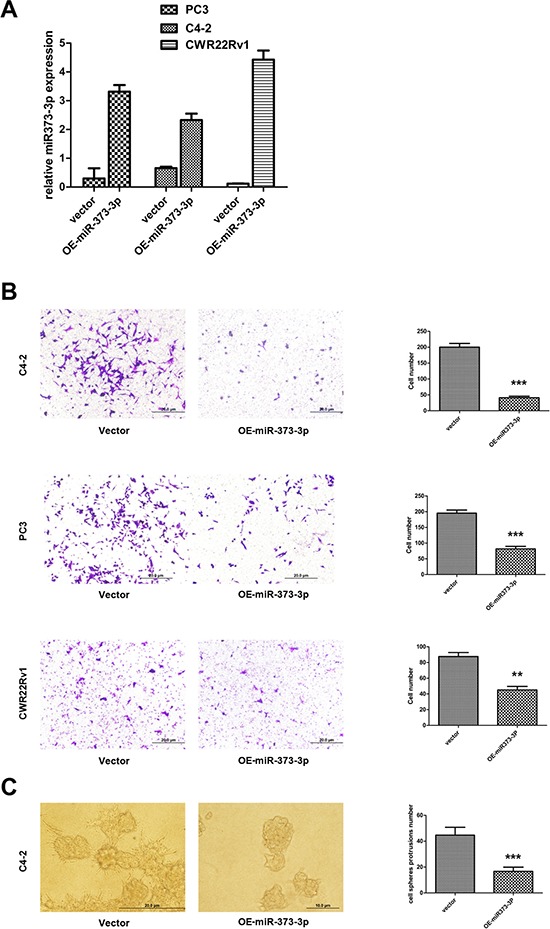
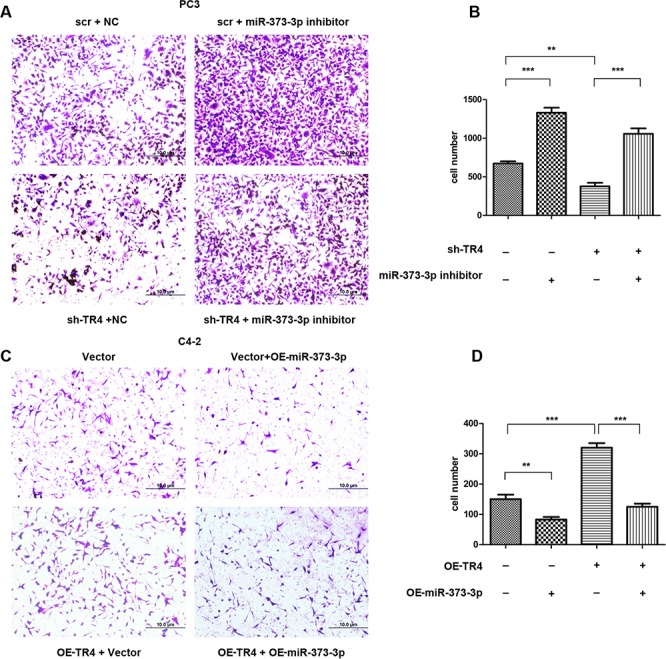
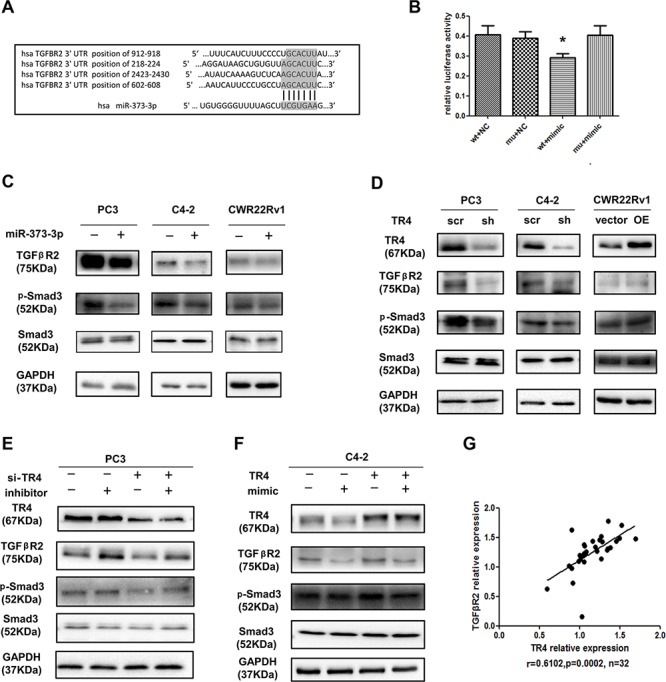
Testicular nuclear receptor 4 (TR4), a member of the nuclear receptor superfamily, may play important roles to modulate the metabolic diseases and prostate tumorigenesis. Here we found TR4 could increase prostate cancer (PCa) cell invasion. Mechanism dissection revealed that TR4 might increase PCa cell invasion via decreasing the miR-373-3p expression that resulted in the activation of the TGFβR2/p-Smad3 signals. The in vivo mouse model using orthotopically xenografted CWR22Rv1 cell line transfected with luciferase-reporter confirmed in vitro cell line studies showing TR4 increased PCa metastasis via decreasing the miR-373-3p expression. Together, these data suggest that TR4 may increase PCa metastasis via a newly identified signal and targeting these TR4/miR-473-3p/TGFβR2/p-Smad3 signals using TR4 antagonist or TR4-siRNA or miR-373-3p may allow us to develop a new potential therapeutic approach to better suppress PCa metastasis.
睾丸核受体4(TR4)是核受体超家族的成员之一,可能在调节代谢疾病和前列腺肿瘤发生过程中发挥重要作用。在此,我们发现TR4可增强前列腺癌细胞的侵袭能力。机制研究表明,TR4可能通过降低miR-373-3p的表达来增强前列腺癌细胞的侵袭能力,进而导致TGFβR2/p-Smad3信号的激活。使用荧光素酶报告基因转染的原位异种移植CWR22Rv1细胞系构建的体内小鼠模型证实了体外细胞系研究结果,即TR4通过降低miR-373-3p的表达来促进前列腺癌转移。综上所述,这些数据表明TR4可能通过一个新发现的信号通路促进前列腺癌转移,使用TR4拮抗剂、TR4-siRNA或miR-373-3p靶向这些TR4/miR-473-3p/TGFβR2/p-Smad3信号通路,可能为我们开发一种新的潜在治疗方法以更好地抑制前列腺癌转移提供思路。