Konstantoulas Constantine James, Lamp Benjamin, Rumenapf Tillman Hans, Indik Stanislav
Institute of Virology, University of Veterinary Medicine, Veterinaerplatz 1, 1210, Vienna, Austria.
Retrovirology. 2015 May 16;12:43. doi: 10.1186/s12977-015-0168-2.
Mouse mammary tumour virus (MMTV) is a betaretrovirus that infects rodent cells and uses mouse tranferrin receptor 1 (TfR1) for cell entry. Several MMTV strains have been shown to productively infect, in addition to murine cells, various heterologous cell lines including those of human origin, albeit less efficiently than murine cells. Furthermore, there have been reports that the continued passage of MMTV in heterologous cell lines gives rise to novel variants that are able to infect naive non-murine cells with higher efficiency than the parental virus.
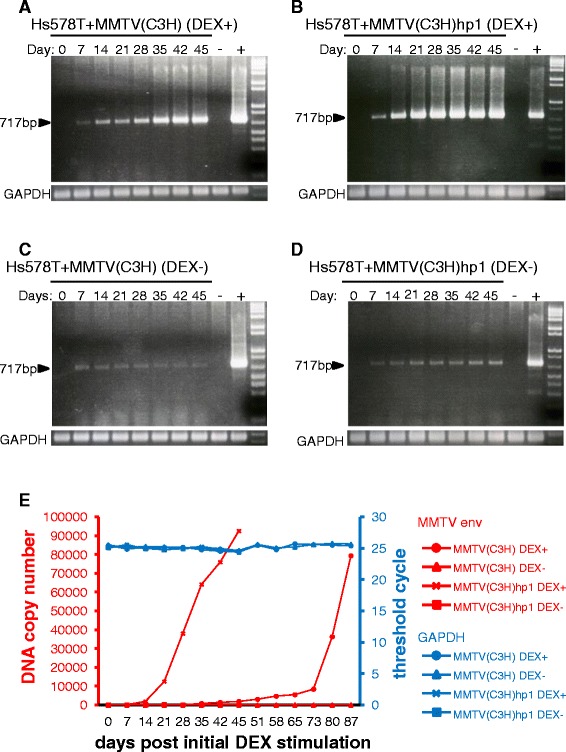
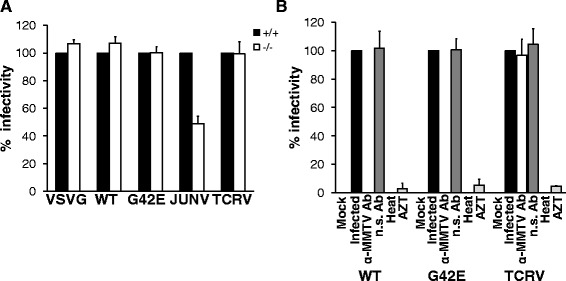
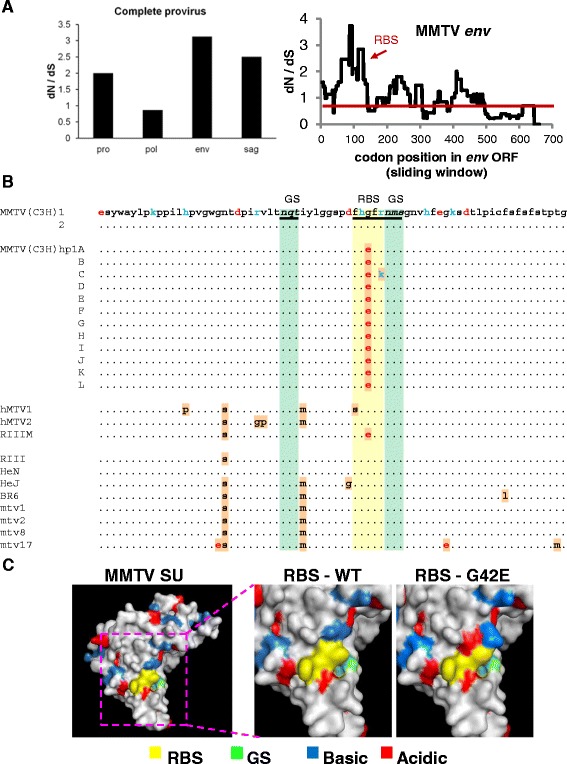
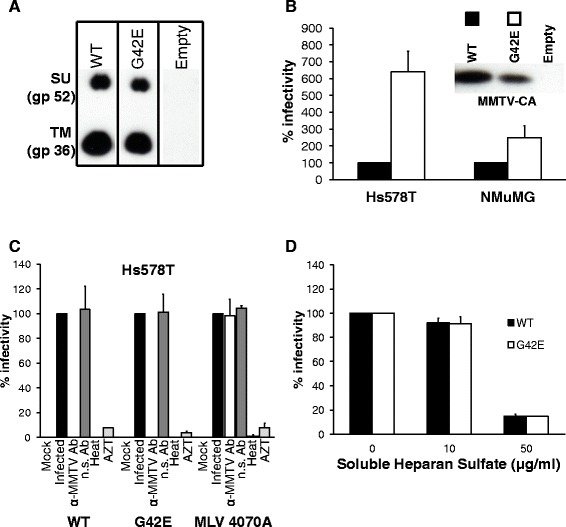
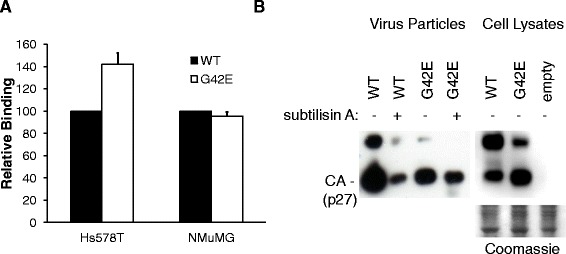
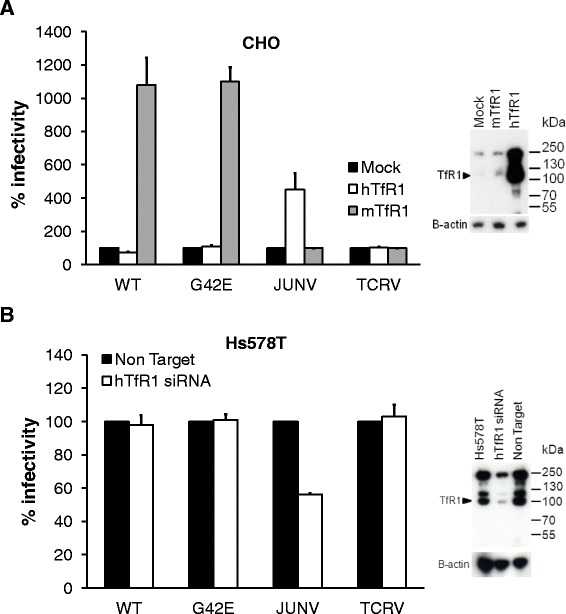
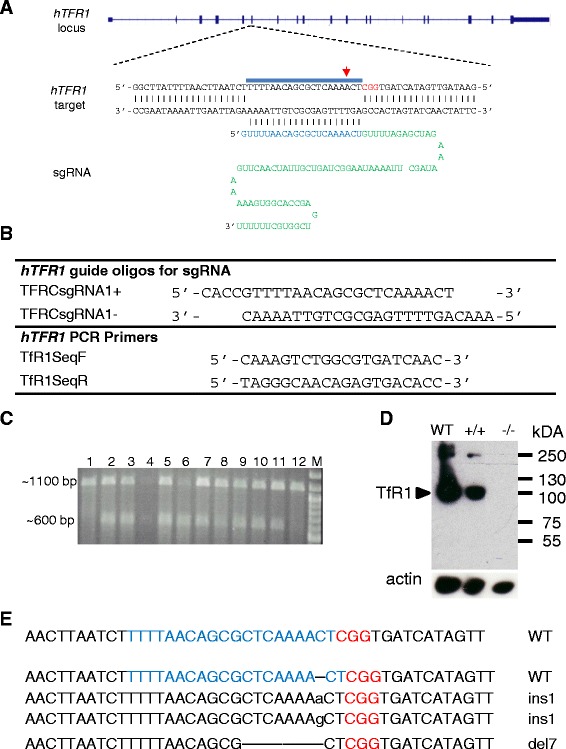
We show that MMTV(C3H), like other MMTV strains, that had undergone a number of replication cycles in non-murine cells displayed an increased replication kinetic, as compared to parental virus, when applied on naive human cells. Sequence analysis of several replication kinetic variants and the parental virus, together with calculation of the ratio of non-synonymous to synonymous mutations at individual codons, revealed that several regions within the viral genome were under strong positive selection pressure during viral replication in human cells. The mutation responsible, at least in part, for the phenotypic change was subsequently mapped to the segment of env encoding the receptor binding site (F₄₀HGFR₄₄). Introduction of the identified mutation, leading to single amino acid substitution (G42E), into egfp-containing recombinant MMTV virions enhanced their ability to bind to and infect human cells. Interestingly, neither the replication kinetic mutant nor the parental virus required human TfR1 for infection. Knock-out of TFR1 gene from the human genome did not decrease the susceptibility of Hs578T cells to virus infection. Furthermore, the expression of human TfR1, in contrast to mouse TfR1, did not enhance the susceptibility of MMTV-resistant Chinese hamster ovary cells. Thus, human TfR1 is dispensable for infection and another cell surface molecule mediates the MMTV entry into human cells.
Taken together, our data explain the mechanism enabling MMTV to form 'host-range variants' in non-murine cells that has been known for a long time, the basis of which remained obscure. Our findings may expand our understanding of how viruses gain capability to cross species-specific barriers to infect new hosts.
小鼠乳腺肿瘤病毒(MMTV)是一种β逆转录病毒,可感染啮齿动物细胞,并利用小鼠转铁蛋白受体1(TfR1)进入细胞。已表明,除鼠细胞外,几种MMTV毒株还能有效感染包括人源细胞系在内的各种异源细胞系,尽管其感染效率低于鼠细胞。此外,有报道称,MMTV在异源细胞系中持续传代会产生新的变体,这些变体能够以高于亲本病毒的效率感染未感染过的非鼠细胞。
我们发现,与其他MMTV毒株一样,在非鼠细胞中经过多个复制周期的MMTV(C3H),在接种到未感染过的人细胞上时,与亲本病毒相比,显示出更快的复制动力学。对多个复制动力学变体和亲本病毒进行序列分析,并计算各个密码子非同义突变与同义突变的比率,结果表明,在人细胞中病毒复制过程中,病毒基因组内的几个区域受到强烈的正选择压力。随后,至少部分导致表型变化的突变被定位到env编码受体结合位点(F₄₀HGFR₄₄)的片段上。将导致单个氨基酸取代(G42E)的已鉴定突变引入含egfp的重组MMTV病毒粒子中,增强了它们与人细胞结合和感染的能力。有趣的是,复制动力学突变体和亲本病毒感染都不需要人TfR1。从人类基因组中敲除TFR1基因并不会降低Hs578T细胞对病毒感染的敏感性。此外,与小鼠TfR1不同,人TfR1的表达并没有增强对MMTV耐药的中国仓鼠卵巢细胞的敏感性。因此,人TfR1对于感染并非必需,另一种细胞表面分子介导MMTV进入人细胞。
综上所述,我们的数据解释了MMTV在非鼠细胞中形成“宿主范围变体”这一长期以来已知现象的机制,其基础一直不明。我们的发现可能会拓展我们对病毒如何获得跨越物种特异性屏障感染新宿主能力的理解。