Salas Yaritza, Márquez Adelys, Diaz Daniel, Romero Laura
Doctoral Program in Production Science and Animal Health, Facultad de Medicina Veterinaria y Zootecnia (FMVZ), Universidad Nacional Autónoma de México (UNAM), Mexico City, Mexico; Pathology Department, Universidad Centroccidental "Lisandro Alvarado" (UCLA), Barquisimeto, Lara, Venezuela.
Doctoral Program in Production Science and Animal Health, Facultad de Medicina Veterinaria y Zootecnia (FMVZ), Universidad Nacional Autónoma de México (UNAM), Mexico City, Mexico; Physiology Department, UCLA, Barquisimeto, Lara, Venezuela.
PLoS One. 2015 May 18;10(5):e0127381. doi: 10.1371/journal.pone.0127381. eCollection 2015.
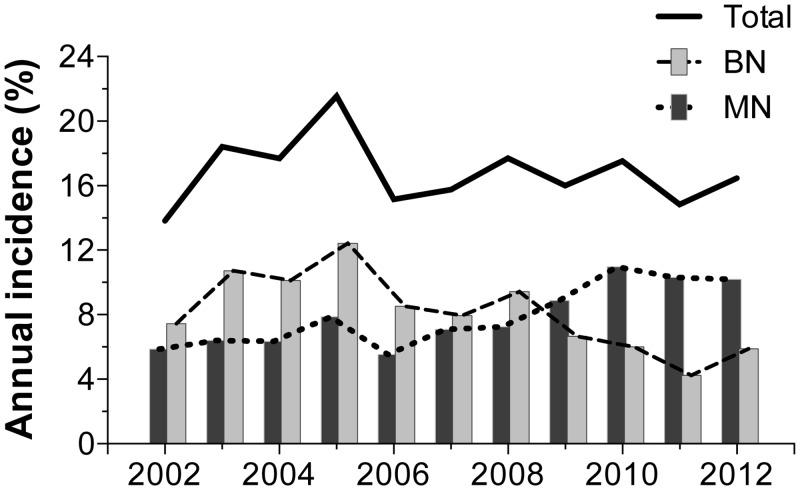
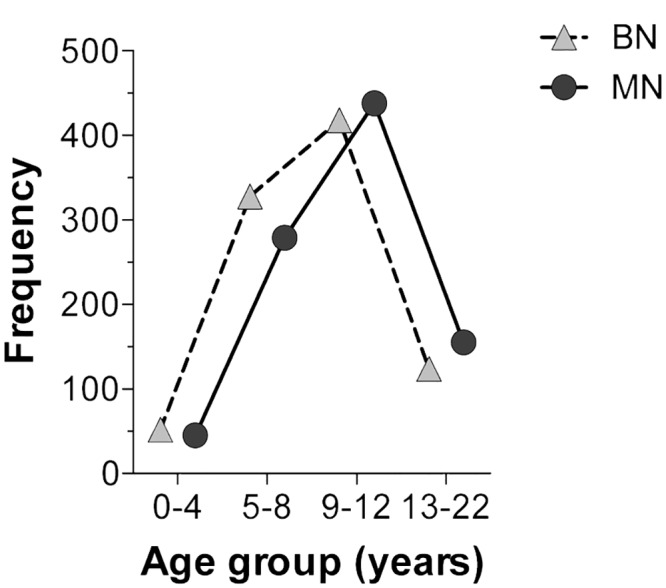
Epidemiological studies enable us to analyze disease behavior, define risk factors and establish fundamental prognostic criteria, with the purpose of studying different types of diseases. The aim of this study was to determine the epidemiological characteristics of canine mammary tumors diagnosed during the period 2002-2012. The study was based on a retrospective study consisting of 1,917 biopsies of intact dogs that presented mammary gland lesions. Biopsies were sent to the Department of Pathology FMVZ-UNAM diagnostic service. The annual incidence of mammary tumors was 16.8%: 47.7% (benign) and 47.5% (malignant). The highest number of cases was epithelial, followed by mixed tumors. The most commonly diagnosed tumors were tubular adenoma, papillary adenoma, tubular carcinoma, papillary carcinoma, solid carcinoma, complex carcinoma and carcinosarcoma. Pure breeds accounted for 80% of submissions, and the Poodle, Cocker Spaniel and German Shepherd were consistently affected. Adult female dogs (9 to 12 years old) were most frequently involved, followed by 5- to 8-year-old females. Some association between breeds with histological types of malignant tumors was observed, but no association was found between breeds and BN. Mammary tumors in intact dogs had a high incidence. Benign and malignant tumors had similar frequencies, with an increase in malignant tumors in the past four years of the study. Epithelial tumors were more common, and the most affected were old adult females, purebreds and small-sized dogs. Mammary tumors in dogs are an important animal health problem that needs to be solved by improving veterinary oncology services in Mexico.
流行病学研究使我们能够分析疾病行为、确定风险因素并建立基本的预后标准,以便研究不同类型的疾病。本研究的目的是确定2002年至2012年期间诊断出的犬乳腺肿瘤的流行病学特征。该研究基于一项回顾性研究,包括1917例出现乳腺病变的未绝育犬的活检样本。活检样本被送往墨西哥国立自治大学兽医学院病理学系诊断服务部。乳腺肿瘤的年发病率为16.8%:良性肿瘤占47.7%,恶性肿瘤占47.5%。病例数最多的是上皮性肿瘤,其次是混合性肿瘤。最常诊断出的肿瘤是管状腺瘤、乳头状腺瘤、管状癌、乳头状癌、实体癌、复合癌和癌肉瘤。纯种犬占送检病例的80%,贵宾犬、可卡犬和德国牧羊犬一直受到影响。成年雌性犬(9至12岁)最常发病,其次是5至8岁的雌性犬。观察到某些品种与恶性肿瘤的组织学类型之间存在关联,但未发现品种与良性肿瘤之间存在关联。未绝育犬的乳腺肿瘤发病率很高。良性和恶性肿瘤的发生率相似,在研究的最后四年中恶性肿瘤有所增加。上皮性肿瘤更为常见,受影响最大的是老年成年雌性犬、纯种犬和小型犬。犬乳腺肿瘤是一个重要的动物健康问题,需要通过改善墨西哥的兽医肿瘤学服务来解决。