Wang Weimin, Liu Shijia, Li Fadi, Pan Xiangyu, Li Chong, Zhang Xiaoxue, Ma Youji, La Yongfu, Xi Rui, Li Tingfu
College of Animal Science and Technology, Gansu Agriculture University, Lanzhou 730000, China.
Engineering Laboratory of Sheep Breeding and Reproduction Biotechnology in Gansu Province, Minqin 733300, China.
Int J Mol Sci. 2015 May 18;16(5):11385-97. doi: 10.3390/ijms160511385.
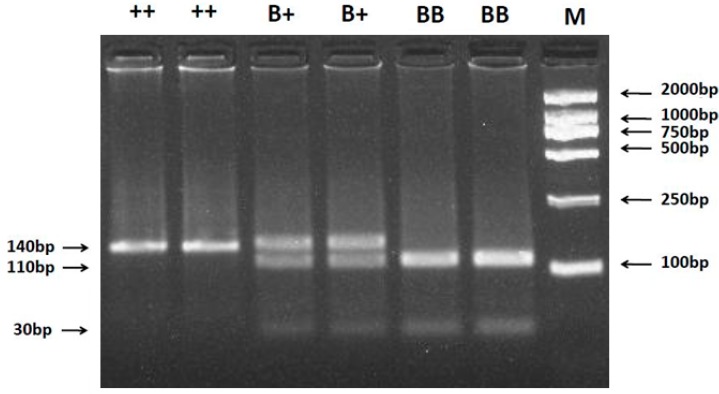
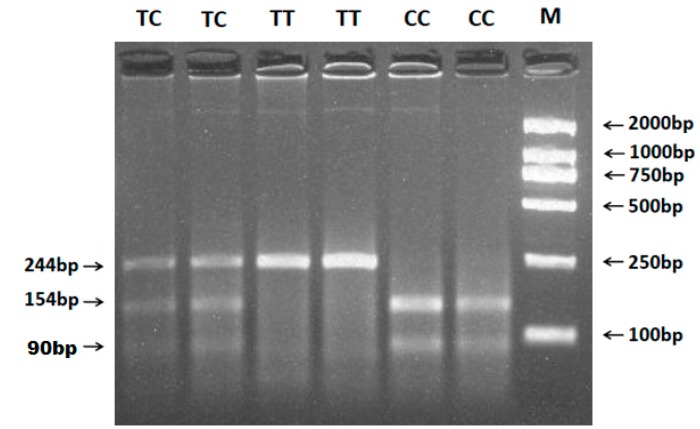
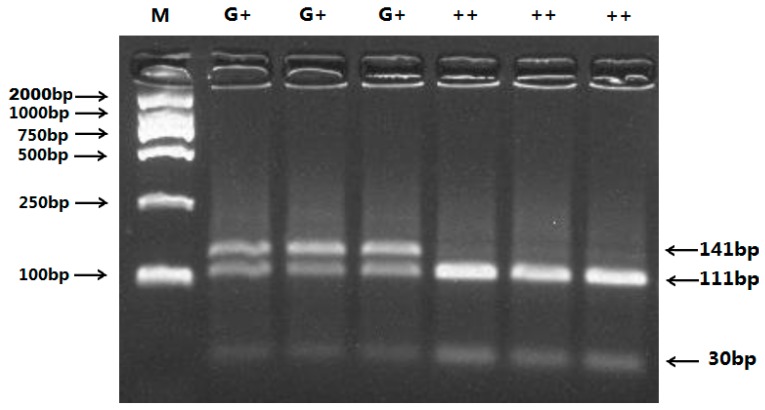
The Small Tailed Han sheep and Hu sheep are two prolific local sheep in China. In this study, the polymorphisms of BMPR-IB (Bone morphogenetic protein receptor IB), BMP-15 (Bone morphogenetic protein 15) and FSHR (follicle stimulating hormone receptor) were investigated to check whether they are associated with litter size in Small Tailed Han sheep and Hu sheep. Consequently, three polymorphisms, FecB mutation in BMPR-IB (c.746A>G), FecG mutation in BMP-15 (c.718C>T) and the mutation (g. 47C>T) in FSHR were found in the above two sheep breeds with a total number of 1630 individuals. The single marker association analysis showed that the three mutations were significantly associated with litter size. The ewes with genotype FecBB/FecBB and FecBB/FecB+ had 0.78 and 0.58 more lambs (p < 0.01) than those with genotype FecB+/FecB+, respectively. The heterozygous Han and Hu ewes with FecXG/FecX+ genotype showed 0.30 (p = 0.05) more lambs than those with the FecX+/FecX+ genotype. For FSHR gene, the ewes with genotype CC had 0.52 (p < 0.01) and 0.75 (p < 0.01) more lambs than those with genotypes TC and TT, respectively. Combined effect analyses indicated an extremely significant interaction (p < 0.01) between the random combinations of BMPR-IB, BMP-15 and FSHR genes on litter size. In addition, the Han and Hu ewes with BB/G+/CC genotype harbor the highest litter size among ewes analyzed in current study. In conclusion, BMPR-IB, BMP-15 and FSHR polymorphisms could be used as genetic markers in multi-gene pyramiding for improving litter size in sheep husbandry.
小尾寒羊和湖羊是中国两个多产的本地绵羊品种。在本研究中,对骨形态发生蛋白受体IB(BMPR - IB)、骨形态发生蛋白15(BMP - 15)和促卵泡激素受体(FSHR)的多态性进行了研究,以检验它们是否与小尾寒羊和湖羊的产羔数相关。结果,在上述两个绵羊品种的总共1630只个体中,发现了三种多态性,即BMPR - IB中的FecB突变(c.746A>G)、BMP - 15中的FecG突变(c.718C>T)以及FSHR中的突变(g.47C>T)。单标记关联分析表明,这三种突变与产羔数显著相关。基因型为FecBB/FecBB和FecBB/FecB + 的母羊分别比基因型为FecB + /FecB + 的母羊多产0.78只和0.58只羔羊(p < 0.01)。FecXG/FecX + 基因型的杂合小尾寒羊和湖羊母羊比FecX + /FecX + 基因型的母羊多产0.30只羔羊(p = 0.05)。对于FSHR基因,基因型为CC的母羊分别比基因型为TC和TT的母羊多产0.52只(p < 0.01)和0.75只(p < 0.01)羔羊。组合效应分析表明,BMPR - IB、BMP - 15和FSHR基因的随机组合对产羔数有极显著的互作效应(p < 0.01)。此外,在本研究分析的母羊中,基因型为BB/G + /CC的小尾寒羊和湖羊母羊产羔数最高。总之,BMPR - IB、BMP - 15和FSHR多态性可作为基因聚合中的遗传标记,用于提高养羊业的产羔数。