Figueroa-Vega Nicté, Moreno-Frías Carmen, Malacara Juan Manuel
Department of Medical Sciences, University of Guanajuato, León campus, León, Gto., México.
PLoS One. 2015 May 19;10(5):e0120990. doi: 10.1371/journal.pone.0120990. eCollection 2015.
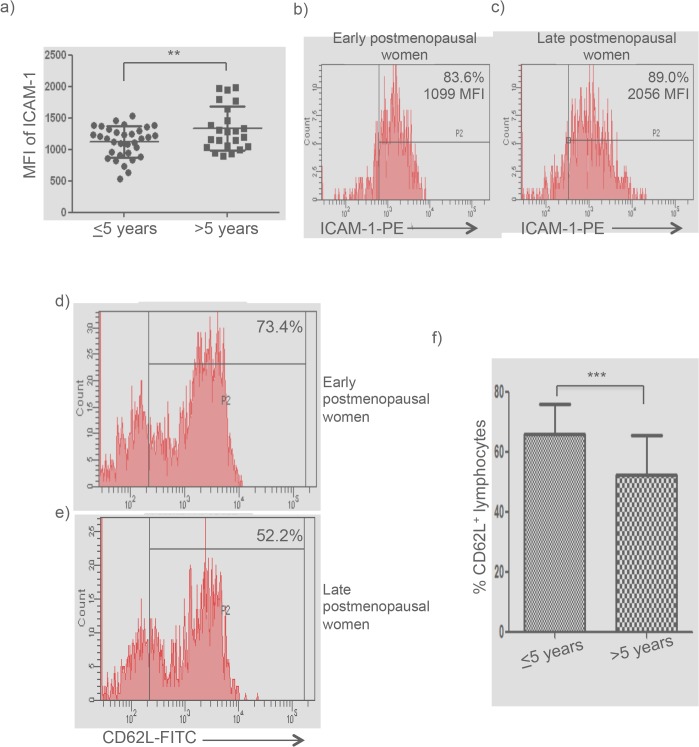
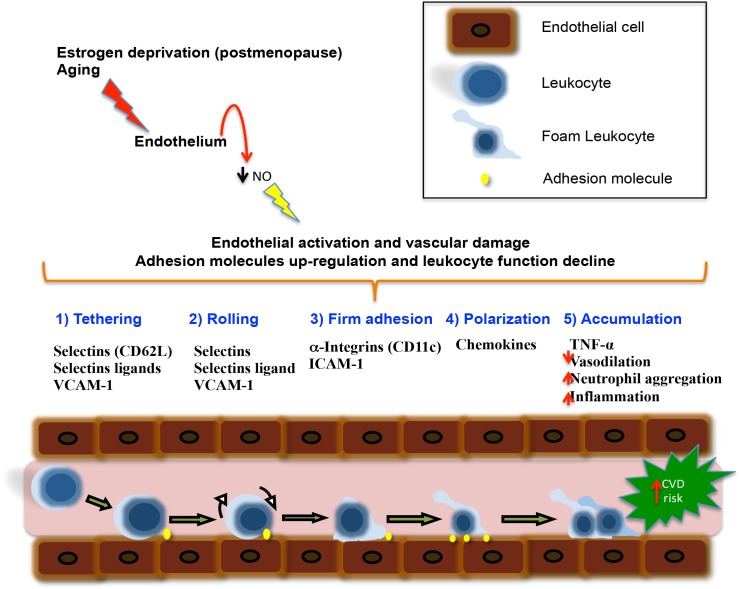
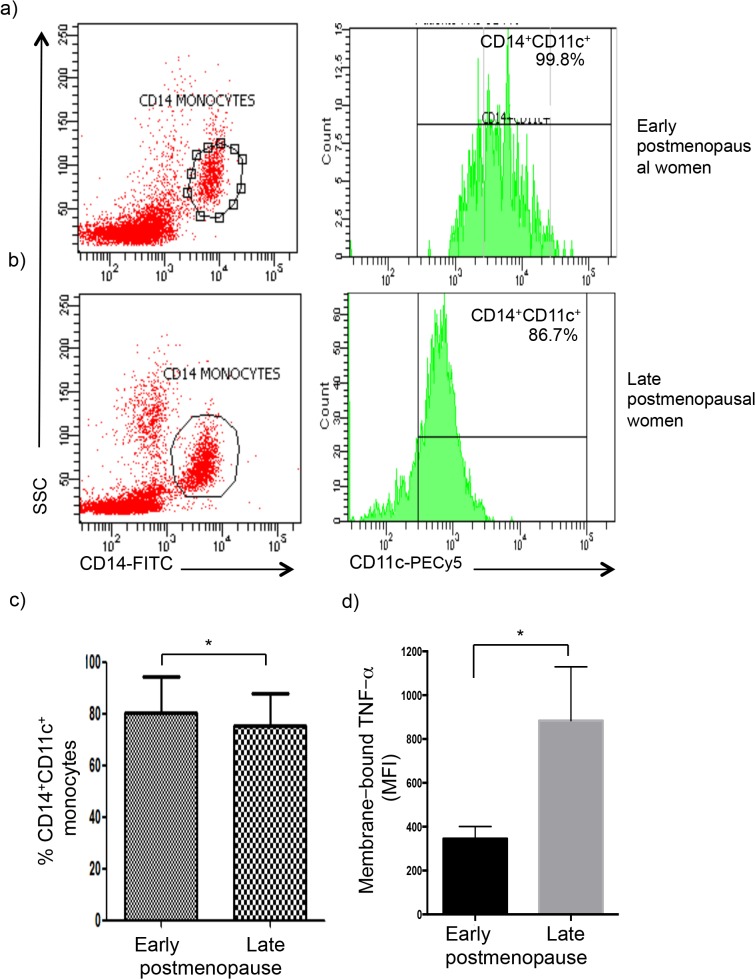
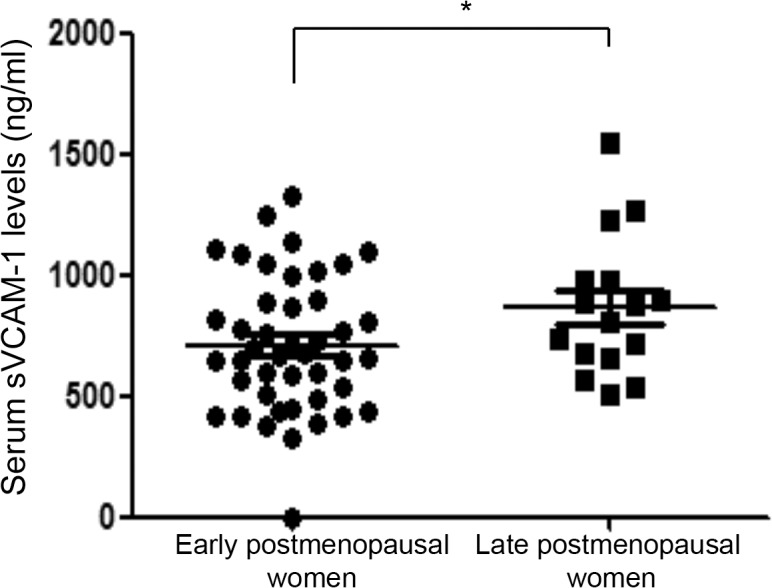
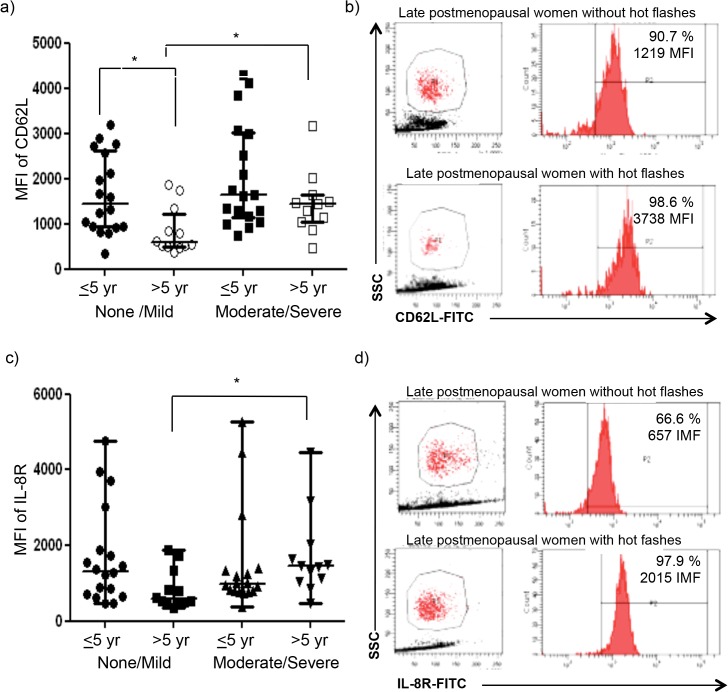
Menopause, the cessation of menses, occurs with estrogens decline, low-grade inflammation, and impaired endothelial function, contributing to atherosclerotic risk. Intima-media thickness (IMT) is an early subclinical biomarker of atherosclerosis. Inflammation may have a role on symptoms: hot flashes, anxiety, and depressive mood, which also are related to endothelial dysfunction, increased IMT and cardiovascular risk. In this study we compared several inflammatory markers in early vs. late postmenopausal women and studied the association of IMT and symptoms with these markers in the full sample. In a cross-sectional design including 60 women (53.1 ± 4.4 years old) at early and late postmenopause, we evaluated the expression of CD62L, ICAM-1, PSGL-1, CD11b, CD11c, and IL-8R on PBMC by flow cytometry. Serum soluble ICAM-1, sVCAM-1, sCD62E, sCD62P, CXCL8, IL-1β, IL-6, and TNF-α levels were quantified by ELISA. Plasma levels of microparticles (MPs) were determined by FACS. Finally, carotid intima-media thickness (IMT) was measured by ultrasound. We observed that ICAM-1 expression by lymphocytes and serum sVCAM-1 levels were augmented at late postmenopause. Late postmenopause women with severe hot flashes had increased expression of CD62L and IL-8R on neutrophils. By multivariate analysis, the carotid IMT was strongly associated with membrane-bound TNF-α, CD11b expression, Annexin V(+) CD3(+) MPs, LPS-induced NO production, HDL-cholesterol and age. Depressive mood was associated negatively with PSGL-1 and positively with LPS-induced NO. Finally, Log(AMH) levels were associated with carotid IMT, IL-8R expression and time since menopause. IMT and depressive mood were the main clinical features related to vascular inflammation. Aging, hormonal changes and obesity were also related to endothelial dysfunction. These findings provide further evidence for a link between estrogen deficiency and low-grade inflammation in endothelial impairment in mature women.
绝经是指月经停止,它与雌激素水平下降、低度炎症以及内皮功能受损有关,会增加动脉粥样硬化风险。内膜中层厚度(IMT)是动脉粥样硬化的一种早期亚临床生物标志物。炎症可能在潮热、焦虑和抑郁情绪等症状中起作用,这些症状也与内皮功能障碍、IMT增加和心血管风险有关。在本研究中,我们比较了绝经早期和晚期女性的几种炎症标志物,并在整个样本中研究了IMT和症状与这些标志物的关联。在一项横断面研究中,纳入了60名绝经早期和晚期女性(年龄53.1±4.4岁),我们通过流式细胞术评估了外周血单个核细胞(PBMC)上CD62L、ICAM-1、PSGL-1、CD11b、CD11c和IL-8R的表达。通过酶联免疫吸附测定(ELISA)对血清可溶性ICAM-1、sVCAM-1、sCD62E、sCD62P、CXCL8、IL-1β、IL-6和TNF-α水平进行定量。通过荧光激活细胞分选术(FACS)测定血浆微粒(MPs)水平。最后,通过超声测量颈动脉内膜中层厚度(IMT)。我们观察到,绝经后期淋巴细胞上ICAM-1的表达和血清sVCAM-1水平升高。有严重潮热的绝经后期女性中性粒细胞上CD62L和IL-8R的表达增加。通过多变量分析,颈动脉IMT与膜结合型TNF-α、CD11b表达、膜联蛋白V(+)CD3(+) MPs、脂多糖诱导的一氧化氮产生、高密度脂蛋白胆固醇和年龄密切相关。抑郁情绪与PSGL-1呈负相关,与脂多糖诱导的一氧化氮呈正相关。最后,抗缪勒管激素(AMH)水平对数与颈动脉IMT、IL-8R表达以及绝经后的时间有关。IMT和抑郁情绪是与血管炎症相关的主要临床特征。衰老、激素变化和肥胖也与内皮功能障碍有关。这些发现为雌激素缺乏与成熟女性内皮损伤中的低度炎症之间的联系提供了进一步证据。