Wen Zhaoying, Ma Heng, Zhao Ying, Fan Zhanming, Zhang Zhaoqi, Choi Sang Il, Choe Yeon Hyeon, Liu Jiayi
Department of Radiology, Beijing Anzhen Hospital, Capital Medical University, Beijing Institute of Heart, Lung and Blood Vessel Diseases, Beijing, China.
Department of Radiology, Yuhuangding Hospital, Yantai, Shandong Province, China.
PLoS One. 2015 May 18;10(5):e0127289. doi: 10.1371/journal.pone.0127289. eCollection 2015.
To assess the impact of left ventricular (LV) diastolic dysfunction on left atrial (LA) phasic volume and function using dual-source CT (DSCT) and to find a viable alternative prognostic parameter of CT for LV diastolic dysfunction through quantitative evaluation of LA phasic volume and function in patients with LV diastolic dysfunction.
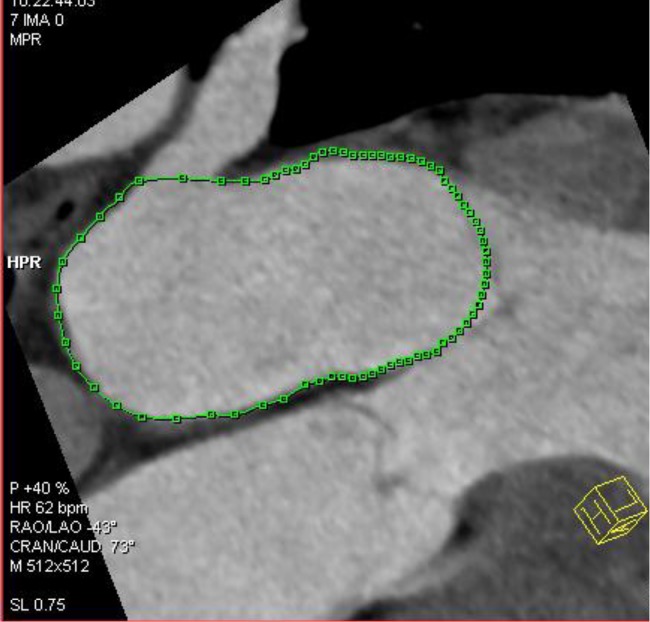
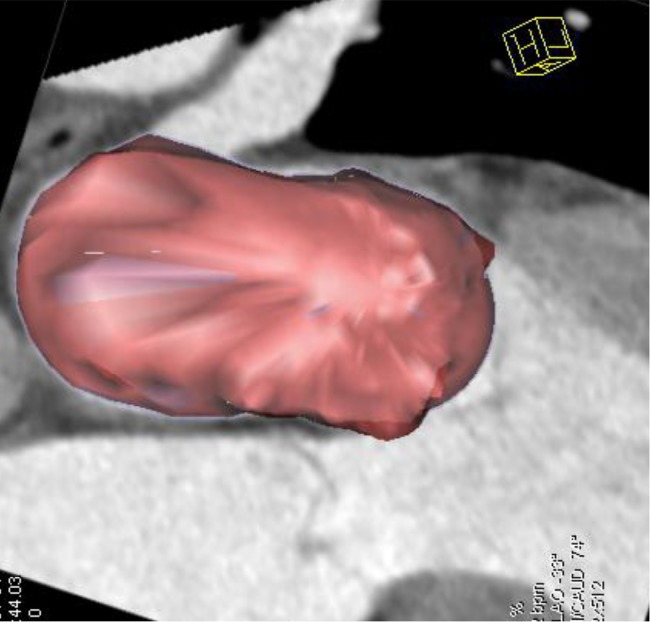
Seventy-seven patients were examined using DSCT and Doppler echocardiography on the same day. Reservoir, conduit, and contractile function of LA were evaluated by measuring LA volume (LAV) during different cardiac phases and all parameters were normalized to body surface area (BSA). Patients were divided into four groups (normal, impaired relaxation, pseudonormal, and restrictive LV diastolic filling) according to echocardiographic findings. The LA phasic volume and function in different stages of LV diastolic function was compared using one-way ANOVA analysis. The correlations between indexed volume of LA (LAVi) and diastolic function in different stages of LV were evaluated using Spearman correlation analysis.
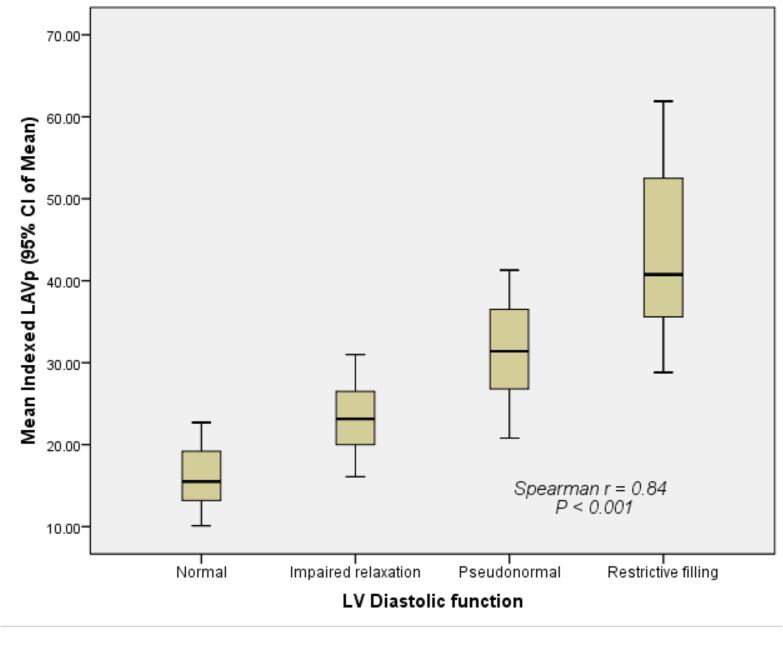
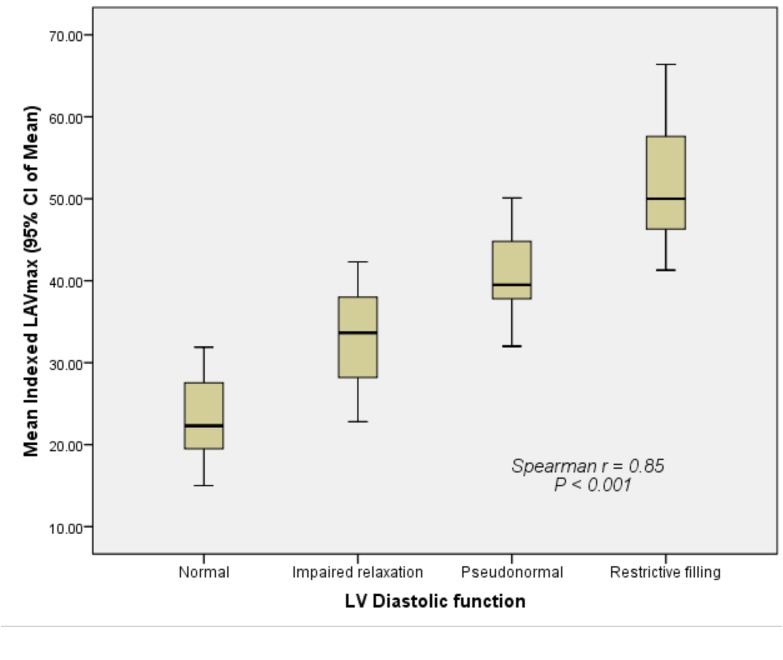
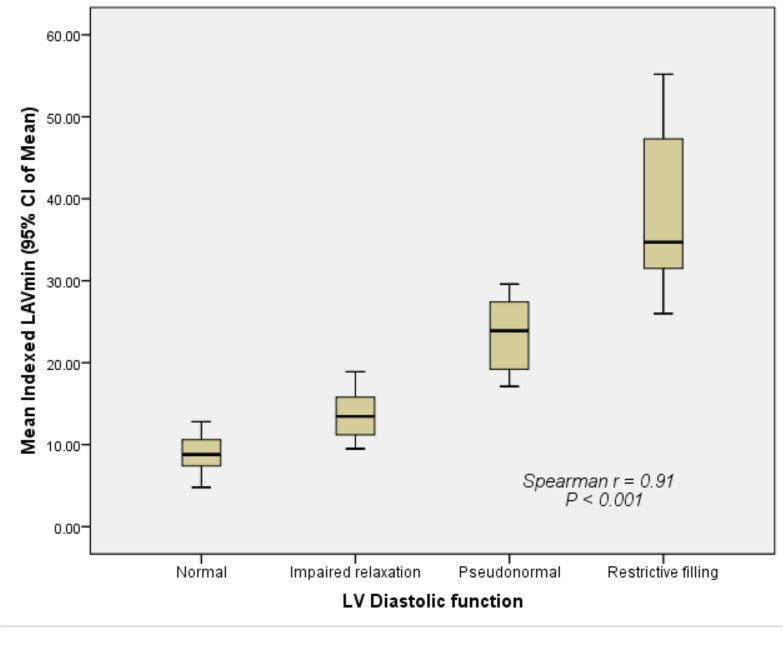
LA ejection fraction (LAEF), LA contraction, reservoir, and conduit function in patients in impaired relaxation group were not different from those in the normal group, but they were lower in patients in the pseudonormal and restrictive LV diastolic dysfunction groups (P < 0.05). For LA conduit function, there were no significant differences between the patients in the pseudonormal group and restrictive filling group (P = 0.195). There was a strong correlation between the indexed maximal left atrial volume (LAVmax, r = 0.85, P < 0.001), minimal left atrial volume (LAVmin, r = 0.91, P < 0.001), left atrial volume at the onset of P wave (LAVp, r = 0.84, P < 0.001), and different stages of LV diastolic function. The LAVi increased as the severity of LV diastolic dysfunction increased.
LA remodeling takes place in patients with LV diastolic dysfunction. At the same time, LA phasic volume and function parameters evaluated by DSCT indicated the severity of the LV diastolic dysfunction. Quantitative analysis of LA phasic volume and function parameters using DSCT could be a viable alternative prognostic parameter of LV diastolic function.
利用双源CT(DSCT)评估左心室(LV)舒张功能障碍对左心房(LA)阶段性容积和功能的影响,并通过对LV舒张功能障碍患者LA阶段性容积和功能的定量评估,寻找一种可行的CT对LV舒张功能障碍的替代预测参数。
77例患者于同一天接受DSCT和多普勒超声心动图检查。通过测量不同心动周期的左心房容积(LAV)评估左心房的储存、管道和收缩功能,所有参数均根据体表面积(BSA)进行标准化。根据超声心动图结果将患者分为四组(正常、舒张功能受损、假性正常和限制性LV舒张期充盈)。采用单因素方差分析比较LV舒张功能不同阶段的左心房阶段性容积和功能。采用Spearman相关分析评估不同LV阶段的左心房指数容积(LAVi)与舒张功能之间的相关性。
舒张功能受损组患者的左心房射血分数(LAEF)、左心房收缩、储存和管道功能与正常组患者无差异,但假性正常和限制性LV舒张功能障碍组患者的这些指标较低(P<0.05)。对于左心房管道功能,假性正常组和限制性充盈组患者之间无显著差异(P=0.195)。最大左心房指数容积(LAVmax,r=0.85,P<0.001)、最小左心房指数容积(LAVmin,r=0.91,P<0.001)、P波起始时的左心房容积(LAVp,r=0.84,P<0.001)与LV舒张功能的不同阶段之间存在强相关性。随着LV舒张功能障碍严重程度的增加,LAVi升高。
LV舒张功能障碍患者会发生左心房重构。同时,DSCT评估的左心房阶段性容积和功能参数表明了LV舒张功能障碍的严重程度。使用DSCT对左心房阶段性容积和功能参数进行定量分析可能是LV舒张功能的一种可行的替代预测参数。