Roche Béatrice, Agrebi Rym, Huguenot Allison, Ollagnier de Choudens Sandrine, Barras Frédéric, Py Béatrice
Laboratoire de Chimie Bactérienne, UMR 7283, Aix-Marseille Université-CNRS, Institut de Microbiologie de la Méditerranée, Marseille, France.
De Duve Institute, Université Catholique de Louvain, Brussels, Belgium.
PLoS Genet. 2015 May 21;11(5):e1005134. doi: 10.1371/journal.pgen.1005134. eCollection 2015 May.
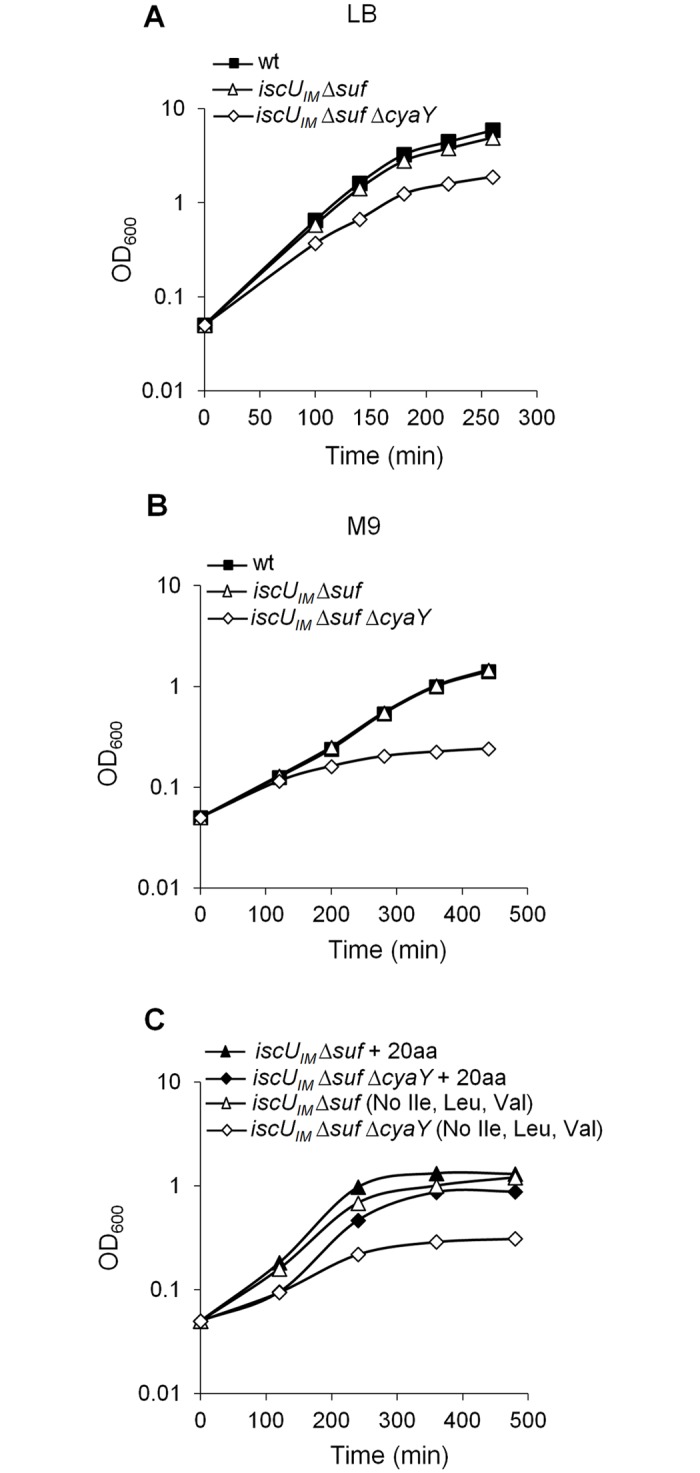
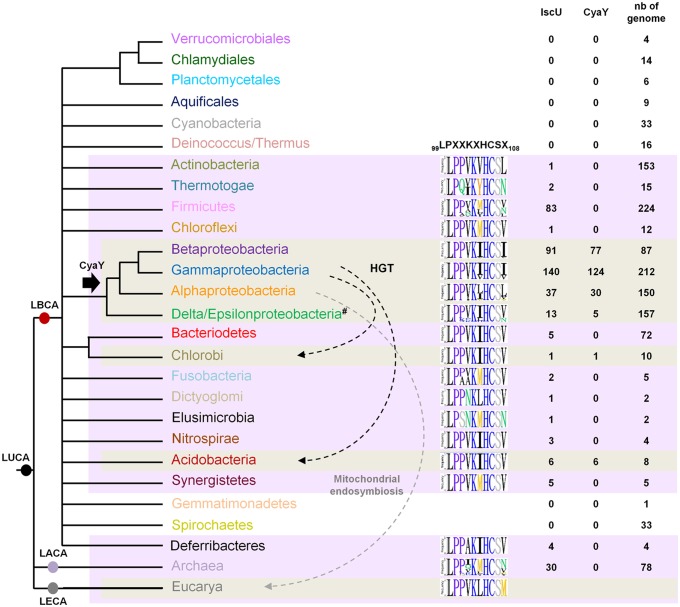
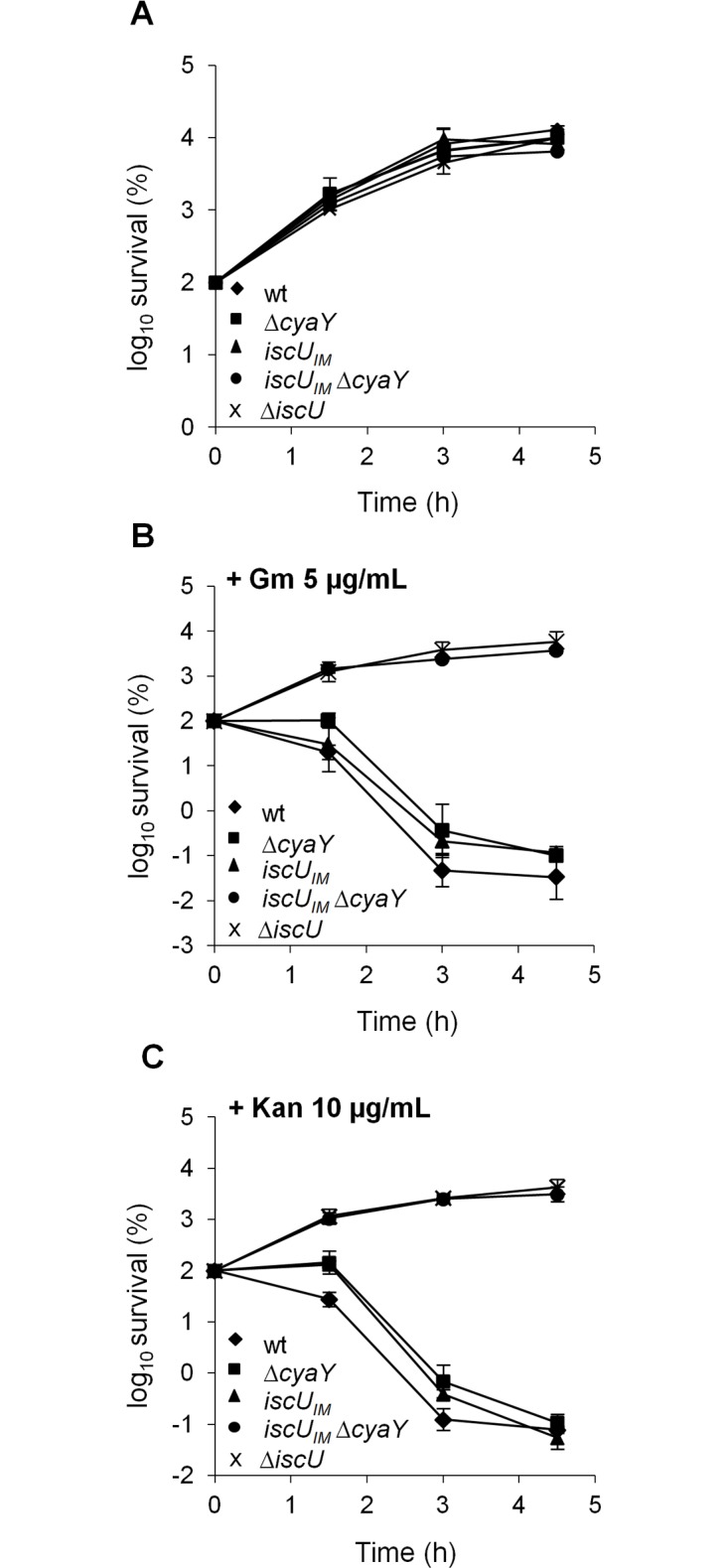
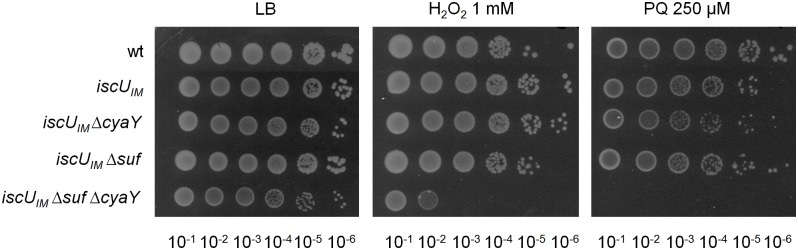
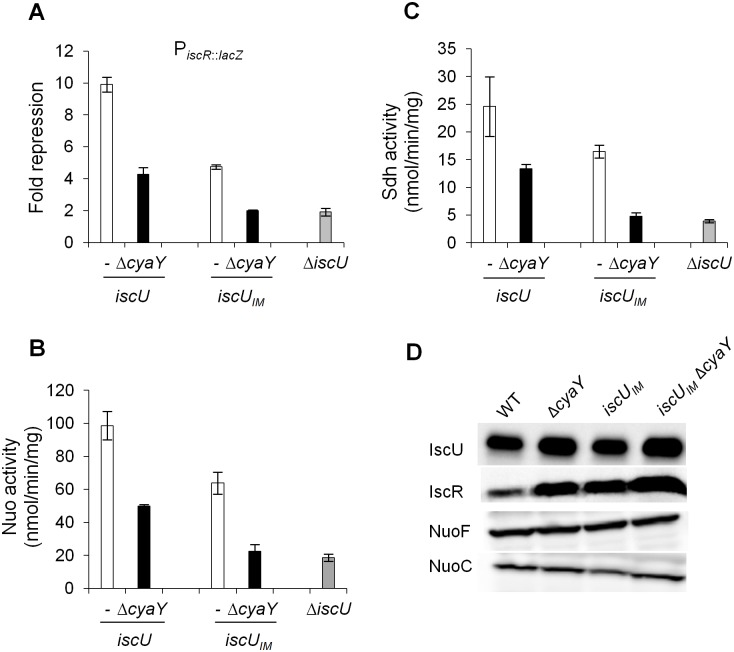
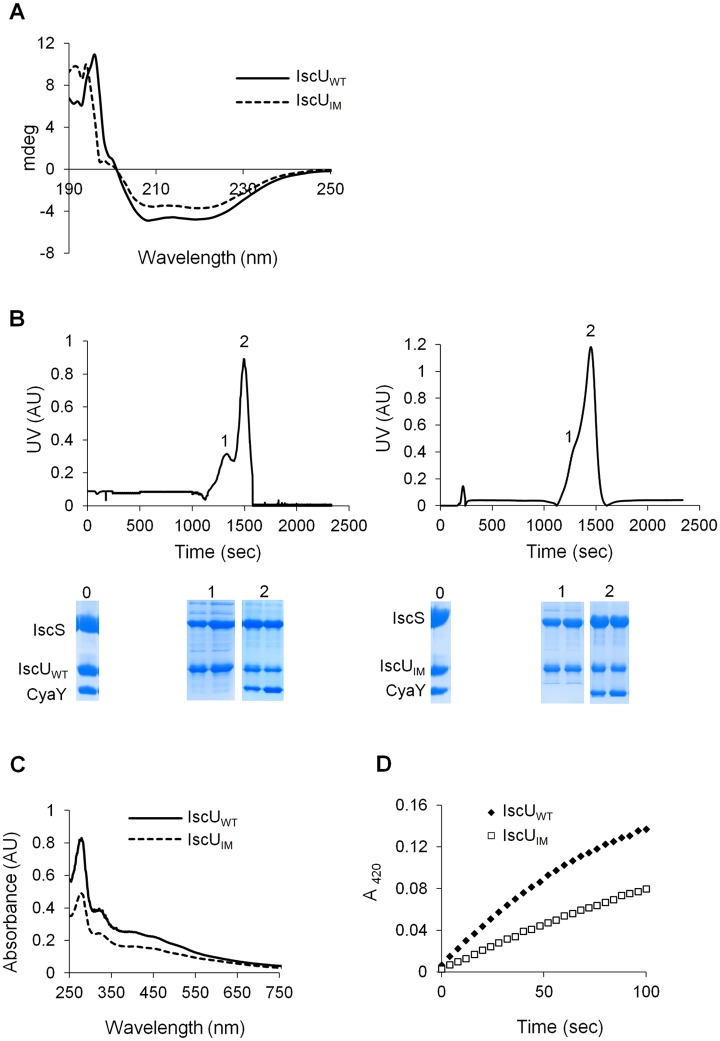
Fe-S bound proteins are ubiquitous and contribute to most basic cellular processes. A defect in the ISC components catalyzing Fe-S cluster biogenesis leads to drastic phenotypes in both eukaryotes and prokaryotes. In this context, the Frataxin protein (FXN) stands out as an exception. In eukaryotes, a defect in FXN results in severe defects in Fe-S cluster biogenesis, and in humans, this is associated with Friedreich's ataxia, a neurodegenerative disease. In contrast, prokaryotes deficient in the FXN homolog CyaY are fully viable, despite the clear involvement of CyaY in ISC-catalyzed Fe-S cluster formation. The molecular basis of the differing importance in the contribution of FXN remains enigmatic. Here, we have demonstrated that a single mutation in the scaffold protein IscU rendered E. coli viability strictly dependent upon a functional CyaY. Remarkably, this mutation changed an Ile residue, conserved in prokaryotes at position 108, into a Met residue, conserved in eukaryotes. We found that in the double mutant IscUIM ΔcyaY, the ISC pathway was completely abolished, becoming equivalent to the ΔiscU deletion strain and recapitulating the drastic phenotype caused by FXN deletion in eukaryotes. Biochemical analyses of the "eukaryotic-like" IscUIM scaffold revealed that it exhibited a reduced capacity to form Fe-S clusters. Finally, bioinformatic studies of prokaryotic IscU proteins allowed us to trace back the source of FXN-dependency as it occurs in present-day eukaryotes. We propose an evolutionary scenario in which the current mitochondrial Isu proteins originated from the IscUIM version present in the ancestor of the Rickettsiae. Subsequent acquisition of SUF, the second Fe-S cluster biogenesis system, in bacteria, was accompanied by diminished contribution of CyaY in prokaryotic Fe-S cluster biogenesis, and increased tolerance to change in the amino acid present at the 108th position of the scaffold.
铁硫结合蛋白广泛存在,参与大多数基本细胞过程。催化铁硫簇生物合成的铁硫簇组装(ISC)组分出现缺陷会在真核生物和原核生物中导致严重表型。在此背景下,弗里德赖希共济失调蛋白(FXN)是个例外。在真核生物中,FXN缺陷会导致铁硫簇生物合成出现严重缺陷,在人类中,这与神经退行性疾病弗里德赖希共济失调相关。相比之下,缺乏FXN同源物CyaY的原核生物完全能够存活,尽管CyaY明显参与了ISC催化的铁硫簇形成。FXN贡献的重要性存在差异的分子基础仍然不明。在这里,我们证明支架蛋白IscU中的单个突变使大肠杆菌的存活严格依赖于功能性CyaY。值得注意的是,此突变将原核生物中第108位保守的异亮氨酸残基变为真核生物中保守的甲硫氨酸残基。我们发现,在双突变体IscUIM ΔcyaY中,ISC途径完全被消除,变得等同于ΔiscU缺失菌株,并重现了真核生物中FXN缺失导致的严重表型。对“类真核”IscUIM支架的生化分析表明,其形成铁硫簇的能力降低。最后,对原核生物IscU蛋白的生物信息学研究使我们能够追溯当今真核生物中出现的FXN依赖性的来源。我们提出了一种进化情景,即当前的线粒体Isu蛋白起源于立克次氏体祖先中存在的IscUIM版本。随后细菌中获得了第二个铁硫簇生物合成系统SUF,同时CyaY在原核生物铁硫簇生物合成中的贡献减少,并且对支架第108位氨基酸变化的耐受性增加。