Chew Boon-How, Hassan Noor-Hasliza, Sherina Mohd-Sidik
Department of Family Medicine, Faculty of Medicine and Health Sciences, Universiti Putra Malaysia, Serdang, Malaysia.
Klinik Kesihatan Dengkil, Ministry of Health, Universiti Putra Malaysia, Serdang, Malaysia.
Patient Prefer Adherence. 2015 May 6;9:639-48. doi: 10.2147/PPA.S81612. eCollection 2015.
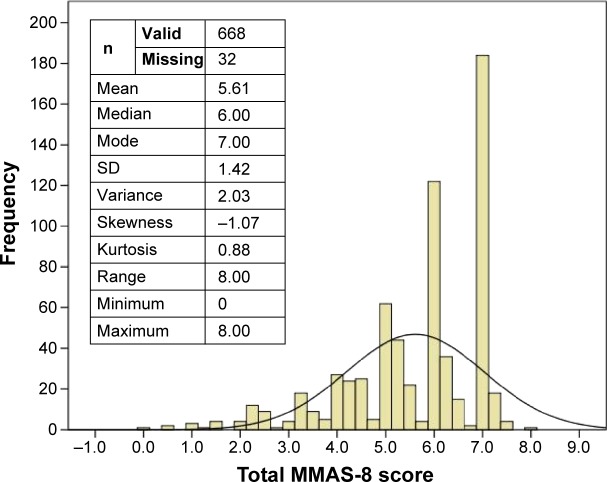
Medication adherence (MA) in adults with type 2 diabetes mellitus (T2D) is associated with improved disease control (glycated hemoglobin, blood pressure, and lipid profile), lower rates of death and diabetes-related complications, increased quality of life, and decreased health care resource utilization. However, there is a paucity of data on the effect of diabetes-related distress, depression, and health-related quality of life on MA. This study examined factors associated with MA in adults with T2D at the primary care level. This was a cross-sectional study conducted in three Malaysian public health clinics, where adults with T2D were recruited consecutively in 2013. We used the 8-item Morisky Medication Adherence Scale (MMAS-8) to assess MA as the main dependent variable. In addition to sociodemographic data, we included diabetes-related distress, depressive symptoms, and health-related quality of life as independent variables. Independent association between the MMAS-8 score and its determinants was done using generalized linear models with a gamma distribution and log link function. The participant response rate was 93.1% (700/752). The majority were female (52.8%), Malay (52.9%), and married (79.1%). About 43% of patients were classified as showing low MA (MMAS-8 score <6). Higher income (adjusted odds ratio 0.90) and depressive symptoms (adjusted odds ratio 0.99) were significant independent determinants of medication non-adherence in young adults with T2D. Low MA in adults with T2D is a prevalent problem. Thus, primary health care providers in public health clinics should focus on MA counselling for adult T2D patients who are younger, have a higher income, and symptoms of depression.
2型糖尿病(T2D)成年患者的药物依从性(MA)与疾病控制改善(糖化血红蛋白、血压和血脂水平)、较低的死亡率和糖尿病相关并发症发生率、生活质量提高以及医疗资源利用率降低相关。然而,关于糖尿病相关困扰、抑郁和健康相关生活质量对MA的影响的数据却很少。本研究在初级保健层面探讨了T2D成年患者中与MA相关的因素。这是一项在马来西亚三家公共卫生诊所进行的横断面研究,于2013年连续招募T2D成年患者。我们使用8项Morisky药物依从性量表(MMAS - 8)来评估MA作为主要因变量。除社会人口统计学数据外,我们还纳入了糖尿病相关困扰、抑郁症状和健康相关生活质量作为自变量。使用具有伽马分布和对数链接函数的广义线性模型来分析MMAS - 8得分与其决定因素之间的独立关联。参与者的回应率为93.1%(700/752)。大多数为女性(52.8%)、马来人(52.9%)且已婚(79.1%)。约43%的患者被归类为MA较低(MMAS - 8得分<6)。较高收入(调整后的优势比为0.90)和抑郁症状(调整后的优势比为0.99)是T2D年轻成年患者药物不依从的重要独立决定因素。T2D成年患者中MA较低是一个普遍问题。因此,公共卫生诊所的初级卫生保健提供者应关注对年龄较轻、收入较高且有抑郁症状的成年T2D患者进行MA咨询。