Milger Katrin, Holdt Lesca Miriam, Teupser Daniel, Huber Rudolf Maria, Behr Jürgen, Kneidinger Nikolaus
Department of Internal Medicine V, University of Munich, Comprehensive Pneumology Center, Member of the German Center for Lung Research, Munich, Germany.
Institute of Laboratory Medicine, University of Munich, Munich, Germany.
Int J Chron Obstruct Pulmon Dis. 2015 May 7;10:891-7. doi: 10.2147/COPD.S80173. eCollection 2015.
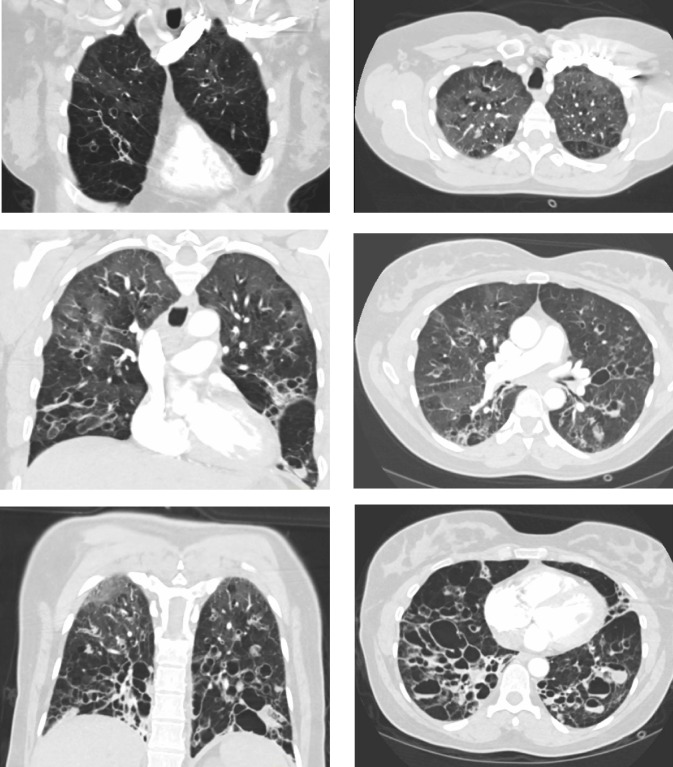
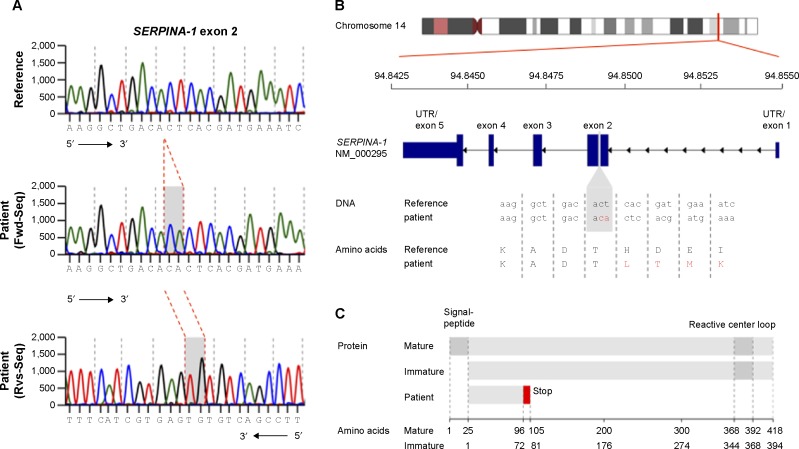
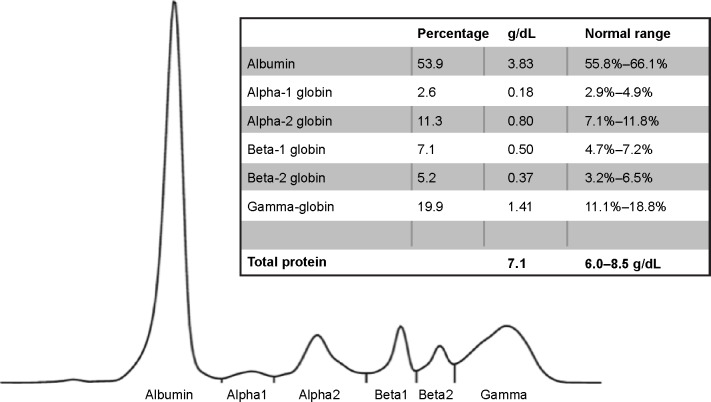
Deficiency in the serine protease inhibitor, alpha-1 antitrypsin (AAT), is known to cause emphysema and liver disease. Other manifestations, including airway disease or skin disorders, have also been described. A 44-year-old woman presented to our emergency department with dyspnea and respiratory insufficiency. She had never smoked, and had been diagnosed with COPD 9 years earlier. Three months previously, she had suffered a pulmonary embolism. Chest computed tomography scan revealed severe cystic bronchiectasis with destruction of the lung parenchyma. The sweat test was normal and there was no evidence of the cystic fibrosis transmembrane conductance regulator (CFTR) mutation. Capillary zone electrophoresis showed a decrease of alpha-1 globin band and AAT levels were below the quantification limit (<25 mg/dL). No S or Z mutation was identified, but sequencing analysis found a homozygous cytosine and adenine (CA) insertion in exon 2 of the SERPINA-1 gene, probably leading to a dysfunctional protein (PI Null/Null). This mutation has not been previously identified. The atypical presentation of the patient, with severe cystic bronchiectasis, highlights AAT deficiency as a differential diagnosis in bronchiectasis. Further, awareness should be raised regarding a possible increased risk of thromboembolism associated with AAT deficiency.
已知丝氨酸蛋白酶抑制剂α-1抗胰蛋白酶(AAT)缺乏会导致肺气肿和肝病。还描述了其他表现,包括气道疾病或皮肤疾病。一名44岁女性因呼吸困难和呼吸功能不全就诊于我们的急诊科。她从不吸烟,9年前被诊断为慢性阻塞性肺疾病(COPD)。3个月前,她发生了肺栓塞。胸部计算机断层扫描显示严重的囊性支气管扩张伴肺实质破坏。汗液试验正常,没有囊性纤维化跨膜传导调节因子(CFTR)突变的证据。毛细管区带电泳显示α-1球蛋白带减少,AAT水平低于定量限(<25mg/dL)。未发现S或Z突变,但测序分析发现SERPINA-1基因外显子2中有纯合的胞嘧啶和腺嘌呤(CA)插入,可能导致蛋白质功能失调(PI Null/Null)。这种突变以前未被发现。该患者以严重囊性支气管扩张为特征的非典型表现突出了AAT缺乏作为支气管扩张鉴别诊断的重要性。此外,应提高对AAT缺乏可能增加血栓栓塞风险的认识。