Tipton Christopher M, Fucile Christopher F, Darce Jaime, Chida Asiya, Ichikawa Travis, Gregoretti Ivan, Schieferl Sandra, Hom Jennifer, Jenks Scott, Feldman Ron J, Mehr Ramit, Wei Chungwen, Lee F Eun-Hyung, Cheung Wan Cheung, Rosenberg Alexander F, Sanz Iñaki
Department of Medicine, Division of Rheumatology, Emory University, Atlanta, Georgia, USA.
Department of Medicine, Division of Allergy, Immunology and Rheumatology, University of Rochester Medical Center, Rochester, New York, USA.
Nat Immunol. 2015 Jul;16(7):755-65. doi: 10.1038/ni.3175. Epub 2015 May 25.
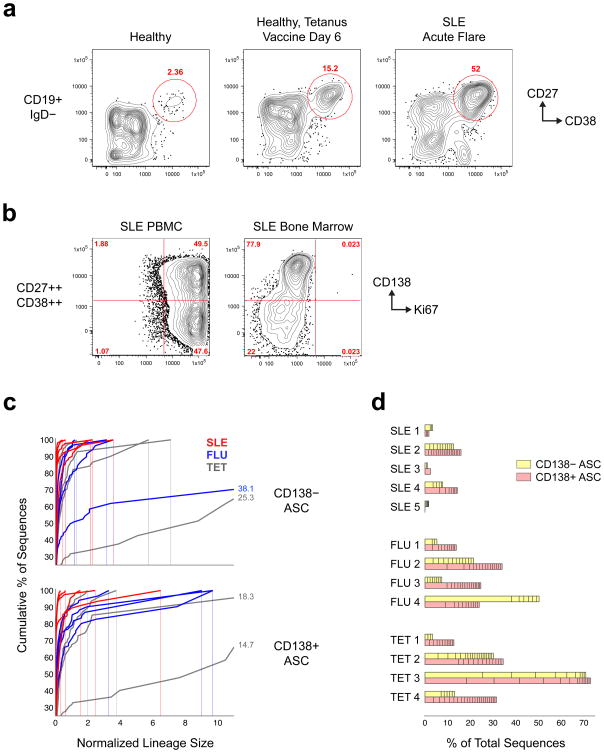
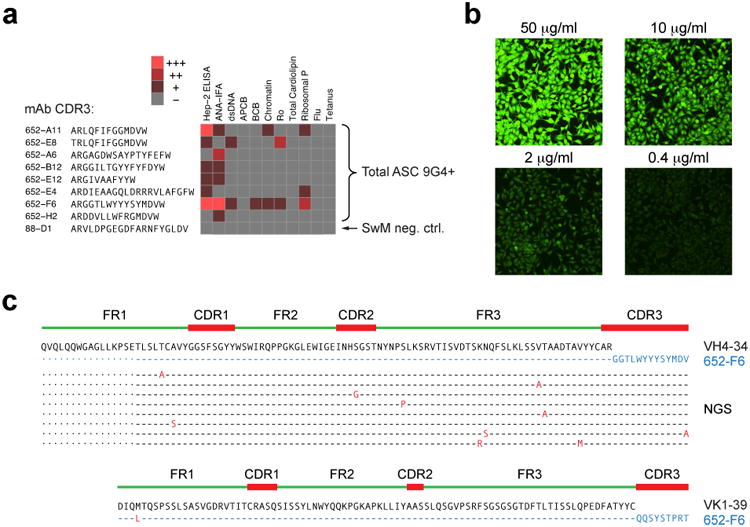
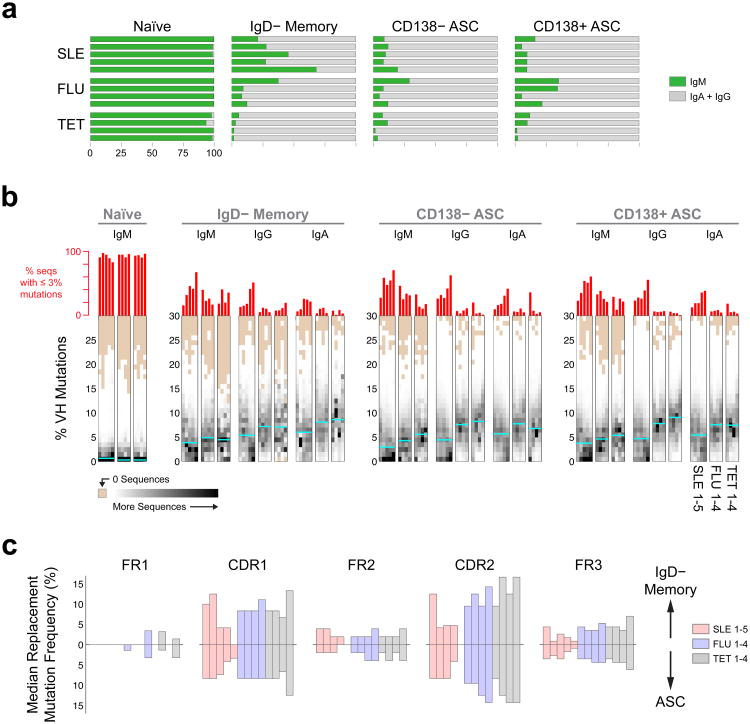
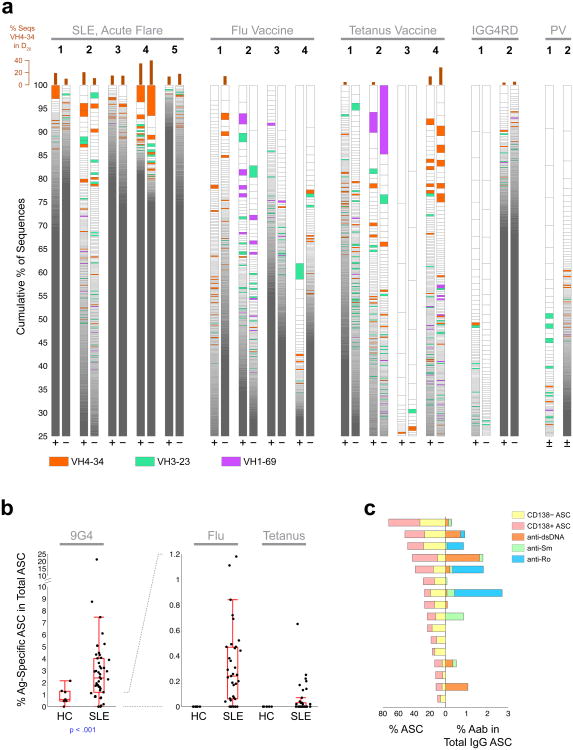
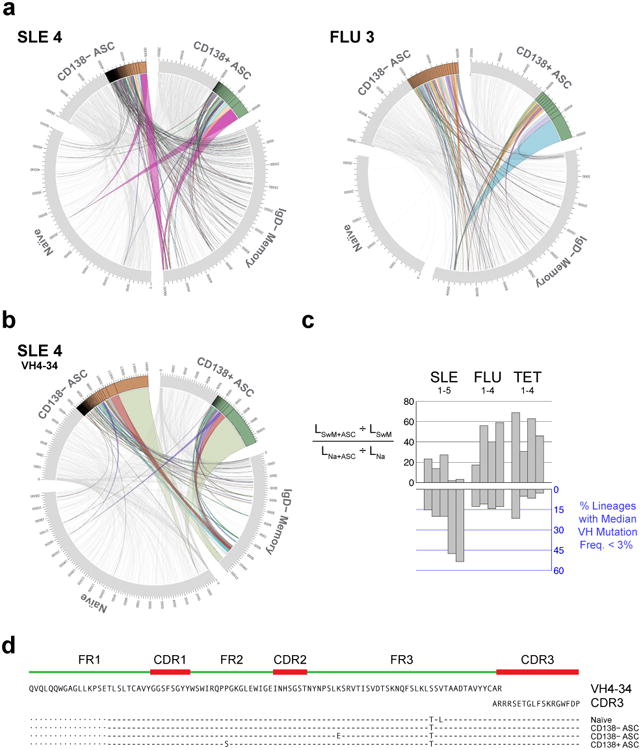
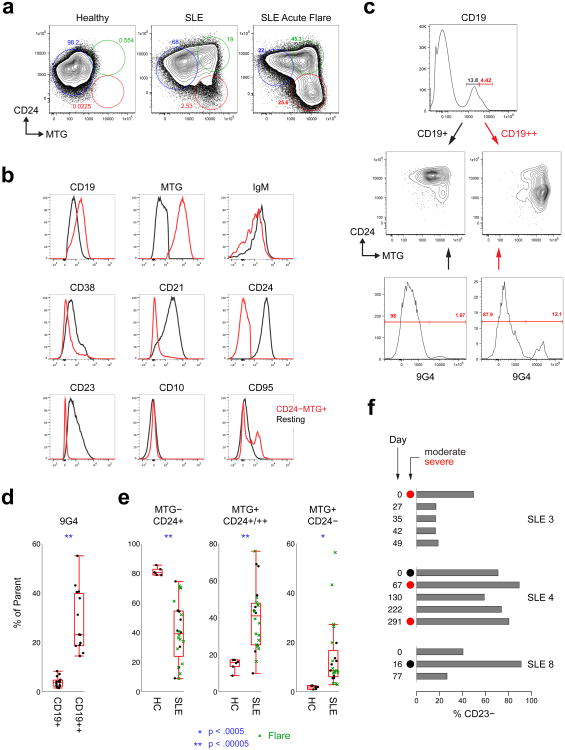
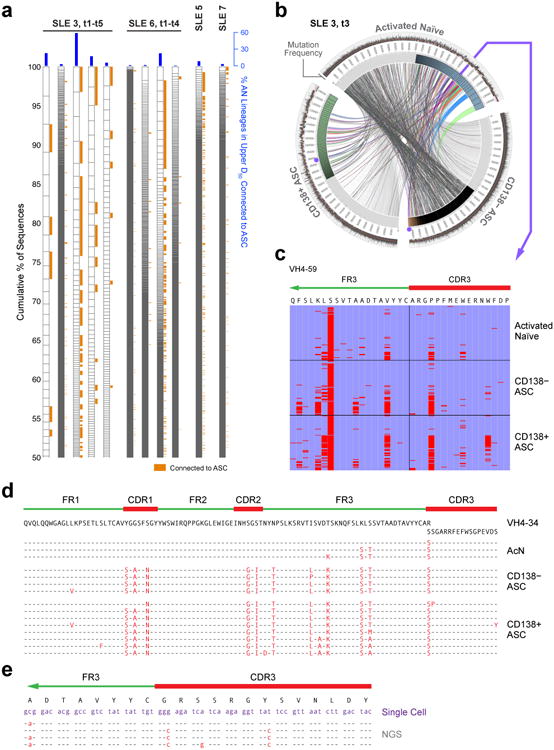
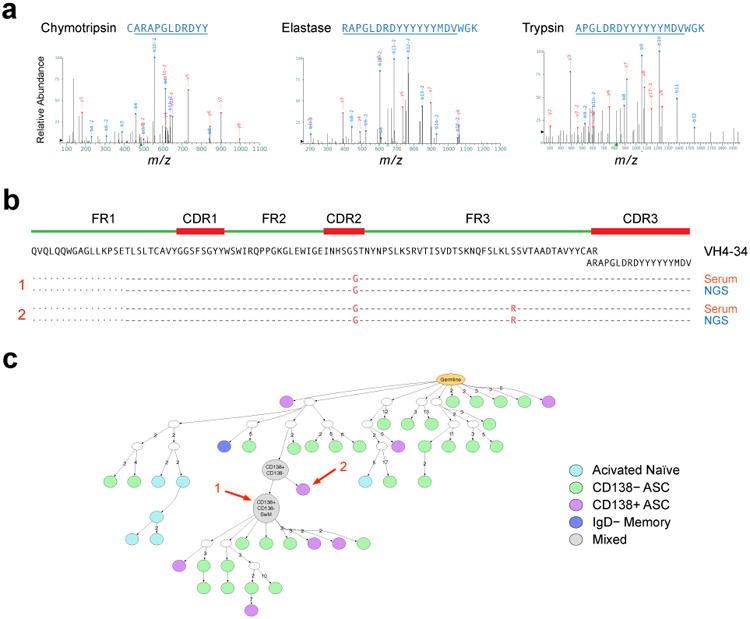
Acute systemic lupus erythematosus (SLE) courses with surges of antibody-secreting cells (ASCs) whose origin, diversity and contribution to serum autoantibodies remain unknown. Here, deep sequencing, proteomic profiling of autoantibodies and single-cell analysis demonstrated highly diversified ASCs punctuated by clones expressing the variable heavy-chain region VH4-34 that produced dominant serum autoantibodies. A fraction of ASC clones contained autoantibodies without mutation, a finding consistent with differentiation outside the germinal centers. A substantial ASC segment was derived from a distinct subset of newly activated naive cells of considerable clonality that persisted in the circulation for several months. Thus, selection of SLE autoreactivities occurred during polyclonal activation, with prolonged recruitment of recently activated naive B cells. Our findings shed light on the pathogenesis of SLE, help explain the benefit of agents that target B cells and should facilitate the design of future therapies.
急性系统性红斑狼疮(SLE)病程中伴有抗体分泌细胞(ASC)激增,其来源、多样性及对血清自身抗体的贡献尚不清楚。在此,深度测序、自身抗体的蛋白质组分析和单细胞分析表明,高度多样化的ASC以表达可变重链区域VH4-34的克隆为特征,这些克隆产生了主要的血清自身抗体。一部分ASC克隆含有未发生突变的自身抗体,这一发现与生发中心外的分化一致。相当一部分ASC来源于新激活的具有相当克隆性的幼稚细胞的一个独特亚群,这些细胞在循环中持续存在数月。因此,SLE自身反应性的选择发生在多克隆激活期间,同时持续招募最近激活的幼稚B细胞。我们的研究结果揭示了SLE的发病机制,有助于解释靶向B细胞药物的益处,并应有助于未来治疗方案的设计。