
用于流行病学研究的射频电磁场暴露替代物的开发。
Development of an RF-EMF Exposure Surrogate for Epidemiologic Research.
作者信息
Roser Katharina, Schoeni Anna, Bürgi Alfred, Röösli Martin
机构信息
University of Basel, Petersplatz 1, CH-4003 Basel, Switzerland.
ARIAS umwelt.forschung.beratung, Gutenbergstrasse 40B, CH-3011 Bern, Switzerland.
出版信息
Int J Environ Res Public Health. 2015 May 22;12(5):5634-56. doi: 10.3390/ijerph120505634.
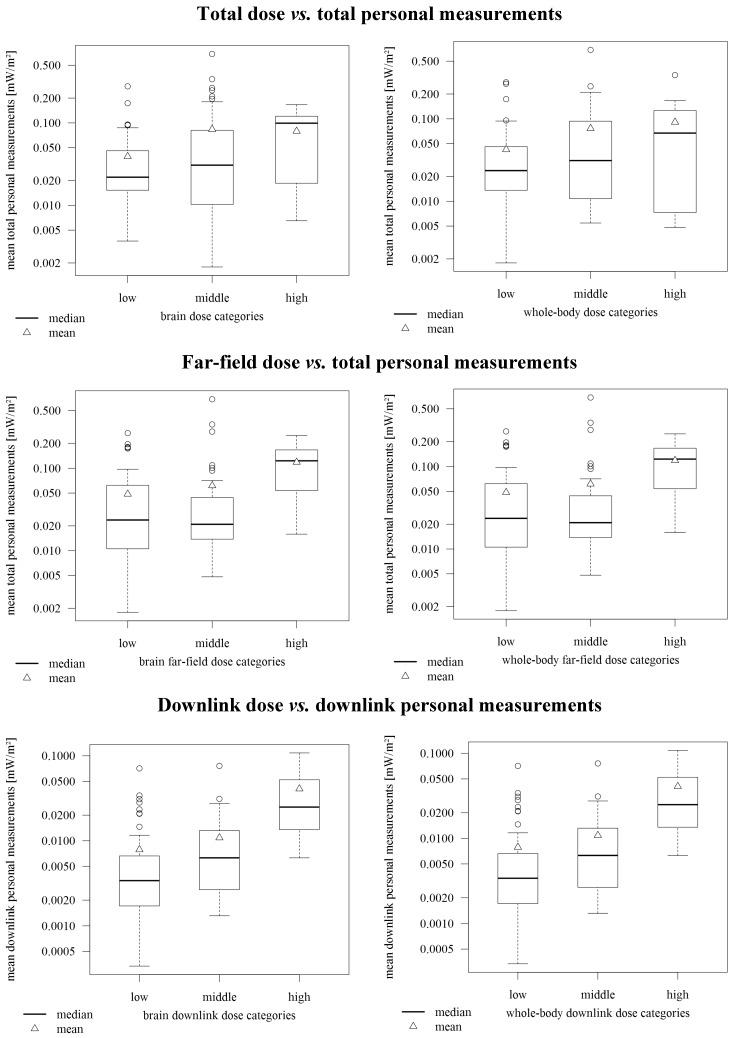
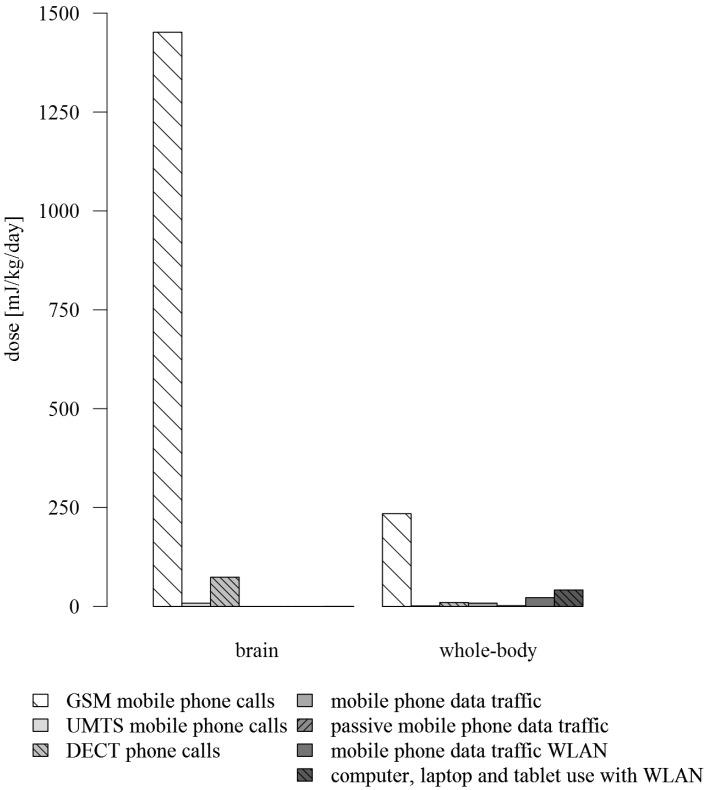
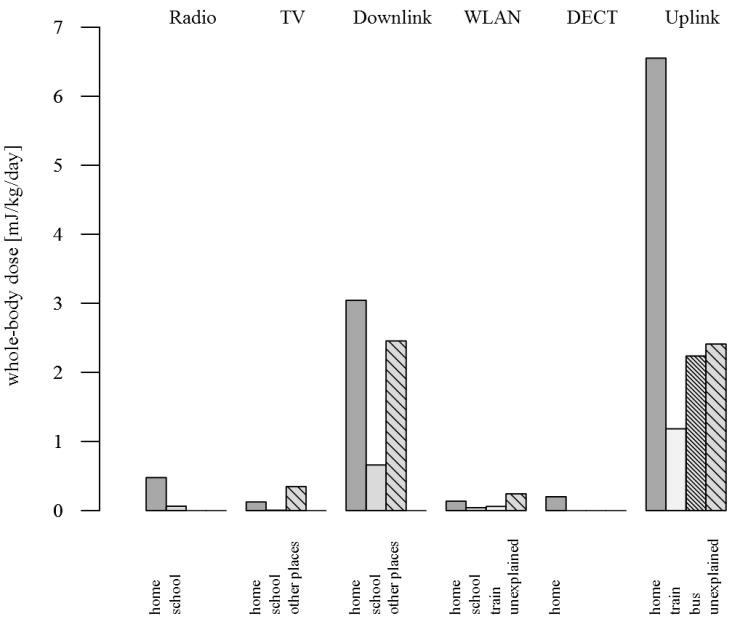
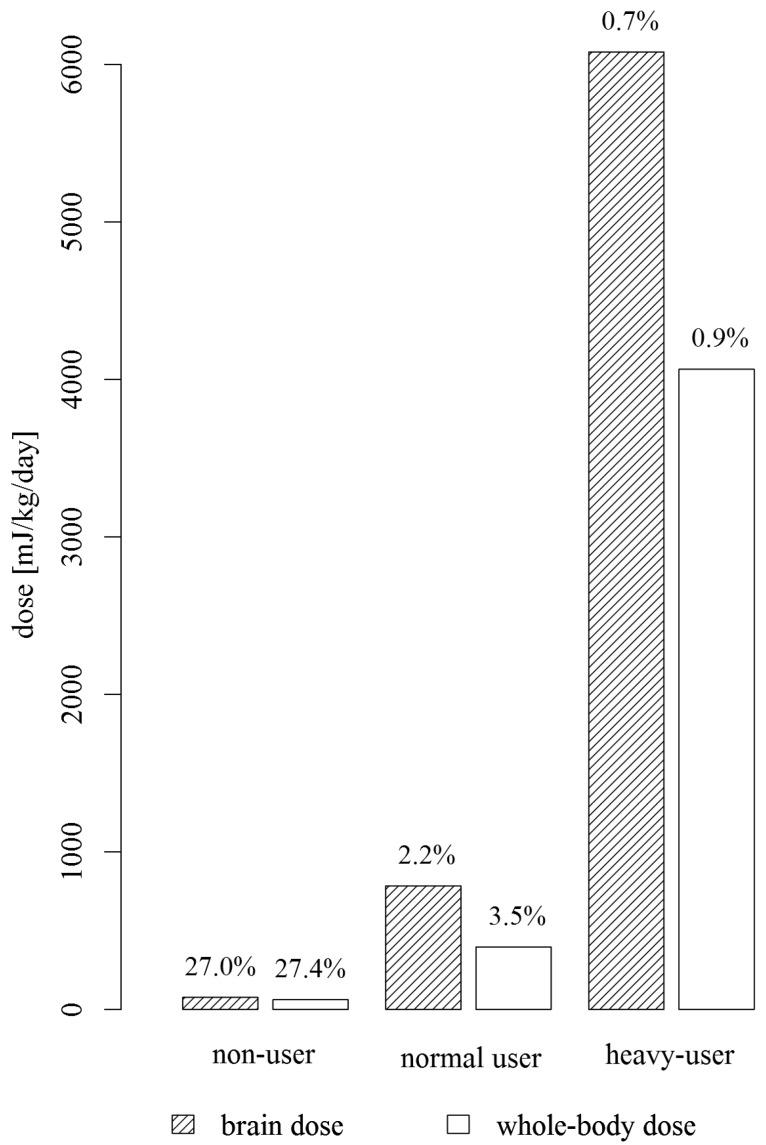
Exposure assessment is a crucial part in studying potential effects of RF-EMF. Using data from the HERMES study on adolescents, we developed an integrative exposure surrogate combining near-field and far-field RF-EMF exposure in a single brain and whole-body exposure measure. Contributions from far-field sources were modelled by propagation modelling and multivariable regression modelling using personal measurements. Contributions from near-field sources were assessed from both, questionnaires and mobile phone operator records. Mean cumulative brain and whole-body doses were 1559.7 mJ/kg and 339.9 mJ/kg per day, respectively. 98.4% of the brain dose originated from near-field sources, mainly from GSM mobile phone calls (93.1%) and from DECT phone calls (4.8%). Main contributors to the whole-body dose were GSM mobile phone calls (69.0%), use of computer, laptop and tablet connected to WLAN (12.2%) and data traffic on the mobile phone via WLAN (6.5%). The exposure from mobile phone base stations contributed 1.8% to the whole-body dose, while uplink exposure from other people's mobile phones contributed 3.6%. In conclusion, the proposed approach is considered useful to combine near-field and far-field exposure to an integrative exposure surrogate for exposure assessment in epidemiologic studies. However, substantial uncertainties remain about exposure contributions from various near-field and far-field sources.
暴露评估是研究射频电磁场潜在影响的关键部分。利用HERMES青少年研究的数据,我们开发了一种综合暴露替代指标,将近场和远场射频电磁场暴露整合为单一的大脑和全身暴露测量指标。远场源的贡献通过传播建模和使用个人测量数据的多变量回归建模进行模拟。近场源的贡献通过问卷调查和移动电话运营商记录进行评估。大脑和全身的平均累积剂量分别为每天1559.7 mJ/kg和339.9 mJ/kg。98.4%的大脑剂量来自近场源,主要来自GSM移动电话通话(93.1%)和数字增强无绳通信(DECT)电话通话(4.8%)。全身剂量的主要贡献者是GSM移动电话通话(69.0%)、连接到无线局域网(WLAN)的计算机、笔记本电脑和平板电脑的使用(12.2%)以及通过WLAN的手机数据流量(6.5%)。移动电话基站的暴露对全身剂量的贡献为1.8%,而其他人手机的上行链路暴露贡献为3.6%。总之,所提出的方法被认为有助于将近场和远场暴露整合为一个综合暴露替代指标,用于流行病学研究中的暴露评估。然而,各种近场和远场源的暴露贡献仍存在很大的不确定性。
 Zotero 插件