Souza João Paulo, Oladapo Olufemi T, Bohren Meghan A, Mugerwa Kidza, Fawole Bukola, Moscovici Leonardo, Alves Domingos, Perdona Gleici, Oliveira-Ciabati Livia, Vogel Joshua P, Tunçalp Özge, Zhang Jim, Hofmeyr Justus, Bahl Rajiv, Gülmezoglu A Metin
Department of Social Medicine, Ribeirão Preto Medical School, University of São Paulo, Av. Bandeirantes, 3900, Ribeirão Preto, SP, Brazil.
GLIDE Technical Cooperation and Research, Ribeirão Preto, SP, Brazil.
Reprod Health. 2015 May 26;12:49. doi: 10.1186/s12978-015-0029-4.
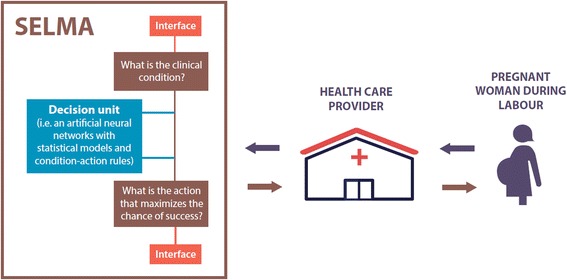
The partograph is currently the main tool available to support decision-making of health professionals during labour. However, the rate of appropriate use of the partograph is disappointingly low. Apart from limitations that are associated with partograph use, evidence of positive impact on labour-related health outcomes is lacking. The main goal of this study is to develop a Simplified, Effective, Labour Monitoring-to-Action (SELMA) tool. The primary objectives are: to identify the essential elements of intrapartum monitoring that trigger the decision to use interventions aimed at preventing poor labour outcomes; to develop a simplified, monitoring-to-action algorithm for labour management; and to compare the diagnostic performance of SELMA and partograph algorithms as tools to identify women who are likely to develop poor labour-related outcomes.
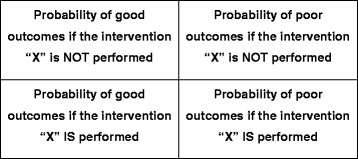
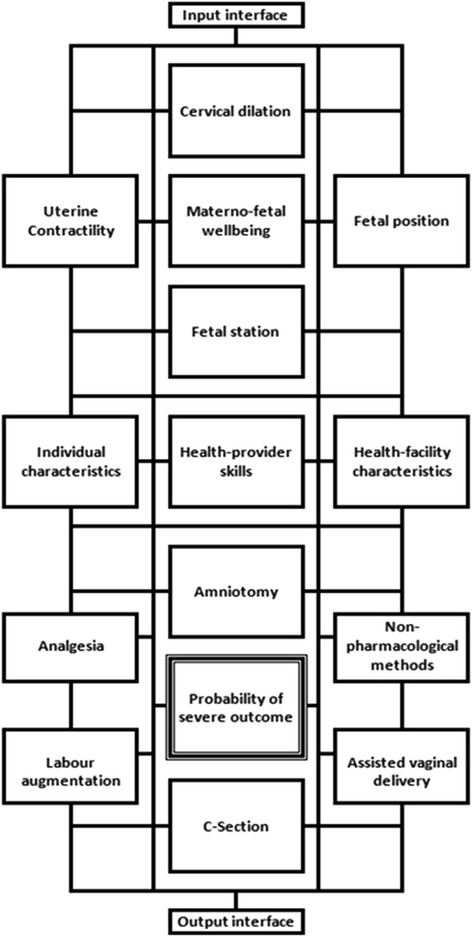
METHODS/DESIGN: A prospective cohort study will be conducted in eight health facilities in Nigeria and Uganda (four facilities from each country). All women admitted for vaginal birth will comprise the study population (estimated sample size: 7,812 women). Data will be collected on maternal characteristics on admission, labour events and pregnancy outcomes by trained research assistants at the participating health facilities. Prediction models will be developed to identify women at risk of intrapartum-related perinatal death or morbidity (primary outcomes) throughout the course of labour. These predictions models will be used to assemble a decision-support tool that will be able to suggest the best course of action to avert adverse outcomes during the course of labour. To develop this set of prediction models, we will use up-to-date techniques of prognostic research, including identification of important predictors, assigning of relative weights to each predictor, estimation of the predictive performance of the model through calibration and discrimination, and determination of its potential for application using internal validation techniques.
This research offers an opportunity to revisit the theoretical basis of the partograph. It is envisioned that the final product would help providers overcome the challenging tasks of promptly interpreting complex labour information and deriving appropriate clinical actions, and thus increase efficiency of the care process, enhance providers' competence and ultimately improve labour outcomes. Please see related articles ' http://dx.doi.org/10.1186/s12978-015-0027-6 ' and ' http://dx.doi.org/10.1186/s12978-015-0028-5 '.
产程图目前是帮助卫生专业人员在分娩期间进行决策的主要工具。然而,产程图的合理使用率低得令人失望。除了与产程图使用相关的局限性外,缺乏对分娩相关健康结局产生积极影响的证据。本研究的主要目标是开发一种简化、有效、从分娩监测到行动(SELMA)的工具。主要目标包括:确定产时监测的基本要素,这些要素触发使用旨在预防不良分娩结局的干预措施的决策;开发一种简化的、从监测到行动的分娩管理算法;比较SELMA算法和产程图算法作为识别可能出现不良分娩相关结局的女性的工具的诊断性能。
方法/设计:将在尼日利亚和乌干达的八个卫生机构(每个国家四个机构)进行一项前瞻性队列研究。所有入院进行阴道分娩的妇女将构成研究人群(估计样本量:7812名妇女)。参与的卫生机构中经过培训的研究助理将收集产妇入院时的特征、分娩事件和妊娠结局的数据。将开发预测模型,以识别分娩过程中存在产时相关围产期死亡或发病风险(主要结局)的妇女。这些预测模型将用于组装一个决策支持工具,该工具将能够建议最佳行动方案,以避免分娩过程中的不良结局。为了开发这组预测模型,我们将使用最新的预后研究技术,包括识别重要预测因素、为每个预测因素分配相对权重、通过校准和区分估计模型的预测性能,以及使用内部验证技术确定其应用潜力。
本研究提供了一个重新审视产程图理论基础的机会。预计最终产品将帮助医护人员克服及时解读复杂分娩信息并得出适当临床行动这一具有挑战性的任务,从而提高护理过程的效率,增强医护人员的能力,并最终改善分娩结局。请参阅相关文章“http://dx.doi.org/10.1186/s12978-015-0027-6”和“http://dx.doi.org/10.1186/s12978-015-0028-5”。