Hoang Vanessa, Bi Jiangjiang, Mohankumar Sheba M, Vyas Arpita K
Department of Pediatrics and Human Development, Michigan State University, East Lansing, Michigan, United States of America.
Department of Pediatrics and Human Development, Michigan State University, East Lansing, Michigan, United States of America; Department of Anesthesiology, Tongji Hospital, Huazhong University of Science and Technology, Wuhan, Hubei, China.
PLoS One. 2015 May 26;10(5):e0126119. doi: 10.1371/journal.pone.0126119. eCollection 2015.
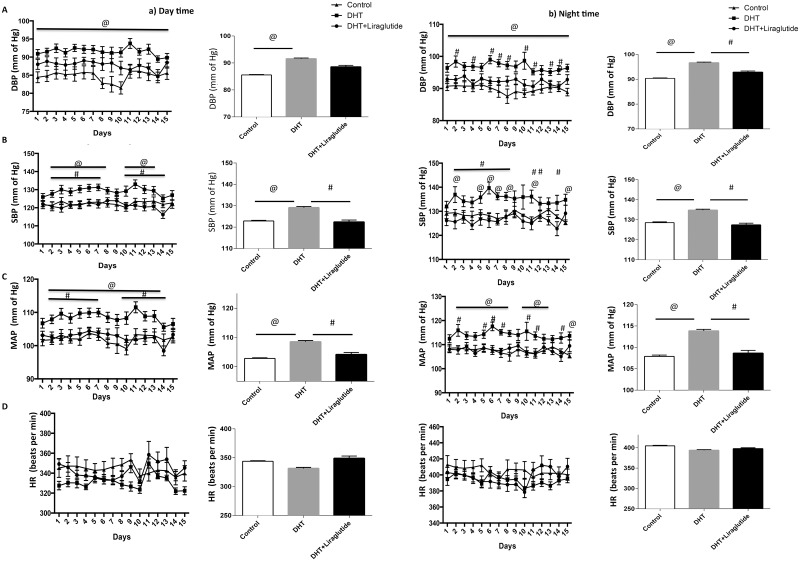
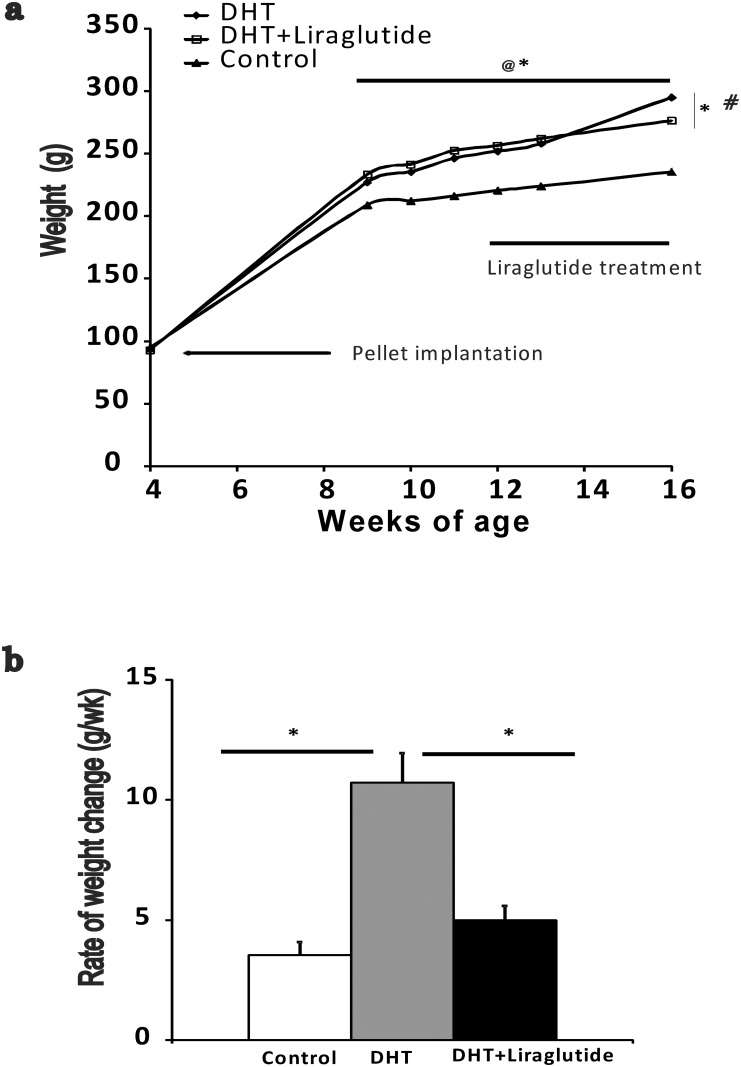
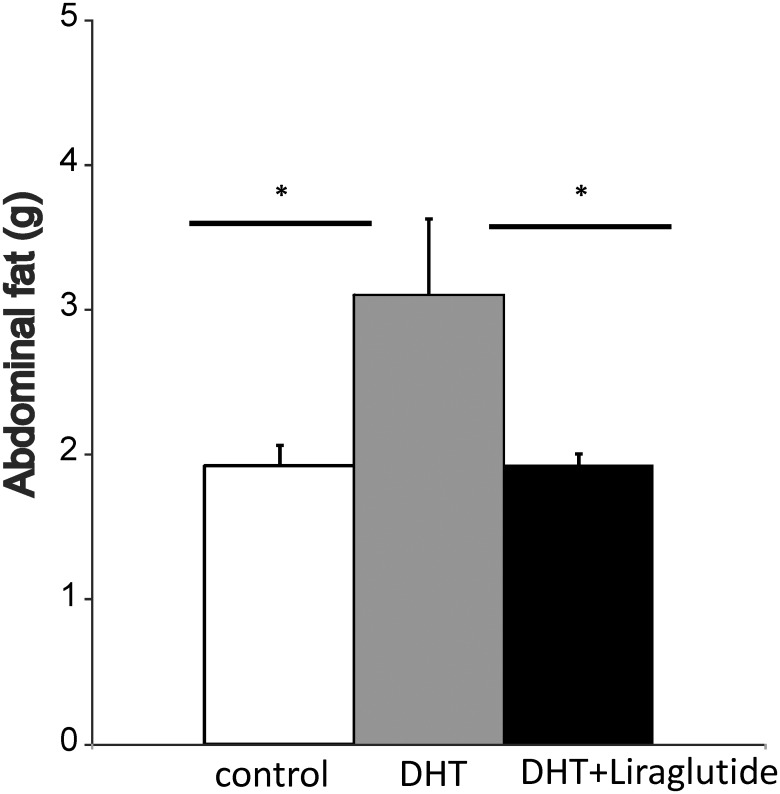
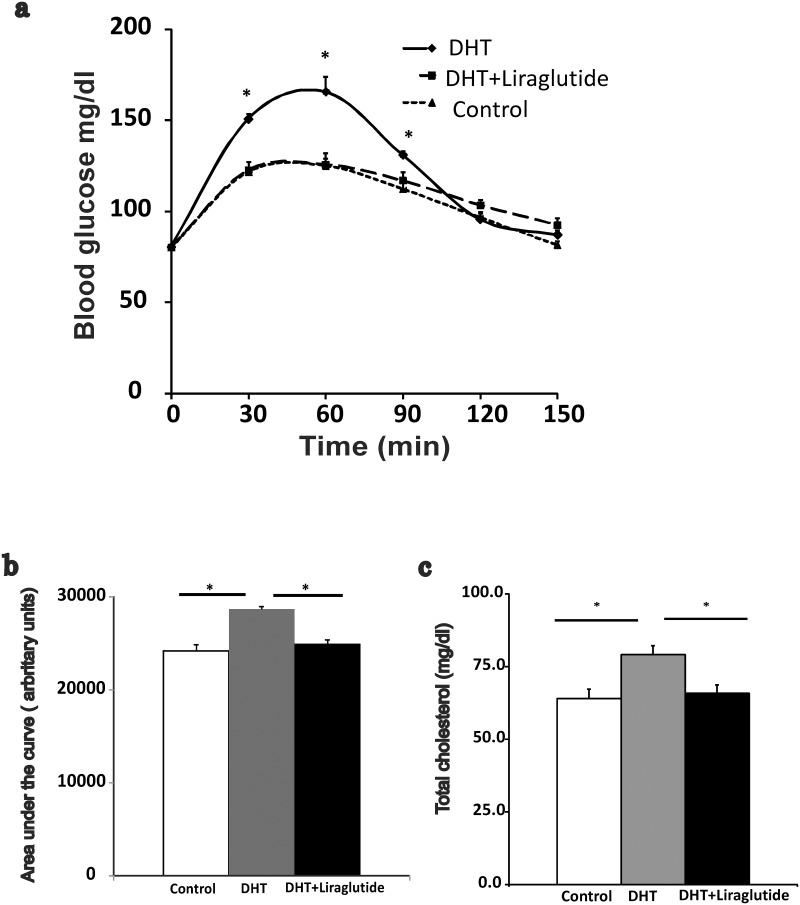
Polycystic ovarian syndrome (PCOS) is the most common endocrine disorder in women of reproductive age, with a prevalence of 5-8%. Type 2 diabetes and cardiovascular disease (CVD) are its long-term complications. Targeted therapies addressing both these complications together are lacking. Glucagon like peptide-1 (GLP-1) agonists that are used to treat type 2 diabetes mellitus have beneficial effects on the cardiovascular system. Hence we hypothesized that a GLP-1 agonist would improve both cardiovascular and metabolic outcomes in PCOS. To test this hypothesis, we used an established rat model of PCOS. Prepubertal female Sprague Dawley rats were sham-implanted or implanted s.c. with dihydrotestosterone (DHT) pellets (90 day release; 83 μg/day). At 12 wks of age, sham implanted rats received saline injections and the DHT treated animals were administered either saline or liraglutide (0.2 mg/kg s.c twice daily) for 4 weeks. Subgroups of rats were implanted with telemeters between 12-13 weeks of age to monitor blood pressure. DHT implanted rats had irregular estrus cycles and were significantly heavier than the control females at 12 weeks (mean± SEM 251.9±3.4 vs 216.8±3.4 respectively; p<0.05) and 4 weeks of treatment with liraglutide in DHT treated rats significantly decreased body weight (mean± SEM 294.75 ±3.2 in DHT+ saline vs 276.25±2.7 in DHT+ liraglutide group respectively; p<0.01). Liraglutide treatment in the DHT implanted rats significantly improved glucose excursion during oral glucose tolerance test (area under the curve: DHT+ saline 28674±310 vs 24990± 420 in DHT +liraglutide p <0.01). DHT rats were hypertensive and liraglutide treatment significantly improved mean arterial pressure. These results suggest that GLP-1 treatment could improve DHT-induced metabolic and blood pressure deficits associated with PCOS.
多囊卵巢综合征(PCOS)是育龄期女性最常见的内分泌疾病,患病率为5%-8%。2型糖尿病和心血管疾病(CVD)是其长期并发症。目前缺乏针对这两种并发症的联合靶向治疗方法。用于治疗2型糖尿病的胰高血糖素样肽-1(GLP-1)激动剂对心血管系统有有益作用。因此,我们假设GLP-1激动剂可改善PCOS患者的心血管和代谢结局。为验证这一假设,我们使用了已建立的PCOS大鼠模型。青春期前的雌性斯普拉格-道利大鼠接受假手术或皮下植入二氢睾酮(DHT)丸剂(90天缓释;83μg/天)。12周龄时,假手术大鼠接受盐水注射,DHT处理的动物则接受盐水或利拉鲁肽(0.2mg/kg皮下注射,每日两次)治疗4周。在12-13周龄之间将遥测器植入部分大鼠亚组以监测血压。植入DHT的大鼠发情周期不规律,在12周时明显比对照雌性大鼠重(分别为平均±标准误251.9±3.4与216.8±3.4;p<0.05),DHT处理的大鼠用利拉鲁肽治疗4周后体重显著降低(分别为DHT+盐水组平均±标准误294.75±3.2与DHT+利拉鲁肽组276.25±2.7;p<0.01)。在植入DHT的大鼠中,利拉鲁肽治疗显著改善了口服葡萄糖耐量试验期间的血糖波动(曲线下面积:DHT+盐水组28674±310与DHT+利拉鲁肽组24990±420,p<0.01)。DHT大鼠患有高血压,利拉鲁肽治疗显著改善了平均动脉压。这些结果表明,GLP-!治疗可改善与PCOS相关的DHT诱导的代谢和血压缺陷。