Vega-Rodríguez Joel, Pastrana-Mena Rebecca, Crespo-Lladó Keila N, Ortiz José G, Ferrer-Rodríguez Iván, Serrano Adelfa E
Department of Microbiology and Medical Zoology, University of Puerto Rico, School of Medicine, San Juan, Puerto Rico.
Department of Pharmacology, University of Puerto Rico, School of Medicine, San Juan, Puerto Rico.
PLoS One. 2015 May 26;10(5):e0128212. doi: 10.1371/journal.pone.0128212. eCollection 2015.
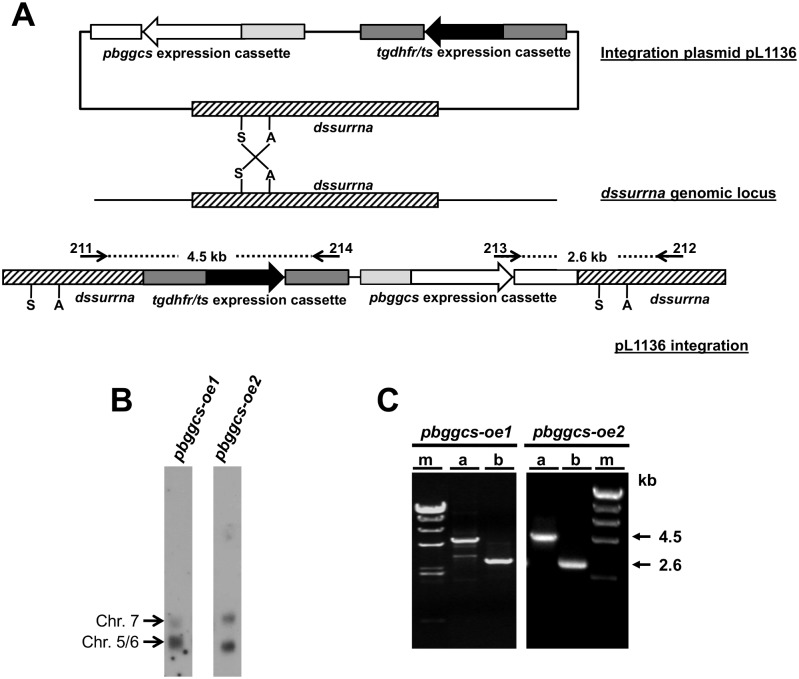
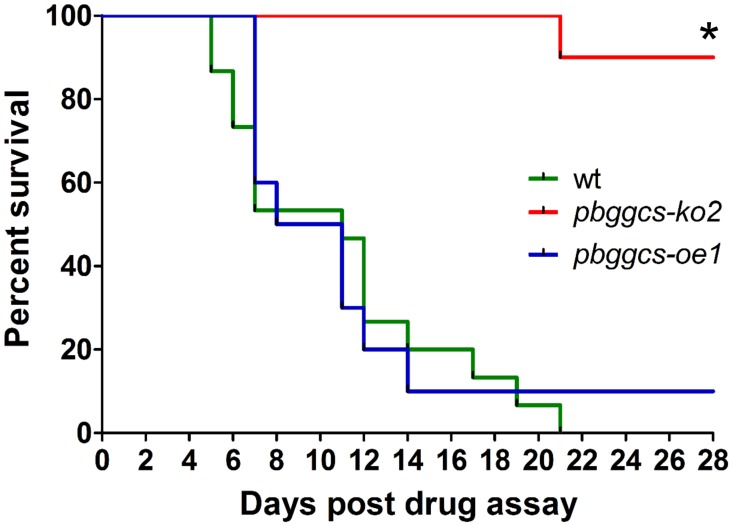
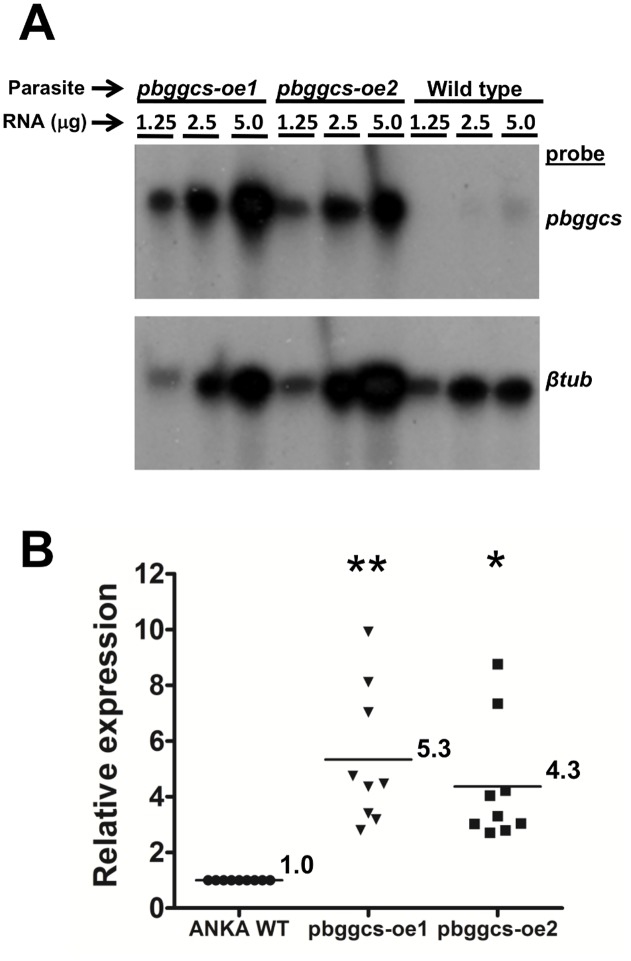
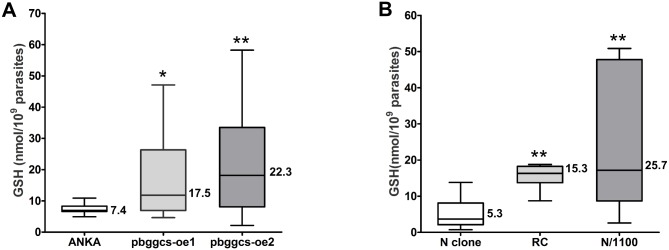
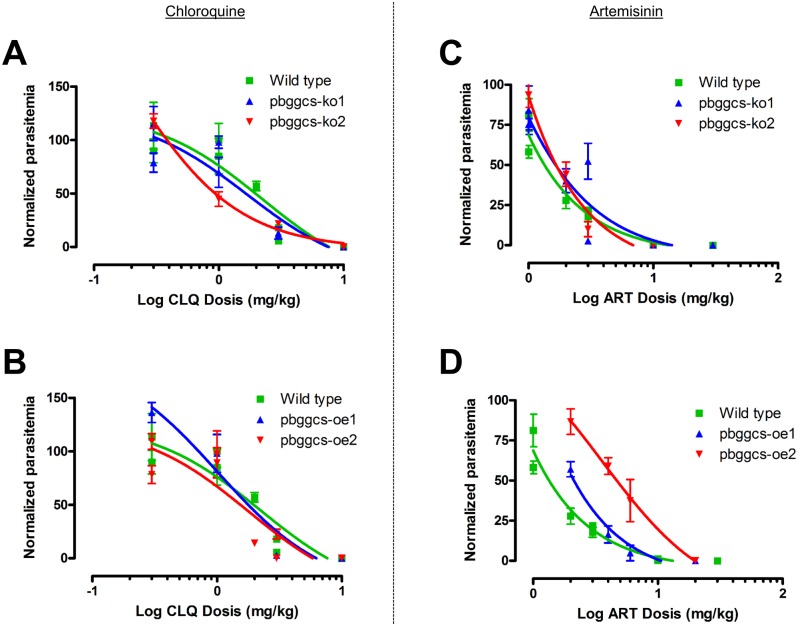
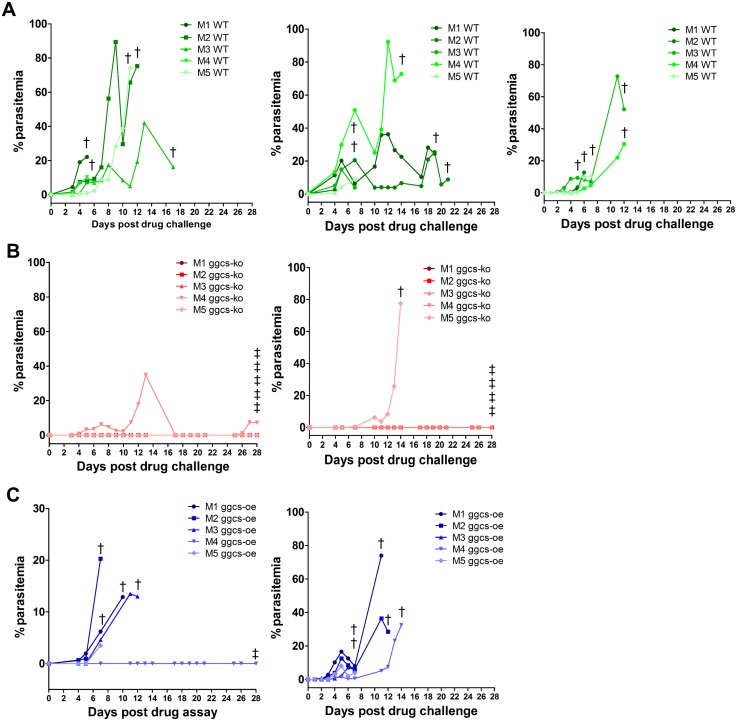
Malaria is one of the most devastating parasitic diseases worldwide. Plasmodium drug resistance remains a major challenge to malaria control and has led to the re-emergence of the disease. Chloroquine (CQ) and artemisinin (ART) are thought to exert their anti-malarial activity inducing cytotoxicity in the parasite by blocking heme degradation (for CQ) and increasing oxidative stress. Besides the contribution of the CQ resistance transporter (PfCRT) and the multidrug resistant gene (pfmdr), CQ resistance has also been associated with increased parasite glutathione (GSH) levels. ART resistance was recently shown to be associated with mutations in the K13-propeller protein. To analyze the role of GSH levels in CQ and ART resistance, we generated transgenic Plasmodium berghei parasites either deficient in or overexpressing the gamma-glutamylcysteine synthetase gene (pbggcs) encoding the rate-limiting enzyme in GSH biosynthesis. These lines produce either lower (pbggcs-ko) or higher (pbggcs-oe) levels of GSH than wild type parasites. In addition, GSH levels were determined in P. berghei parasites resistant to CQ and mefloquine (MQ). Increased GSH levels were detected in both, CQ and MQ resistant parasites, when compared to the parental sensitive clone. Sensitivity to CQ and ART remained unaltered in both pgggcs-ko and pbggcs-oe parasites when tested in a 4 days drug suppressive assay. However, recrudescence assays after the parasites have been exposed to a sub-lethal dose of ART showed that parasites with low levels of GSH are more sensitive to ART treatment. These results suggest that GSH levels influence Plasmodium berghei response to ART treatment.
疟疾是全球最具毁灭性的寄生虫病之一。疟原虫耐药性仍然是疟疾控制面临的主要挑战,并导致了该疾病的再度流行。氯喹(CQ)和青蒿素(ART)被认为通过阻断血红素降解(针对CQ)和增加氧化应激来诱导寄生虫的细胞毒性,从而发挥其抗疟活性。除了CQ耐药转运蛋白(PfCRT)和多药耐药基因(pfmdr)的作用外,CQ耐药性还与寄生虫谷胱甘肽(GSH)水平升高有关。最近发现ART耐药性与K13螺旋桨蛋白的突变有关。为了分析GSH水平在CQ和ART耐药中的作用,我们构建了转基因伯氏疟原虫,这些寄生虫要么缺乏编码GSH生物合成限速酶的γ-谷氨酰半胱氨酸合成酶基因(pbggcs),要么过表达该基因。与野生型寄生虫相比,这些品系产生的GSH水平要么更低(pbggcs-ko),要么更高(pbggcs-oe)。此外,还测定了对CQ和甲氟喹(MQ)耐药的伯氏疟原虫中的GSH水平。与亲本敏感克隆相比,在对CQ和MQ耐药的寄生虫中均检测到GSH水平升高。在4天药物抑制试验中测试时,pgggcs-ko和pbggcs-oe寄生虫对CQ和ART的敏感性均未改变。然而,在寄生虫暴露于亚致死剂量的ART后的复发试验表明,GSH水平低的寄生虫对ART治疗更敏感。这些结果表明,GSH水平影响伯氏疟原虫对ART治疗的反应。