Ma Xuexiao, Lin Yazhou, Yang Kun, Yue Bin, Xiang Hongfei, Chen Bohua
Department of Orthopedic Surgery, The Affiliated Hospital of Qingdao University Medical College, Qingdao University, Qingdao, Shandong 266003, P.R. China.
Medical Research Center, The Affiliated Hospital of Qingdao University Medical College, Qingdao University, Qingdao, Shandong 266003, P.R. China.
Int J Mol Med. 2015 Jul;36(1):186-94. doi: 10.3892/ijmm.2015.2225. Epub 2015 May 26.
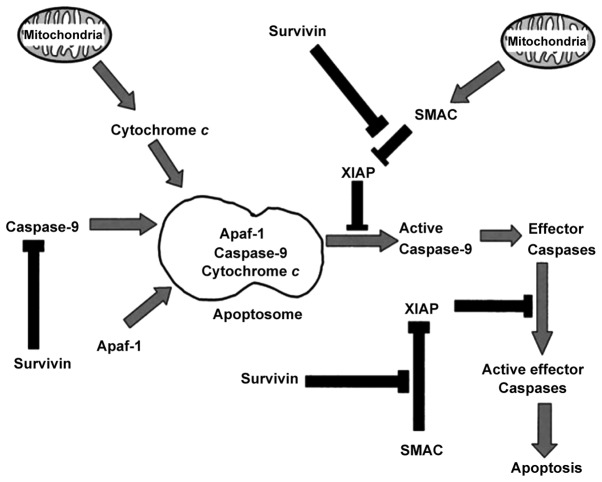
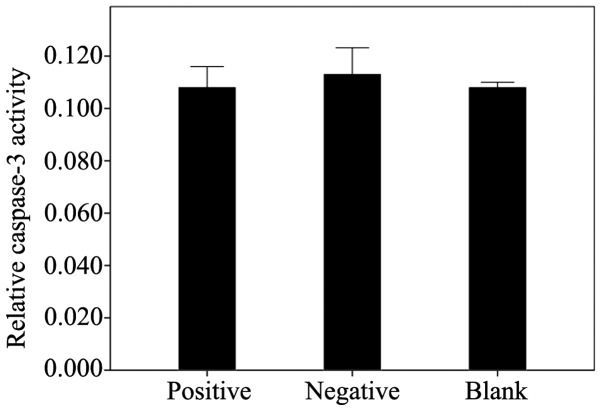
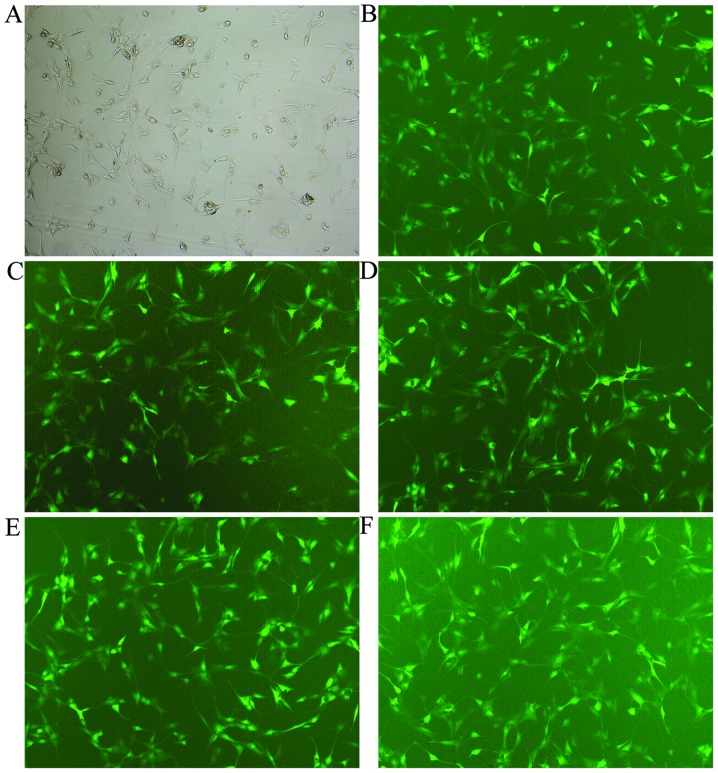
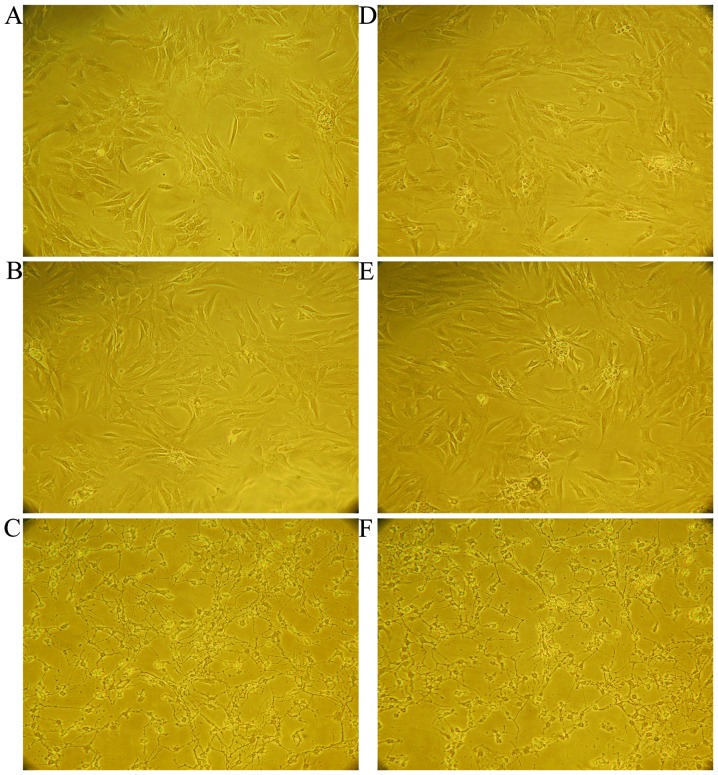
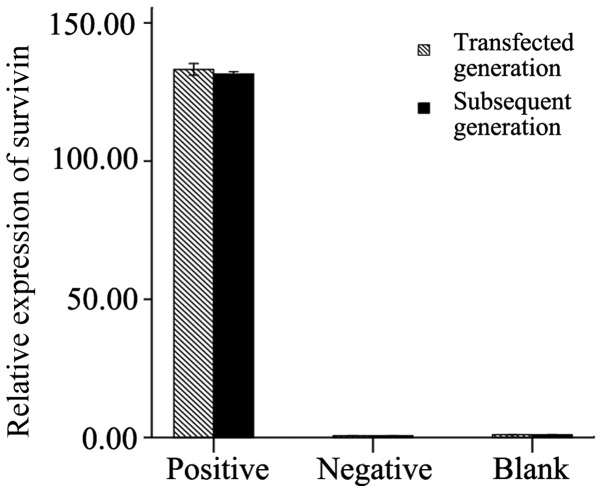
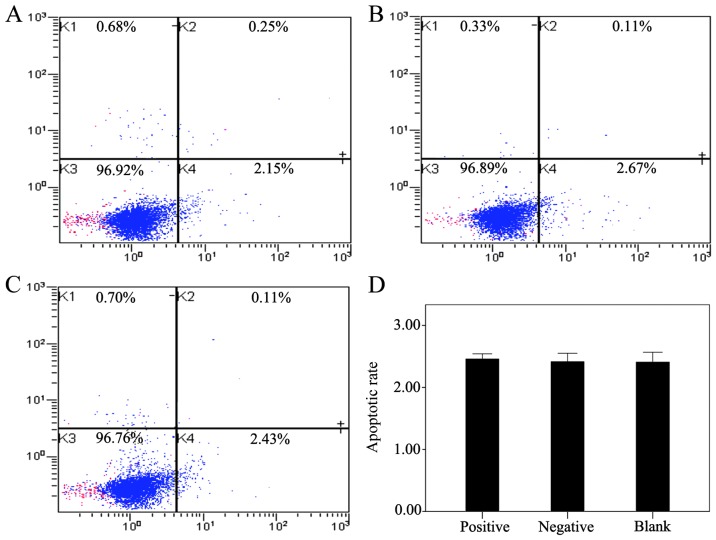
Lower back pain is a common concern, and 40% of all cases involve the degeneration of the intervertebral disc (IVD). However, the excessive apoptosis of disc cells plays an important role in IVD degeneration, particularly in the nucleus pulposus (NP). Thus, anti-apoptotic gene therapy to attenuate or reverse the degenerative process within the NP is being developed. Survivin is a unique inhibitor of apoptosis (IAP) and has been extensively investigated in cancer cells. However, little is known of the effects of survivin transfection on NP cells derived from degenerative human disc. In this study, we aimed to investigate the effects of lentivirus (LV)‑mediated survivin transfection on the morphology and apoptosis of NP cells derived from degenerative human disc in vitro. NP cells were transfected with LV‑mediated survivin. Subsequently, cell morphology was observed and the survivin mRNA expression levels were measured by RT‑qPCR. Apoptosis was analyzed by flow cytometry and by measuring caspase‑3 activity. The results revealed that the morphology of the NP cells derived from degenerative human disc transfected with LV‑mediated survivin was significantly altered as evidenced by cytomorphosis, the reduction of the cytoplasm and cell shrinkage. Following transfection, survivin gene expression significantly increased in the transfected cells and subsequent generation cells; however, no significant differences in the cell apoptotic rate and caspase‑3 activity were observed. We found that transfection of the survivin gene into NP cells led to the stable expression of survivin and induced marked changes in cell morphology. Furthermore, no significant anti-apoptotic effects were observed following LV‑mediated survivin transfection. Overall, our findings demonstrate that LV carrying surviving may be used to successfully enforce the expression of survivin in NP cells. However, cell morphology was evidently altered, whereas the apoptotic rate did not decrease. Comprehensive studies on the feasibility of using survivin in gene therapy in an aim to attenuate disc degeneration are warranted. Further research on the mechanisms responsible for the changes in cell morphology and cell function are also required.
下背部疼痛是一个常见问题,所有病例中有40%涉及椎间盘(IVD)退变。然而,椎间盘细胞的过度凋亡在IVD退变中起重要作用,尤其是在髓核(NP)中。因此,正在开发抗凋亡基因疗法以减轻或逆转NP内的退变过程。生存素是一种独特的凋亡抑制因子(IAP),已在癌细胞中得到广泛研究。然而,关于生存素转染对来自退变人椎间盘的NP细胞的影响知之甚少。在本研究中,我们旨在探讨慢病毒(LV)介导的生存素转染对体外培养的来自退变人椎间盘的NP细胞形态和凋亡的影响。用LV介导的生存素转染NP细胞。随后,观察细胞形态,并通过RT-qPCR测量生存素mRNA表达水平。通过流式细胞术和测量caspase-3活性分析细胞凋亡。结果显示,用LV介导的生存素转染的来自退变人椎间盘的NP细胞形态发生显著改变,表现为细胞变形、细胞质减少和细胞皱缩。转染后,转染细胞及其后代细胞中生存素基因表达显著增加;然而,未观察到细胞凋亡率和caspase-3活性有显著差异。我们发现将生存素基因转染到NP细胞中可导致生存素的稳定表达并诱导细胞形态发生明显变化。此外,LV介导的生存素转染后未观察到明显的抗凋亡作用。总体而言,我们的研究结果表明携带生存素的LV可成功在NP细胞中增强生存素的表达。然而,细胞形态明显改变,而凋亡率并未降低。有必要对将生存素用于基因治疗以减轻椎间盘退变的可行性进行全面研究。还需要进一步研究细胞形态和细胞功能变化的机制。