Pavlova Velichka, Paunova-Krasteva Tsvetelina, Stoitsova Stoyanka, Nikolova Elena
Department of Experimental Morphology, Institute of Experimental Morphology, Pathology and Anthropology with Museum, Bulgarian Academy of Sciences , Sofia , Bulgaria.
Department of General Microbiology, The Stefan Angeloff Institute of Microbiology, Bulgarian Academy of Sciences , Sofia , Bulgaria.
Biotechnol Biotechnol Equip. 2015 Mar 4;29(2):357-362. doi: 10.1080/13102818.2014.999214. Epub 2015 Jan 29.
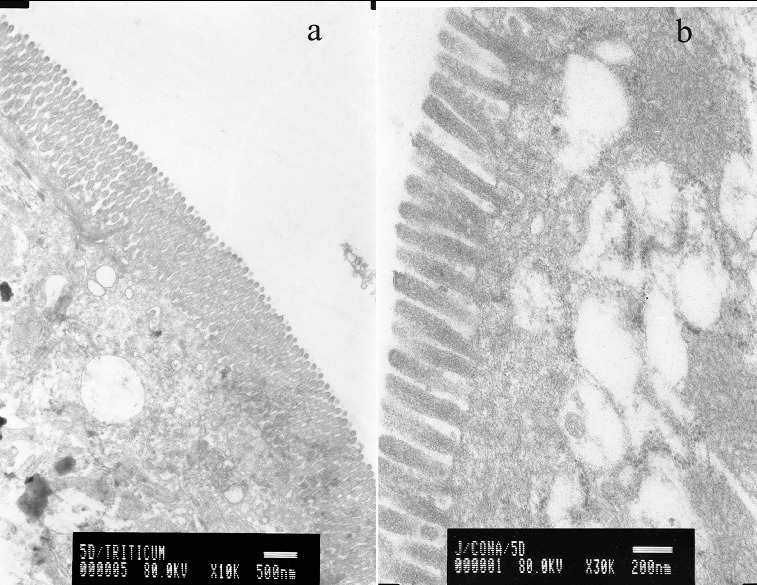
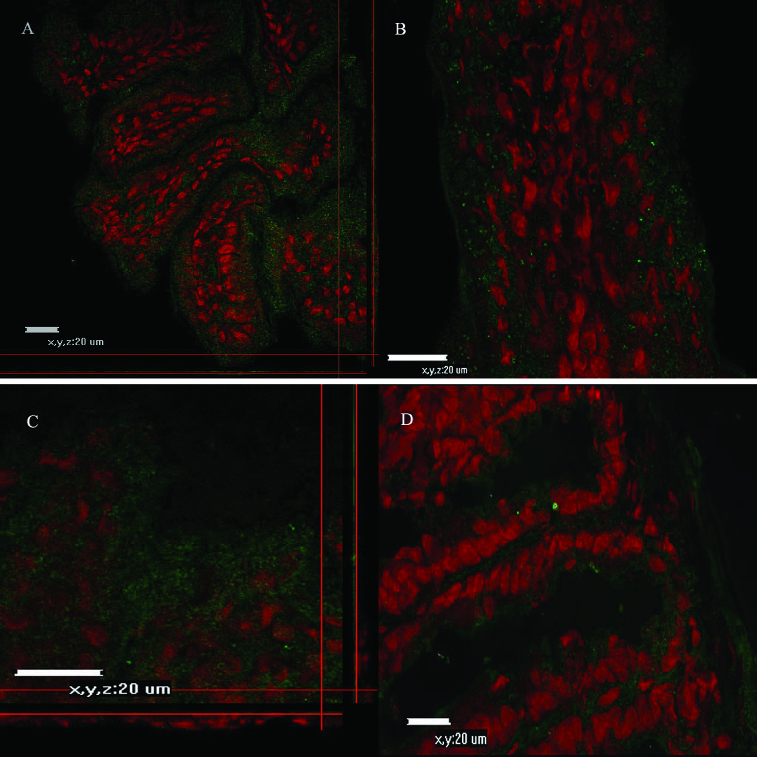
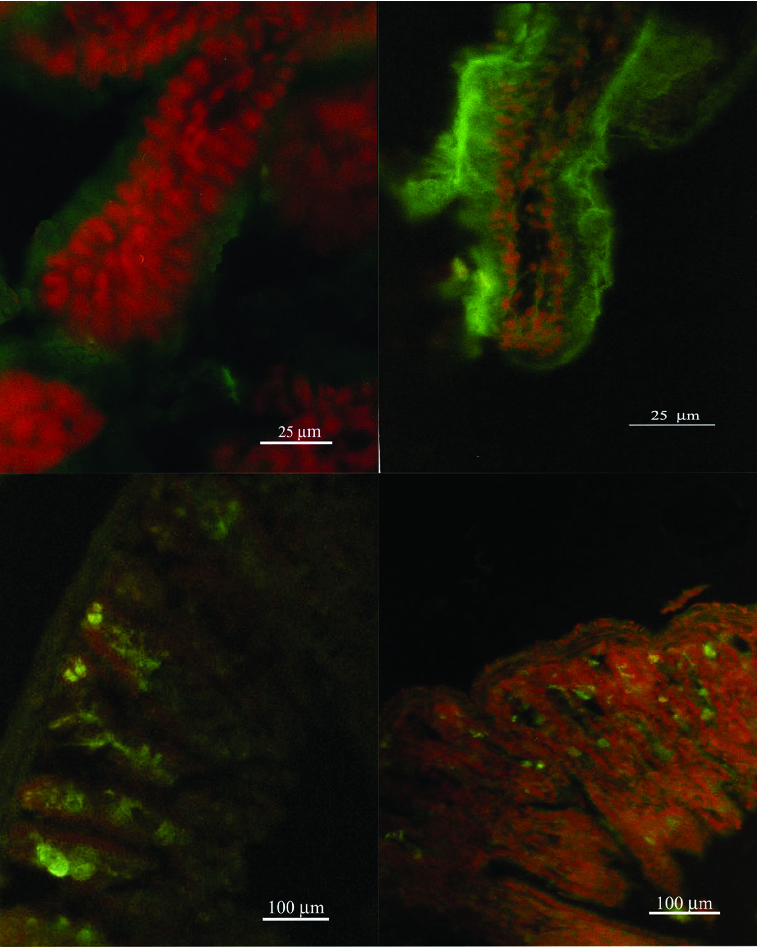
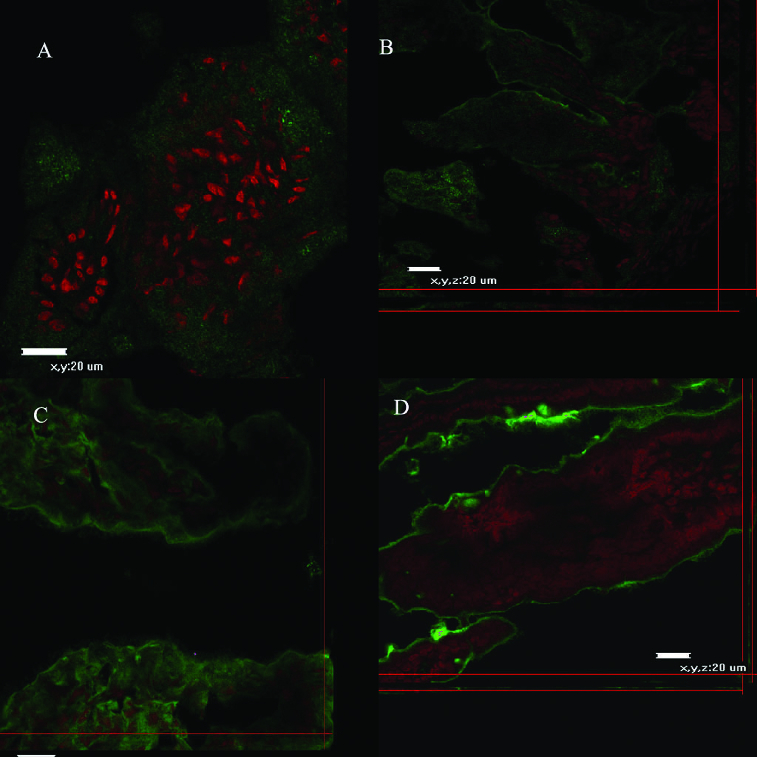
Enterocytes are unique cells governing an array of processes. They are covered by the gut glycocalyx, which is an extraneous carbohydrate-rich coat and an integral part of the plasma membrane. The intestinal glycocalyx and secreted mucins constitute a glycosylated milieu which has a number of physiological and protective functions. One of the important functions of the glycocalyx is its barrier function against microbial adherence to different membrane glycolipids. Thus, the glycocalyx is an important part of the mucosal immune system in newborns. The aim of our study was to identify the carbohydrates in the small bowel glycocalyx of Balb/c mice at different ages. We used plant lectins with different sugar specificities. Fluorescein-labelled lectins binding different carbohydrate moieties were detected using confocal laser scanning microscopy. Biotinilated lectins were used for transmission electron microscopy observations of the constituents of the gut glycocalyx at different periods of postnatal development in mice. Different carbohydrate moieties that were identified in the murine intestinal glycocalyx followed different distribution patterns and characteristics. Carbohydrates present on the mucus surface depended on tissue localization, cell type and stage of development. The distribution and mucins glycosylation could be of interest in analysing the response of the mucosal barrier to intestinal pathogens causing infection or inflammation.
肠上皮细胞是一类独特的细胞,掌管着一系列生理过程。它们被肠道糖萼覆盖,糖萼是一层富含碳水化合物的外层结构,也是质膜的重要组成部分。肠道糖萼和分泌型黏蛋白构成了一个具有多种生理和保护功能的糖基化环境。糖萼的重要功能之一是其对微生物黏附不同膜糖脂的屏障作用。因此,糖萼是新生儿黏膜免疫系统的重要组成部分。我们研究的目的是鉴定不同年龄的Balb/c小鼠小肠糖萼中的碳水化合物。我们使用了具有不同糖特异性的植物凝集素。利用共聚焦激光扫描显微镜检测结合不同碳水化合物部分的荧光素标记凝集素。生物素化凝集素用于小鼠出生后不同发育阶段肠道糖萼成分的透射电子显微镜观察。在小鼠肠道糖萼中鉴定出的不同碳水化合物部分呈现出不同的分布模式和特征。黏液表面存在的碳水化合物取决于组织定位、细胞类型和发育阶段。糖萼的分布和黏蛋白糖基化可能有助于分析黏膜屏障对引起感染或炎症的肠道病原体的反应。