Huang Xiangfeng, Liu Jia'nan, Wang Yihan, Liu Jia, Lu Lijun
College of Environmental Science and Engineering, State Key Laboratory of Pollution Control and Resource Reuse, Key Laboratory of Yangtze River Water Environment of the Ministry of Education, the Collaborative Innovation Center of Advanced Technology and Equipment for Water Pollution Control, the Collaborative Innovation Center for Regional Environmental Quality, Tongji University , Shanghai , China.
Biotechnol Biotechnol Equip. 2015 Mar 4;29(2):381-389. doi: 10.1080/13102818.2015.1006905. Epub 2015 Feb 12.
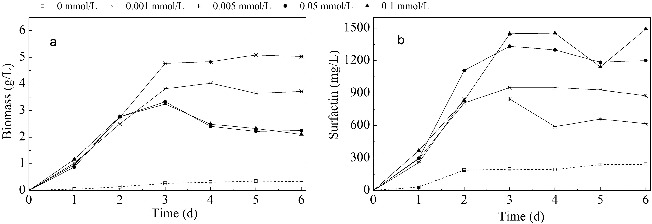
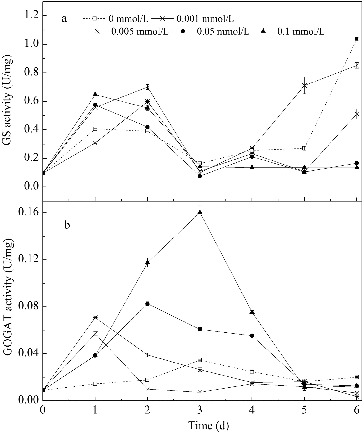
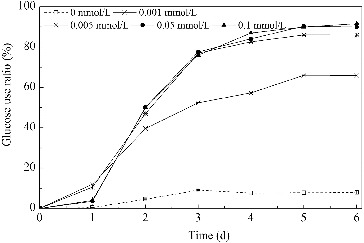
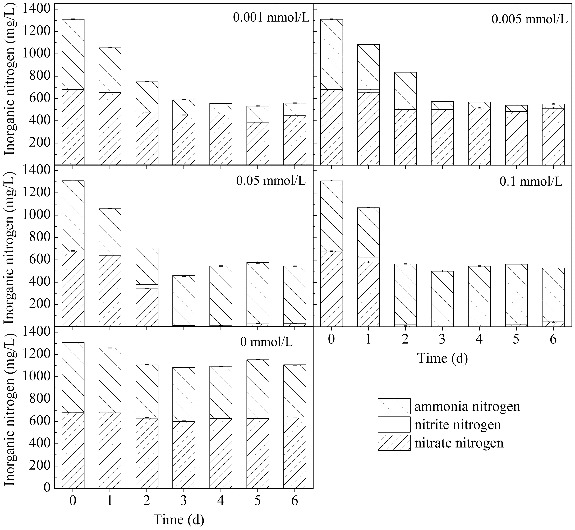
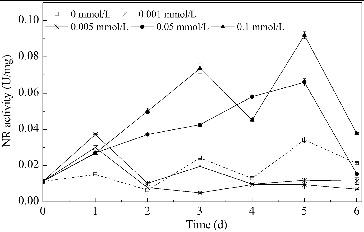
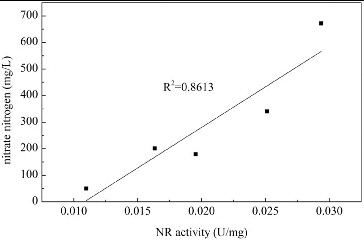
Surfactin, one of the most effective biosurfactants, has great potential in commercial applications. Studies on effective methods to reduce surfactin's production cost are always a hotspot in the research field of biosurfactants. The aim of this study was to reveal the role of Mn in promoting the biosynthesis of surfactin by ATCC 21332, which could arise more targeted suggestions on surfactin yield promotion. In this study, was cultivated in media containing different Mn concentrations. The obtained results showed that the yield of surfactin gradually increased upon Mn addition (0.001 to 0.1 mmol/L) and achieved the maximal production of 1500 mg/L, which reached 6.2-fold of the yield obtained in media without Mn addition. Correspondingly, the usage ratios of ammonium nitrate were improved. When the Mn concentration was higher than 0.05 mmol/L, nitrate became the main nitrogen source, instead of ammonium, indicating that the nitrogen utilization pattern was also changed. An increase in nitrate reductase activity was observed and the increase upon Mn dosage had a positive correlate with nitrate use, and then stimulated secondary metabolic activity and surfactin synthesis. On the other hand, Mn enhanced the glutamate synthase activity, which increased nitrogen absorption and transformation and provided more free amino acids for surfactin synthesis.
表面活性素是最有效的生物表面活性剂之一,在商业应用中具有巨大潜力。降低表面活性素生产成本的有效方法研究一直是生物表面活性剂研究领域的热点。本研究旨在揭示锰在促进ATCC 21332合成表面活性素中的作用,从而对提高表面活性素产量提出更具针对性的建议。在本研究中,将其在含有不同锰浓度的培养基中培养。所得结果表明,添加锰(0.001至0.1 mmol/L)后表面活性素产量逐渐增加,最高产量达到1500 mg/L,是未添加锰的培养基中产量的6.2倍。相应地,硝酸铵的利用率也得到提高。当锰浓度高于0.05 mmol/L时,硝酸盐取代铵成为主要氮源,这表明氮利用模式也发生了变化。观察到硝酸还原酶活性增加,且锰剂量增加与硝酸盐利用呈正相关,进而刺激次级代谢活性和表面活性素合成。另一方面,锰增强了谷氨酸合酶活性,增加了氮的吸收和转化,为表面活性素合成提供了更多游离氨基酸。