Sohn Dae-Hee, Sohn Hyun-Jung, Lee Hyun-Joo, Lee Seon-Duk, Kim Sueon, Hyun Seung-Joo, Cho Hyun-Il, Cho Seok-Goo, Lee Suk-Kyeong, Kim Tai-Gyu
Department of Microbiology, College of Medicine, The Catholic University of Korea, Seoul, Korea.
Hematopoietic Stem Cell Bank, College of Medicine, The Catholic University of Korea, Seoul, Korea.
PLoS One. 2015 May 29;10(5):e0127899. doi: 10.1371/journal.pone.0127899. eCollection 2015.
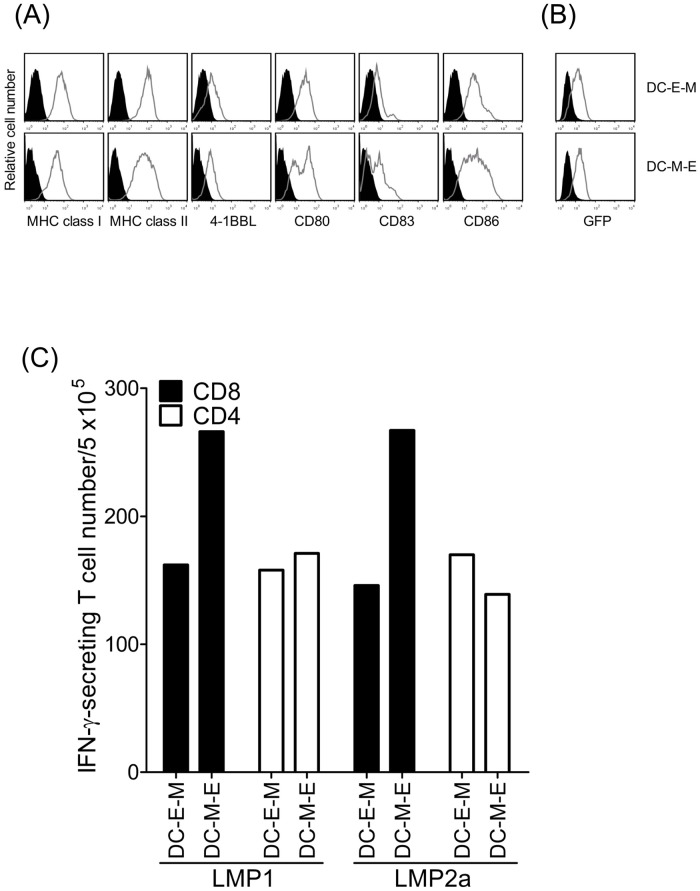
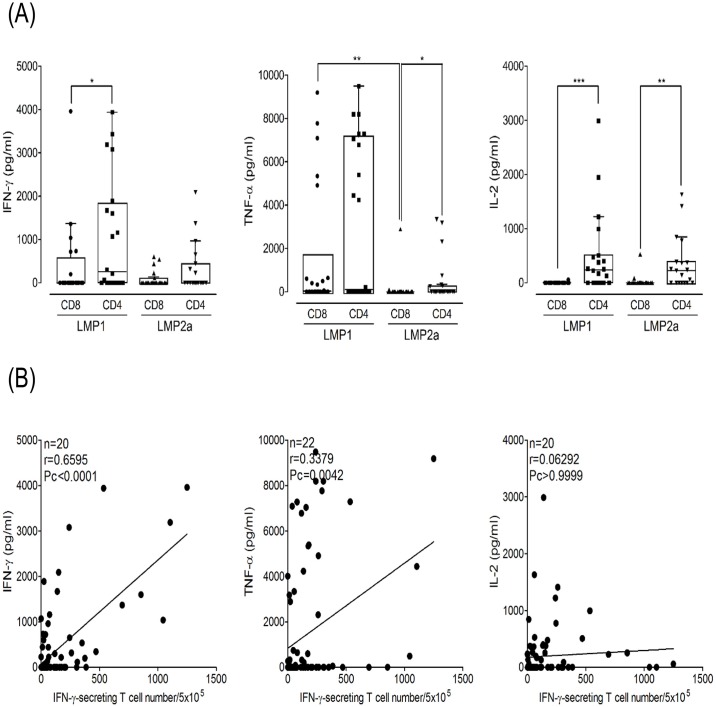
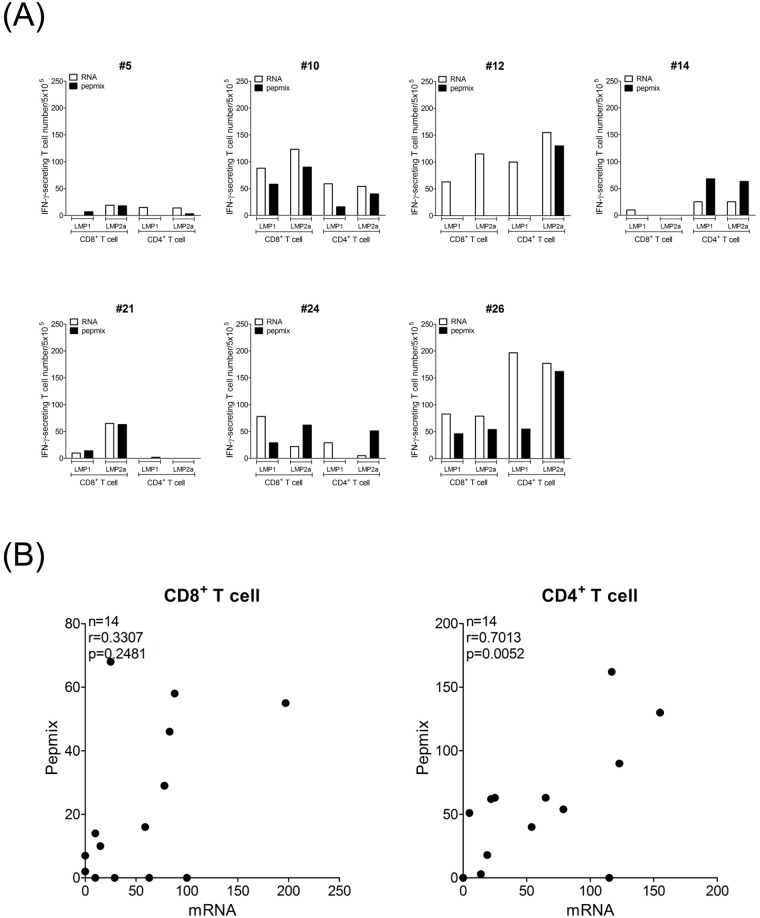
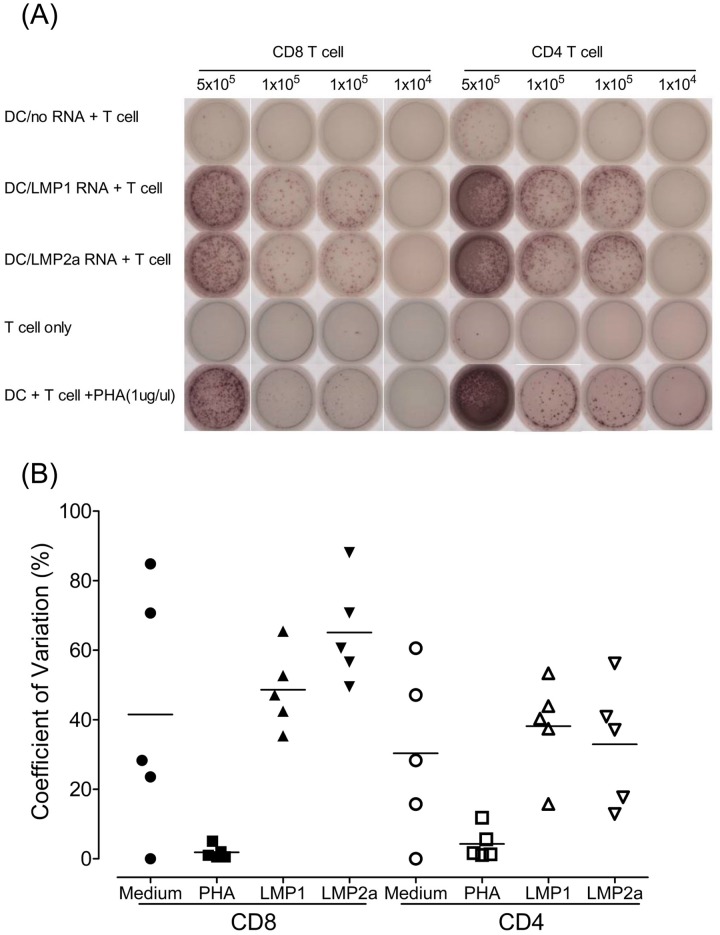
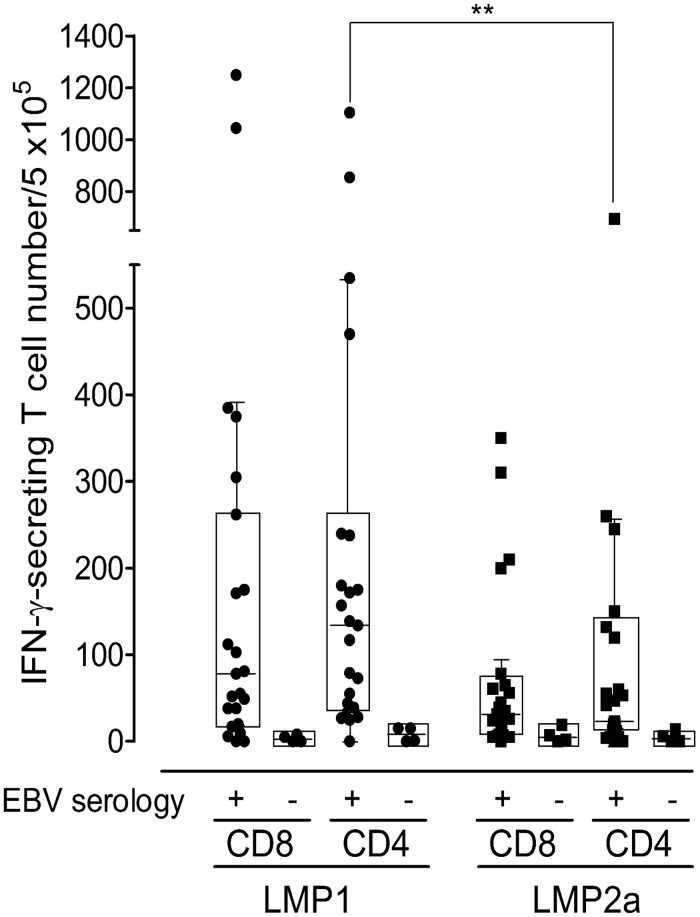
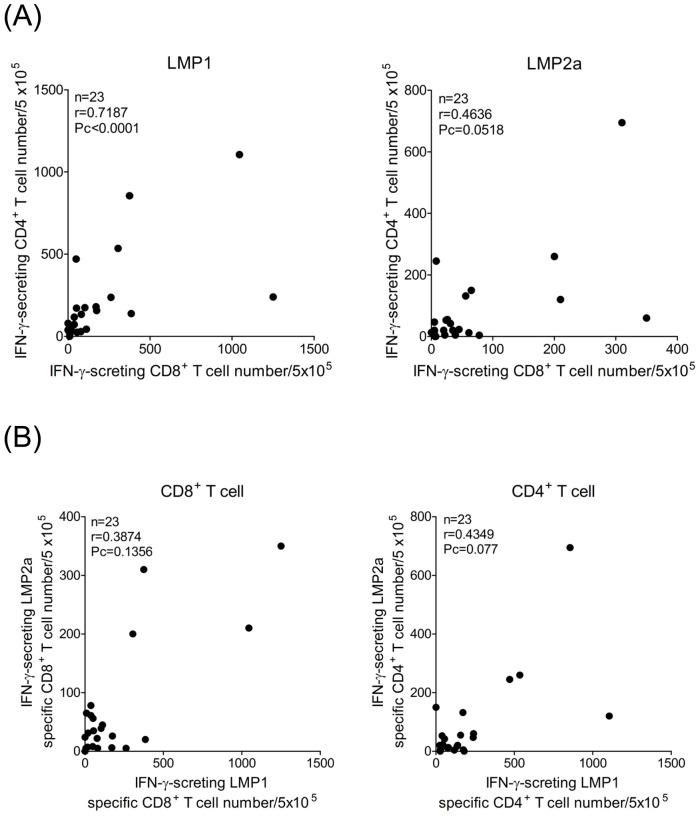
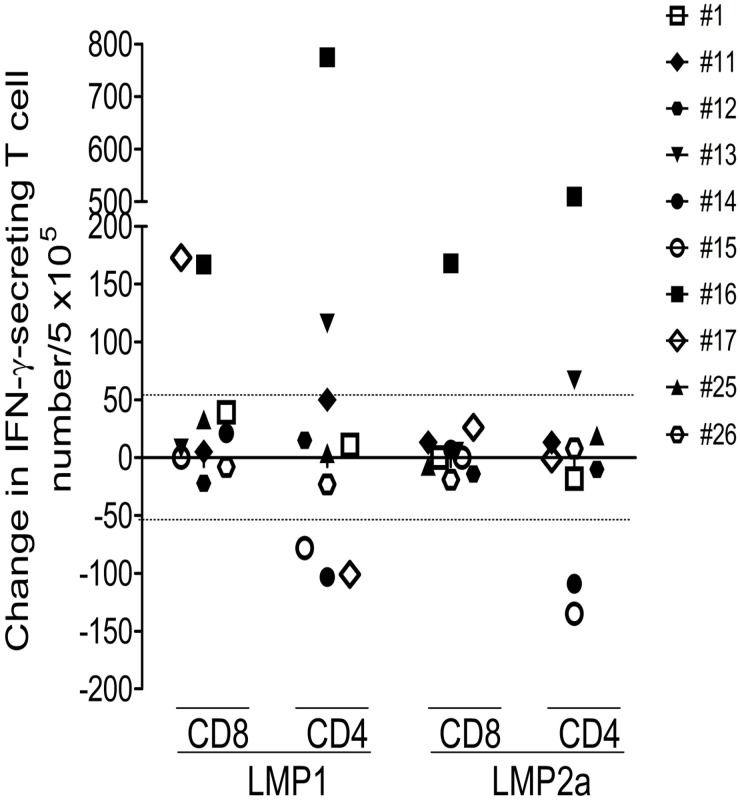
An EBV-specific cellular immune response is associated with the control of EBV-associated malignancies and lymphoproliferative diseases, some of which have been successfully treated by adoptive T cell therapy. Therefore, many methods have been used to measure EBV-specific cellular immune responses. Previous studies have mainly used autologous EBV-transformed B-lymphoblastoid cell lines (B-LCLs), recombinant viral vectors transfected or peptide pulsed dendritic cells (DCs) as stimulators of CD8(+) and CD4(+) T lymphocytes. In the present study, we used an interferon-γ (IFN-γ) enzyme-linked immunospot (ELISPOT) assay by using isolated CD8(+) and CD4(+) T cells stimulated with mRNA-transfected DCs. The frequency of latent membrane protein 1 (LMP1)-specific IFN-γ producing CD4(+) T cells was significantly higher than that of LMP2a. The frequency of IFN-γ producing CD4(+) T cells was significantly correlated with that of CD8(+) T cells in LMP1-specific immune responses (r = 0.7187, Pc < 0.0001). To determine whether there were changes in LMP1- or LMP2a-specific immune responses, subsequent peripheral blood mononuclear cells (PBMCs) samples were analyzed. Significant changes were observed in 5 of the 10 donors examined, and CD4(+) T cell responses showed more significant changes than CD8(+) T cell responses. CD8(+) and CD4(+) T cells from EBV-seropositive donors secreted only the Th1 cytokines IFN-γ, TNF-α, and IL-2, while Th2 (IL-4) and Th17 (IL-17a) cytokines were not detected. CD4(+) T cells secreted significantly higher cytokine levels than did CD8(+) T cells. Analysis of EBV-specific T cell responses using autologous DCs transfected with mRNA might provide a comprehensive tool for monitoring EBV infection and new insights into the pathogenesis of EBV-associated diseases.
EBV特异性细胞免疫反应与EBV相关恶性肿瘤和淋巴增殖性疾病的控制相关,其中一些疾病已通过过继性T细胞疗法成功治疗。因此,许多方法已被用于测量EBV特异性细胞免疫反应。先前的研究主要使用自体EBV转化的B淋巴母细胞系(B-LCL)、转染重组病毒载体或肽脉冲树突状细胞(DC)作为CD8(+)和CD4(+) T淋巴细胞的刺激物。在本研究中,我们通过使用经mRNA转染的DC刺激分离的CD8(+)和CD4(+) T细胞,进行了干扰素-γ(IFN-γ)酶联免疫斑点(ELISPOT)测定。潜伏膜蛋白1(LMP1)特异性产生IFN-γ的CD4(+) T细胞频率显著高于LMP2a。在LMP1特异性免疫反应中,产生IFN-γ的CD4(+) T细胞频率与CD8(+) T细胞频率显著相关(r = 0.7187,Pc < 0.0001)。为了确定LMP1或LMP2a特异性免疫反应是否存在变化,随后对外周血单个核细胞(PBMC)样本进行了分析。在所检测的10名供体中有5名观察到显著变化,并且CD4(+) T细胞反应显示出比CD8(+) T细胞反应更显著的变化。来自EBV血清阳性供体的CD8(+)和CD4(+) T细胞仅分泌Th1细胞因子IFN-γ、TNF-α和IL-2,而未检测到Th2(IL-4)和Th17(IL-17a)细胞因子。CD4(+) T细胞分泌的细胞因子水平显著高于CD8(+) T细胞。使用经mRNA转染的自体DC分析EBV特异性T细胞反应可能为监测EBV感染提供一个全面的工具,并为EBV相关疾病的发病机制提供新的见解。