Edwards D S, Phillip Rhodri D, Bosanquet Nick, Bull Anthony M J, Clasper Jon C
Royal Centre for Defence Medicine, Birmingham, UK,
Clin Orthop Relat Res. 2015 Sep;473(9):2848-55. doi: 10.1007/s11999-015-4250-9.
Personal protection equipment, improved early medical care, and rapid extraction of the casualty have resulted in more injured service members who served in Afghanistan surviving after severe military trauma. Many of those who survive the initial trauma are faced with complex wounds such as multiple amputations. Although costs of care can be high, they have not been well quantified before. This is required to budget for the needs of the injured beyond their service in the armed forces.
QUESTION/PURPOSES: The purposes of this study were (1) to quantify and describe the extent and nature of traumatic amputations of British service personnel from Afghanistan; and (2) to calculate an estimate of the projected long-term cost of this cohort.
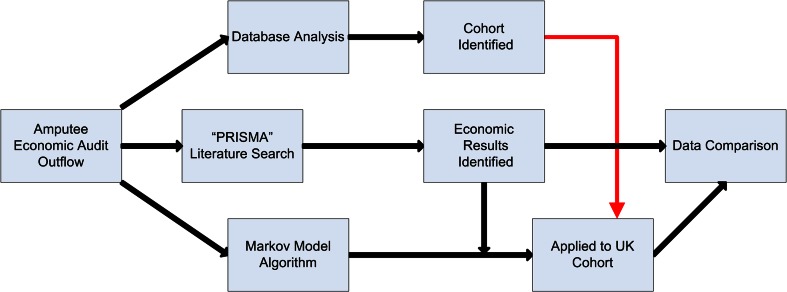
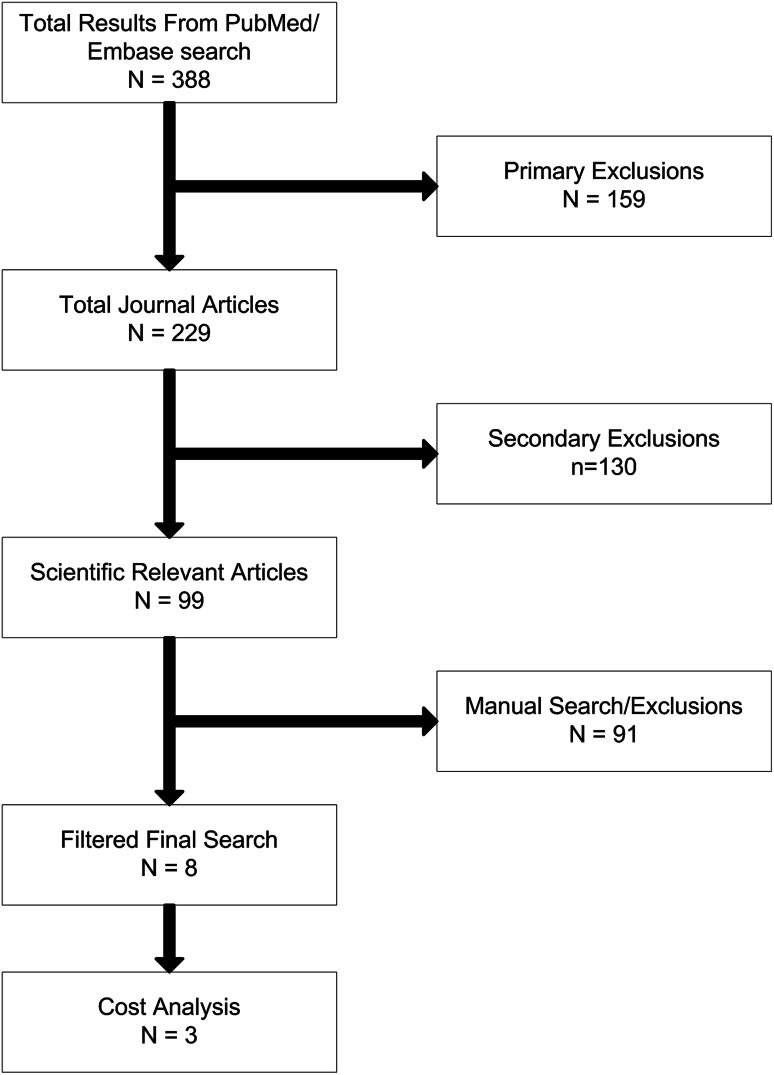
A four-stage methodology was used: (1) systematic literature search of previous studies of amputee care cost; (2) retrospective analysis of the UK Joint Theatre Trauma and prosthetic database; (3) Markov economic algorithm for healthcare cost and sensitivity analysis of results; and (4) statistical cost comparison between our cohort and the identified literature.
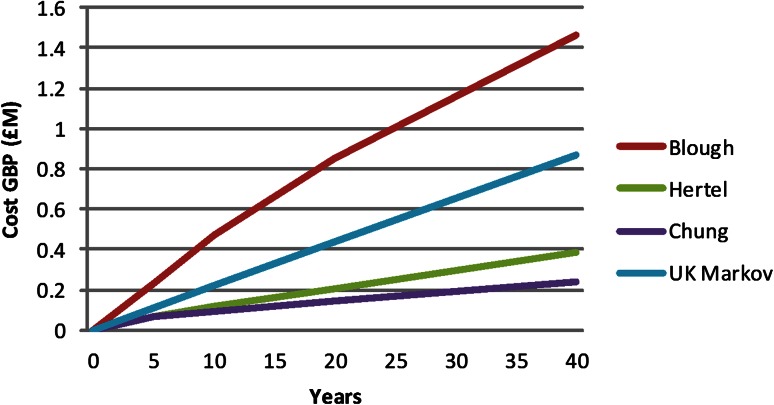
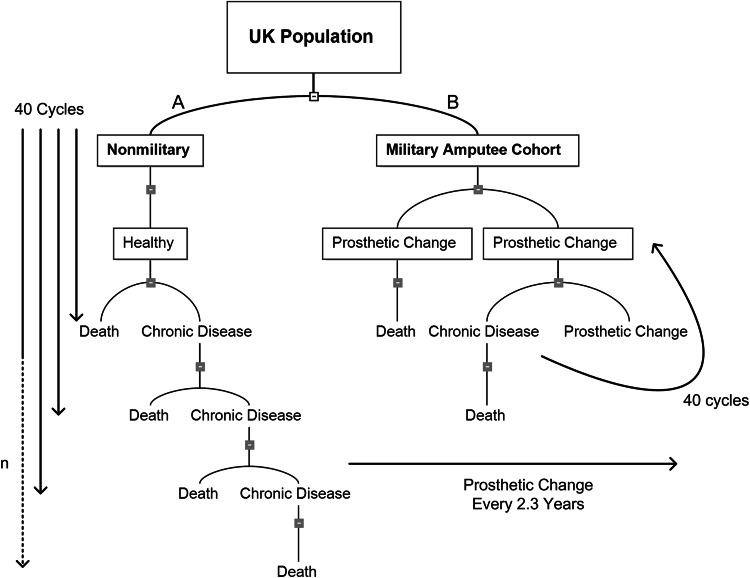
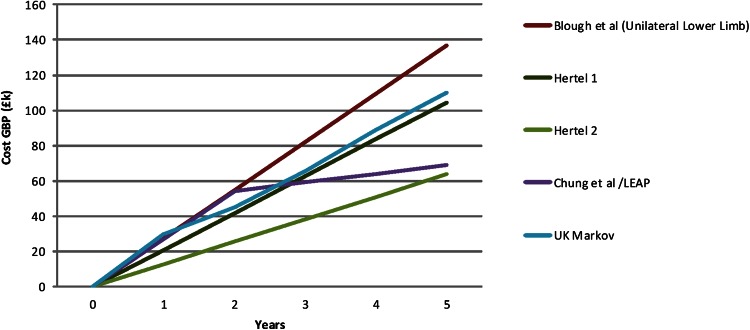
From 2003 to 2014, 265 casualties sustained 416 amputations. The average number of limbs lost per casualty was 1.6. The most common type of amputation was a transfemoral amputation (153 patients); the next most common amputation type was unilateral transtibial (143 patients). Using a Markov model of healthcare economics, it is estimated that the total 40-year cost of the UK Afghanistan lower limb amputee cohort is £288 million (USD 444 million); this figure estimates cost of trauma care, rehabilitation, and prosthetic costs. A sensitivity analysis on our model demonstrated a potential ± 6.19% variation in costs.
The conflict in Afghanistan resulted in high numbers of complex injuries. Our findings suggest that a long-term facility to budget for veterans' health care is necessary.
Estimates here should be taken as the start of a challenge to develop sustained rehabilitation and recovery funding and provision.
个人防护装备的改进、早期医疗护理的提升以及伤员的快速撤离,使得更多在阿富汗服役的受伤军人在遭受严重军事创伤后得以存活。许多在初期创伤中幸存下来的人面临着复杂的伤口,比如多处截肢。尽管护理成本可能很高,但此前并未得到很好的量化。而这对于为这些受伤军人退役后的需求进行预算规划是必要的。
问题/目的:本研究的目的是:(1)量化并描述来自阿富汗的英国军人创伤性截肢的范围及性质;(2)估算该队列预计的长期成本。
采用了四阶段方法:(1)对以往截肢护理成本研究进行系统的文献检索;(2)对英国联合战区创伤与假肢数据库进行回顾性分析;(3)用于医疗成本的马尔可夫经济算法及结果敏感性分析;(4)对我们的队列与已识别文献进行统计成本比较。
2003年至2014年,265名伤员共接受了416次截肢手术。每名伤员平均失去的肢体数量为1.6个。最常见的截肢类型是经股骨截肢(153例患者);其次最常见的截肢类型是单侧经胫骨截肢(143例患者)。使用医疗经济学的马尔可夫模型估计,英国阿富汗下肢截肢队列40年的总成本为2.88亿英镑(4.44亿美元);该数字估算了创伤护理、康复及假肢成本。对我们模型的敏感性分析表明成本可能有±6.19%的变化幅度。
阿富汗冲突导致大量复杂损伤。我们的研究结果表明,有必要建立一个为退伍军人医疗保健进行预算规划的长期机制。
这里的估算应被视为开展持续康复和恢复资金及服务提供工作所面临挑战的起点。