Sanya Emmanuel Olatunde, Desalu Olufemi Olumuyiwa, Adepoju Feyiyemi, Aderibigbe Sunday Adedeji, Shittu Akeem, Olaosebikan Olabode
Departments of Medicine, University of Ilorin Teaching Hospital, Nigeria.
Departments of Ophthalmology, University of Ilorin Teaching Hospital, Nigeria.
Pan Afr Med J. 2015 Jan 13;20:33. doi: 10.11604/pamj.2015.20.33.4594. eCollection 2015.
The burden of stroke has been projected to increase for developing countries, but data are limited, especially in sub-Saharan Africa. This necessitated this study to determine the stroke prevalence in a semi urban community in middle-belt region of Nigeria.
A two-phase door-to-door study was performed in three semi-urban communities of Kwara state; in the first phase 12,992 residents were screened and probable stroke cases were identified by trained health care workers. In the second phase individuals adjudged to be positive for stroke were screened with a stroke-specific questionnaire and made to undergo a complete neurological examination by a neurologist. Stroke diagnosis was based on clinical evaluation using WHO criteria.
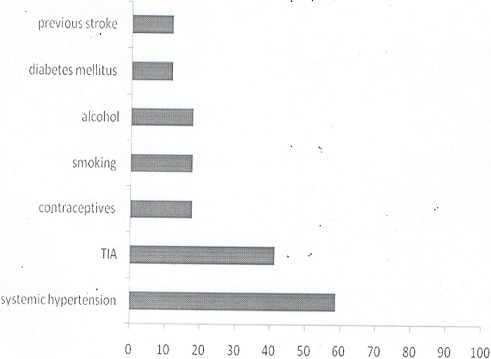
Out of the numbers that were screened, 18 probable stroke cases were identified in the first stage, and of these, 17 fulfilled WHO criteria for stroke, giving a crude prevalence rate of 1.31/1000 population. The prevalence of stroke was higher among the males than the females (1.54/1000 vs. 1.08/1000) with a ratio 1.4: 1. Sixteen subjects (94.1%) had one or more risk factors for stroke. Uncontrolled systemic hypertension (82.4%) was the commonest risk factors for stroke followed by transient ischaemic attack (TIA) (41.2%).
Stroke is a condition that is prevalent in our environment; especially in older adults and men. Uncontrolled systemic hypertension and previous transient ischaemic attacks were the commonest risk factors for stroke in our community.
预计中风负担在发展中国家将会增加,但数据有限,尤其是在撒哈拉以南非洲地区。因此有必要开展本研究,以确定尼日利亚中部地带一个半城市社区的中风患病率。
在夸拉州的三个半城市社区开展了一项两阶段的挨家挨户调查;在第一阶段,对12992名居民进行了筛查,经过培训的医护人员识别出可能的中风病例。在第二阶段,对被判定为中风阳性的个体进行了中风专项问卷调查,并由神经科医生进行全面的神经学检查。中风诊断基于使用世界卫生组织标准的临床评估。
在筛查的人群中,第一阶段识别出18例可能的中风病例,其中17例符合世界卫生组织的中风标准,粗患病率为1.31/1000人口。男性中风患病率高于女性(1.54/1000对1.08/1000),比例为1.4:1。16名受试者(94.1%)有一个或多个中风危险因素。未控制的系统性高血压(82.4%)是最常见的中风危险因素,其次是短暂性脑缺血发作(TIA)(41.2%)。
中风在我们所处的环境中很普遍;尤其是在老年人和男性中。未控制的系统性高血压和既往短暂性脑缺血发作是我们社区中风最常见的危险因素。