Kotini Suresh Babu, Peske Frank, Rodnina Marina V
Department of Physical Biochemistry, Max Planck Institute for Biophysical Chemistry, Am Fassberg 11, 37077 Goettingen, Germany.
Department of Physical Biochemistry, Max Planck Institute for Biophysical Chemistry, Am Fassberg 11, 37077 Goettingen, Germany
Nucleic Acids Res. 2015 Jul 27;43(13):6426-38. doi: 10.1093/nar/gkv558. Epub 2015 Jun 3.
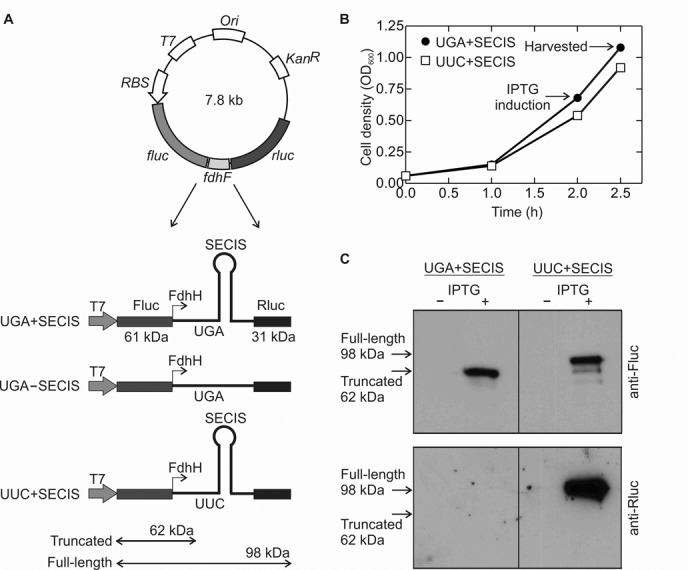
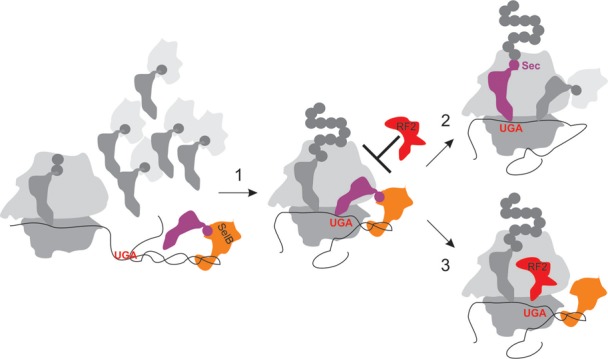
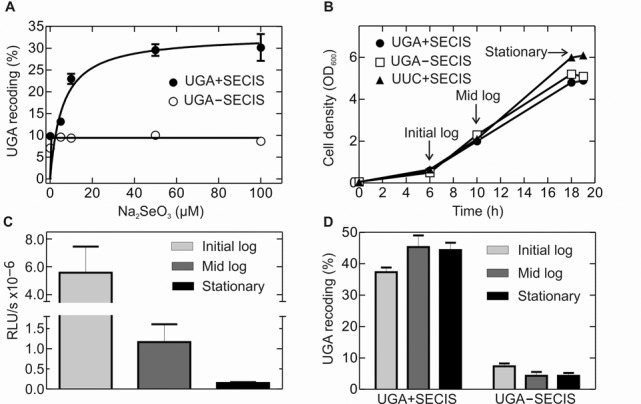
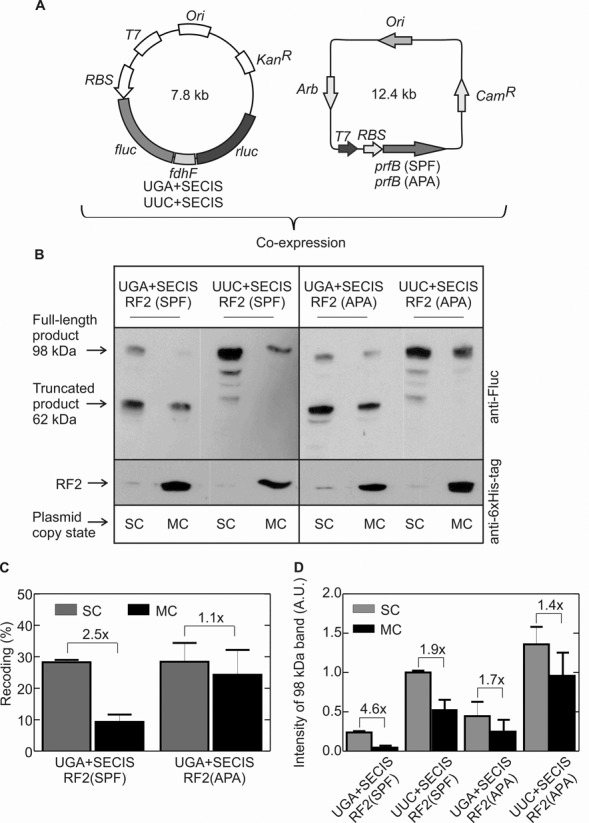
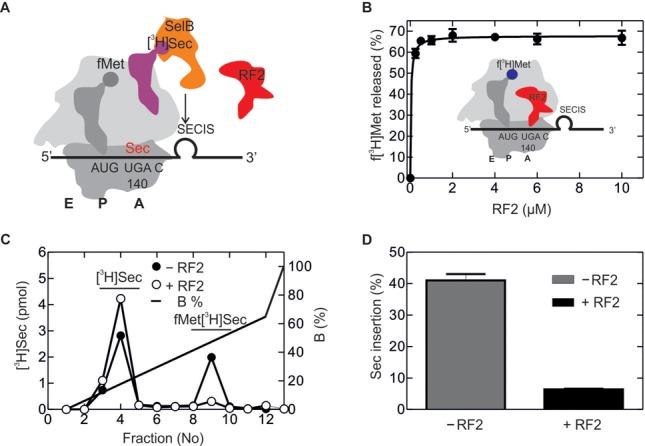
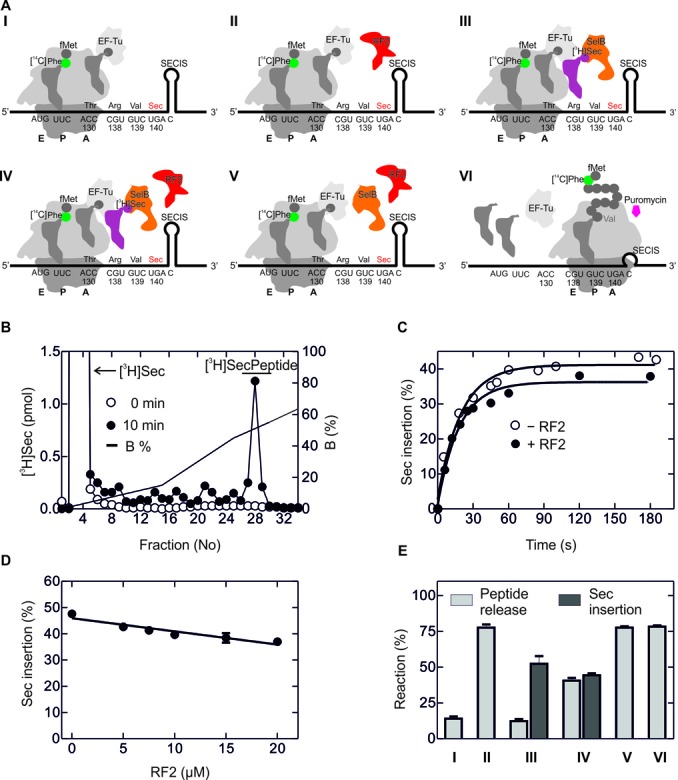
Selenocysteine (Sec) is inserted into proteins by recoding a UGA stop codon followed by a selenocysteine insertion sequence (SECIS). UGA recoding by the Sec machinery is believed to be very inefficient owing to RF2-mediated termination at UGA. Here we show that recoding efficiency in vivo is 30-40% independently of the cell growth rate. Efficient recoding requires sufficient selenium concentrations in the medium. RF2 is an unexpectedly poor competitor of Sec. We recapitulate the major characteristics of SECIS-dependent UGA recoding in vitro using a fragment of fdhF-mRNA encoding a natural bacterial selenoprotein. Only 40% of actively translating ribosomes that reach the UGA codon insert Sec, even in the absence of RF2, suggesting that the capacity to insert Sec into proteins is inherently limited. RF2 does not compete with the Sec incorporation machinery; rather, it terminates translation on those ribosomes that failed to incorporate Sec. The data suggest a model in which early recruitment of Sec-tRNA(Sec)-SelB-GTP to the SECIS blocks the access of RF2 to the stop codon, thereby prioritizing recoding over termination at Sec-dedicated stop codons.
硒代半胱氨酸(Sec)通过对UGA终止密码子进行重编码并紧跟硒代半胱氨酸插入序列(SECIS)而被插入到蛋白质中。由于RF2介导在UGA处的终止,Sec机制对UGA的重编码被认为效率非常低。在此我们表明,体内重编码效率为30% - 40%,与细胞生长速率无关。高效重编码需要培养基中有足够的硒浓度。RF2是Sec出乎意料的弱竞争者。我们使用编码天然细菌硒蛋白的fdhF - mRNA片段在体外重现了依赖SECIS的UGA重编码的主要特征。即使在没有RF2的情况下,到达UGA密码子的活跃翻译核糖体中也只有40%插入Sec,这表明将Sec插入蛋白质的能力本质上是有限的。RF2不与Sec掺入机制竞争;相反,它在那些未能掺入Sec的核糖体上终止翻译。这些数据提示了一种模型,即Sec - tRNA(Sec) - SelB - GTP对SECIS的早期募集会阻止RF2接近终止密码子,从而在Sec专用终止密码子处优先进行重编码而非终止。