Mochizuki Hiroyuki, Kennedy Katherine, Shapiro Susan G, Breen Matthew
Department of Molecular Biomedical Sciences, College of Veterinary Medicine, North Carolina State University, Raleigh, North Carolina, United States of America.
Department of Molecular Biomedical Sciences, College of Veterinary Medicine, North Carolina State University, Raleigh, North Carolina, United States of America; Center for Comparative Medicine and Translational Research, North Carolina State University, Raleigh, North Carolina, United States of America; Center for Human Health and the Environment, North Carolina State University, Raleigh, North Carolina, United States of America; Lineberger Comprehensive Cancer Center, University of North Carolina, Chapel Hill, North Carolina, United States of America.
PLoS One. 2015 Jun 8;10(6):e0129534. doi: 10.1371/journal.pone.0129534. eCollection 2015.
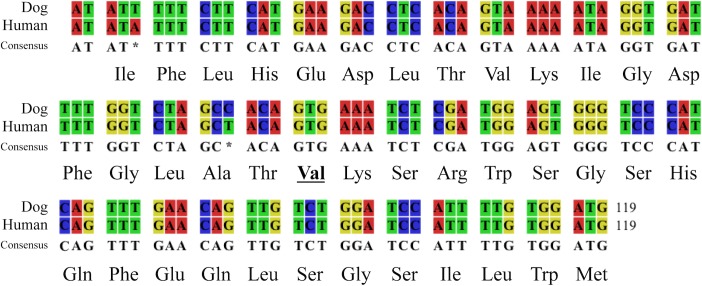
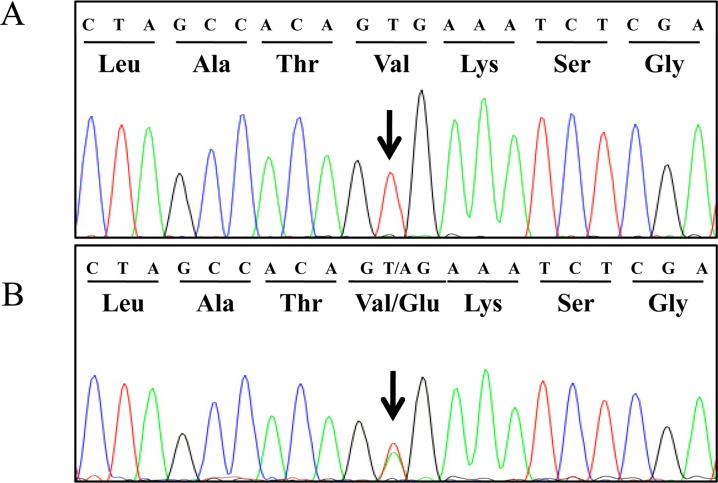
Activating mutations of the BRAF gene lead to constitutive activation of the MAPK pathway. Although many human cancers carry the mutated BRAF gene, this mutation has not yet been characterized in canine cancers. As human and canine cancers share molecular abnormalities, we hypothesized that BRAF gene mutations also exist in canine cancers. To test this hypothesis, we sequenced the exon 15 of BRAF, mutation hot spot of the gene, in 667 canine primary tumors and 38 control tissues. Sequencing analysis revealed that a single nucleotide T to A transversion at nucleotide 1349 occurred in 64 primary tumors (9.6%), with particularly high frequency in prostatic carcinoma (20/25, 80%) and urothelial carcinoma (30/45, 67%). This mutation results in the amino acid substitution of glutamic acid for valine at codon 450 (V450E) of canine BRAF, corresponding to the most common BRAF mutation in human cancer, V600E. The evolutional conservation of the BRAF V600E mutation highlights the importance of MAPK pathway activation in neoplasia and may offer opportunity for molecular diagnostics and targeted therapeutics for dogs bearing BRAF-mutated cancers.
BRAF基因的激活突变导致丝裂原活化蛋白激酶(MAPK)通路的组成性激活。尽管许多人类癌症携带BRAF基因突变,但这种突变在犬类癌症中尚未得到表征。由于人类和犬类癌症存在共同的分子异常,我们推测BRAF基因突变也存在于犬类癌症中。为了验证这一假设,我们对667个犬原发性肿瘤和38个对照组织中BRAF基因的第15外显子(该基因的突变热点)进行了测序。测序分析显示,在64个原发性肿瘤(9.6%)中发生了核苷酸1349处的单核苷酸T到A颠换,在前列腺癌(20/25,80%)和尿路上皮癌(30/45,67%)中频率尤其高。这种突变导致犬BRAF第450密码子(V450E)处的缬氨酸被谷氨酸取代,这与人类癌症中最常见的BRAF突变V600E相对应。BRAF V600E突变的进化保守性突出了MAPK通路激活在肿瘤形成中的重要性,并可能为患有BRAF突变癌症的犬提供分子诊断和靶向治疗的机会。